

It is no surprise that Americans seem at odds with one another yet again. In a country so polarized — where citizens belittle their political adversaries, governors rally their states against the federal government and media outlets constantly claim criminality against the Commander-in-Chief, a leader who, in turn, reverts to name-calling anyone who disagrees with his policies or hairstyle — it is a wonder anyone would want to come to America. Yet, the answer is: a lot of people do. If they cannot move here, they at least hope to share in the freedoms that America guarantees its citizens.
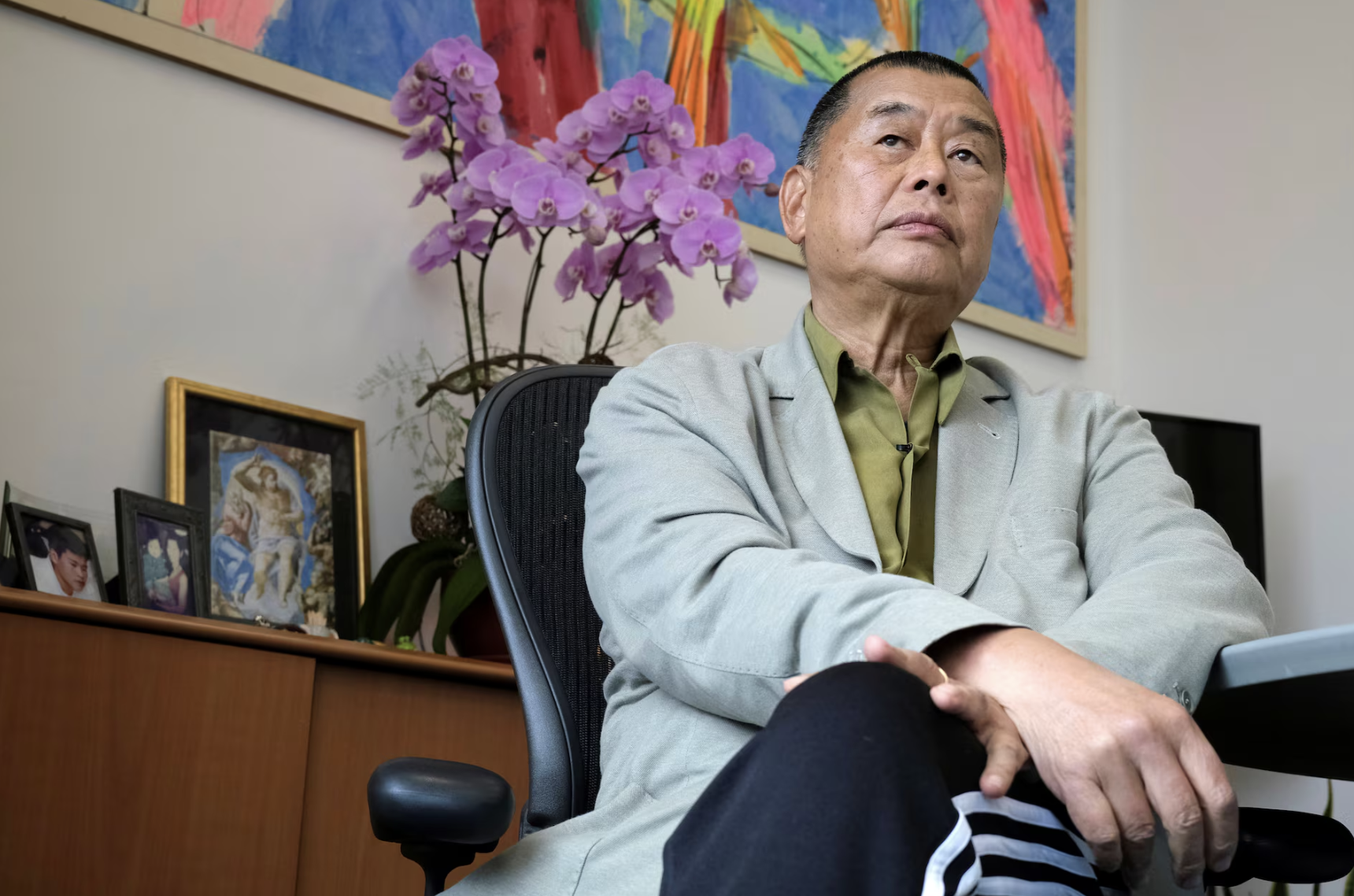
While Americans may be seen as constantly fighting internally, they at least enjoy the freedom to do so. Unlike Americans, 78-year-old British citizen and long-time Hong Kong resident Jimmy Lai was not afforded such luxuries; the Chinese government sentenced Lai to 20 years in prison for “conspiracy to collude with foreign forces and conspiring with others to publish seditious articles” (Associated Press, 2026, para. 2).
Many nations have condemned the sentence, calling for his immediate release from what they see as an unjust punishment. And who does the world turn to whenever it sees such liberties trampled? If you didn’t say it to yourself, let this article spell it out for you:
A.M.E.R.I.C.A.
America’s internal battles are a sign of freedom, but Jimmy Lai’s imprisonment is the mark of subjugation. By fighting for his release, America isn’t distracting from its key responsibilities — it is protecting what it fought so hard to become. To free Lai is to reaffirm that the rights we argue over at home are indeed the property of every human being, everywhere.
“If we lose freedom, we lose everything. We can’t allow that. We lose our freedom, we lose everything.”
-Jimmy Lai
Since the transfer of Hong Kong from a British colony to Beijing’s rule, new legislation has fundamentally reframed media operations. This framework — specifically the National Security Law (NSL) and Article 23 — imposes significant restrictions on free speech and the right to protest (BBC News, 2020).
Jimmy Lai’s life is a rags-to-richesstory. After fleeing mainland China at just 12 years old, he rose from a factory worker to a billionaire fashion mogul. In the late 1980s, spurred by what he saw as government overreach, he founded a media company to critique the tactics of the Communist Party. He did this because, in his words, “Information is freedom.”
Lai maintained that the freedoms Hong Kong enjoyed as a colony were being systematically dismantled under Beijing’s control. To him, the stakes were absolute: “When you lose freedom, you lose everything.”
Like many, Lai believes China to be a global threat to democracy and a formidable rival to the United States. During a 60 Minutes interview, speaking for himself and the people of Hong Kong, Lai said, “We share the same values as you Americans. What we are fighting for is the first battle of the new cold war” (60 Minutes, 2025).
Just as the colonies were against the crown, Lai was aware of the stakes when he set forth to speak out against such a powerful regime. Though he had the ability to live a life of luxury anywhere in the world, he chose to go to his place of birth, his home and be a voice of freedom for himself and the people of Hong Kong. In America, we are blessed to have such freedoms. Though I often may “disapprove of what you say, I will defend to the death your right to say it” (Tallentyre, 1906).
SOURCES
BBC News. (2020, May 22). Hong Kong: What is the national security law?
Tallentyre, S. G. (1906). The friends of Voltaire. Smith, Elder, & Co.
