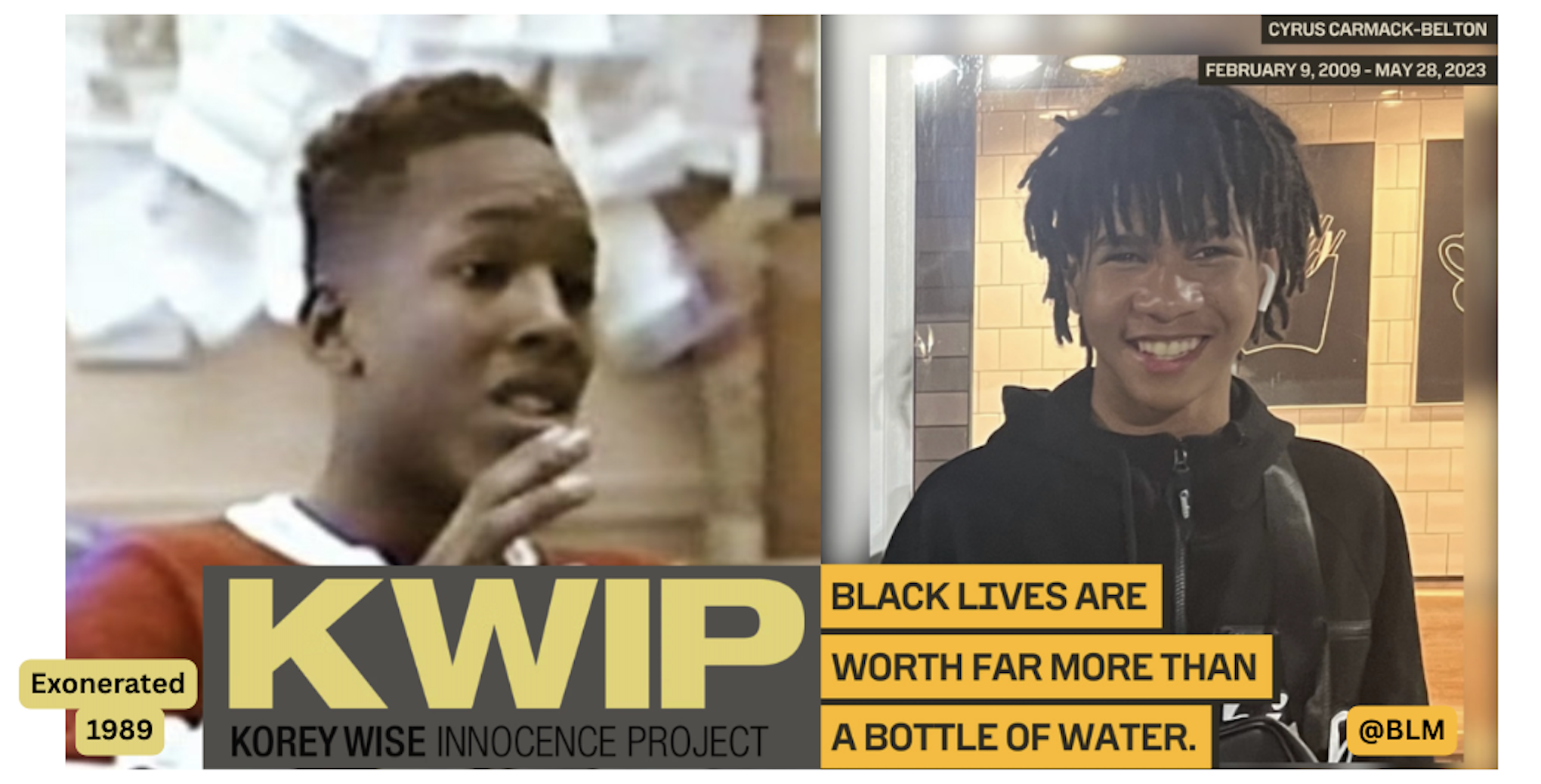

After watching news coverage around Chikei Rick Chow’s acquittal from murder charges, after wrongfully shooting 14-year-old Cyrus Carmack-Belton, I am disheartened by the antonym within Parole Board malpractice.
In films that depict the plight of black males in America within our Criminal Justice System, like The Kalief Browder Story and When They See Us, how are there still consistent failures within the correctional facility release process, that only result in wrongful imprisonment and unjust release.
Korey Wise, from the exonerated five, was repeatedly denied parole because he maintained his innocence.
In the New York state prison system, inmates are generally expected to admit guilt and show remorse in front of the parole board to be granted early release. A Mandatory Remorse statement is required by inmates to acknowledge responsibility for their actions and participate in rehabilitation programs while admitting guilt. Wise adamantly refused to do this. The board reported inconsistencies in statements during his parole hearings, he struggled to walk the line between stating his innocence and showing remorse for simply being at the scene. His rambling answers ultimately hurt his chances.
The aftermath of not accepting a plea deal or admit to the crime, Wise ultimately served nearly 13 years in adult prison. After losing multiple hearings and repeatedly facing denial because he wouldn’t admit guilt, Wise stopped attending his parole hearings entirely.
The constitution promotes Habeas Corpus as a right to a judge’s review and prohibits indefinite imprisonment. The constitution requires a trial to declare guilt and establish punishment.
The Bill of Rights: Fifth Amendment requires a right to due process and protection against self-incrimination.The Sixth Amendment requires a right to a speedy, public, and fair trial “to have compulsory process for obtaining witnesses in his favor”. The Eighth Amendment requires the right to protection against excessive bail and cruel and unusual punishments… (and generations of codifications by all levels of the judicial branch expand on these inalienable rights.
If all of this is true, then how can a privatized system – which is only an extension of our government – legally be allowed to review if an inmate can be released?
FACT: In order to proceed with release, Parole boards heavily favor inmates who take responsibility for their crimes. Owning up to the offense demonstrates that the individual understands the magnitude of their actions and “supposed lack of insight or remorse, or failure to take responsibility for the commitment offense, or disciplinary violations – or any combination of these as evidence of present dangerousness” (Hammond, 2016).
[there are inconsistent statutes across the nation, so this was quoted from a google search] Texas is an example of a median, harsh punishment, red state:
Eligibility Requirements: Time Served: Most inmates are eligible for parole after serving 1/4th of their sentence, Parole Guidelines Score: The Board uses a matrix that merges ‘Risk Assessment’ (likelihood of reoffending) and ‘Offense Severity’. The Parole Board Procedures: Automatic Review: The review process begins automatically 6 months before an inmate’s initial eligibility date (or 4 months before subsequent reviews), Voting Panels: Files are reviewed by a 3-member panel (usually 1 board member and 2 parole commissioners), Victim Involvement: Victims have the right to request interviews with the lead panel voter and can submit confidential protest letters.
Despite inconsistencies, most prisons require inmates to provide a.) A sworn statement of guilt admitting to the crime to establish conviction and secure penalties, frequently resulting in a reduced sentence or b.) A remorse statement (allocution): it is unsworn and occurs post-conviction; it serves to humanize the defendant and request leniency, but it does not determine guilt. There are often further processes without the inmate nor their attorney present.
Again, Article I and Article III of the constitution in addition to the explicit codification in the Bill of Rights establish parole boards are not only illegal, but proof of generationally systemic complex unconstitutional behaviors.
How then, when up for parole as ruled by a judge, not limiting a jury’s verdict of guilt, attorneys specialized-laymen arguments backed by the evidence, does a “board” get the deciding vote?
If our judicial branch distributes authority to judges, then only a judge can rule guilt and establish appropriate punishment.
If a judge’s ruling -the final confirmation of all criminal court trial proceedings- establishes a minimum time required of an inmate until ‘Sentence Termination Release’, then why don’t we argue to reform components of government sanctioned institutions that are in contempt of court through the ability to challenge an inmate’s fate?
What I’m trying to argue is that an inmate is only required to respond to a judge’s authority. Yes, our government’s actions are based upon actions of the court that are handed down to bureaus — however, allowing this to impede on an American’s right to parole, set by a constitutional authority, is illegal.
No matter how a parole board’s reviews process around court ruling, a high authority declared termination of sentence at a minimum and maximum. Therefore, a board has no constitutional authority to deny an inmate release.
The requirement for all actions in deciding the fate of an inmate must abide by the rights under the constitution, therefore Bill of Rights, and all relevant Statutory Laws. If there must be a review or Parole Trial, it must be reviewed by a jury of their peers, original attorneys (in the event that this is appealed some type of designated survivor order), and without appeal, a randomly assigned impartial judge.
Acknowledgement: The opinions expressed in this article are those of the individual author, not necessarily Our National Conversation as a whole.
BibliographyHammond, D. (2019, October 5). CDCR parole suitability factors. Criminal Defense Heroes P.C. California DUI Defense. https://www.donhammondlaw.com/blog/post-conviction-relief-cdcr-parole-suitability-article/