

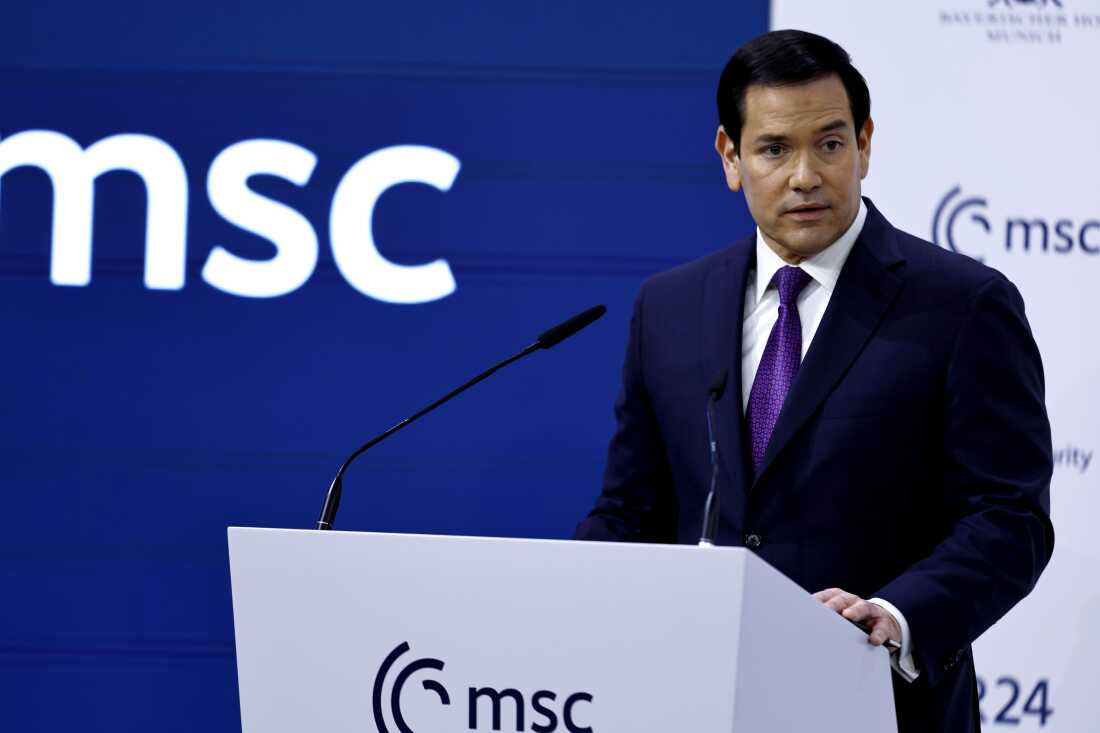
Last weekend, Secretary of State Marco Rubio delivered an address to our European allies at the Munich Conference, aiming to reassure them of the United States’ commitment to the trans-Atlantic alliance while also providing some necessary critiques of European policy mistakes. Overall, the speech was well-received and offered relief from the overbearing, uncivil rhetoric of the Trump administration.
However, Rubio made an appeal for unity based on common Western Christian values. While I agree that Western civilization has been founded on Christian values, I find it problematic when the Christian faith is reduced to merely a set of civilizational values. This presents a two-fold issue.
Firstly, save for a few exceptions like Poland, Christianity has largely become secular in Europe and the United States, meaning that a heavy emphasis on Christianity’s values will likely not resonate in these countries. Signs of a Christian revival seem insignificant, even as younger generations show more interest in religion.
Second, the Christian faith is not just a collection of helpful values. It is either the only way, truth, and life, or it is entirely false. Christianity cannot be divorced from its fundamental claims about Christ. If Christ is truly who He claimed to be and genuinely rose from the dead, then Christianity primarily offers the power to save humans from their sins, and only afterwards can it perhaps contribute to the well-being of Western civilization. We should not expect it to be simply a “self-help” guide for society—this has never been Christianity’s primary purpose.
I appreciate leaders who are concerned about preserving the West, but we must recognize that there is more at stake than just economic and security issues. Greater battles are taking place within each of our souls, and perhaps we should address those before attempting to save an entire civilization.
1 Comment
👍👍