
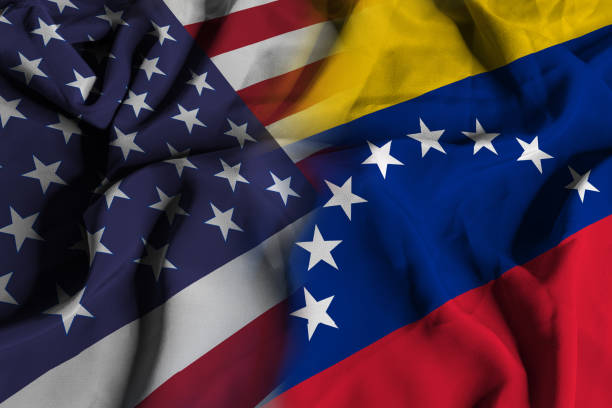
The start of the year 2026 for the American public has been marked by the still-evolving situation in the aftermath of the abduction of President Nicolás Maduro. The legality of the event is not evidently clear. Still, I am personally happy that Maduro is no longer in power, and many Venezuelan-Americans share this sentiment, as the reported celebrations suggest. With Maduro currently in detention and facing trial, many within the U.S. are looking to the Trump administration for clarification regarding how foreign policy with the Bolivarian Republic of Venezuela will be conducted in the year ahead.
While the present can be construed in a positive light, the future of Venezuela remains murky. The U.S. Secretary of State, Marco Rubio, has not been forthcoming on the specifics of how the U.S. will be involved with Venezuela’s government after capturing President Maduro.
Rubio stated that the action did not require congressional approval because, although it was performed by the U.S. Army’s 1st Special Forces Operational Detachment–Delta, famous for the capture of Saddam Hussein, it was evidently not a military operation. I cannot help but draw unfortunate parallels to how the Russian Federation initially considered the invasion of Ukraine as a ‘special military operation,’ and did not officially declare war until 2024.
I am willing to assume that many within the American public do not wish to be involved with Venezuela in a protracted campaign reminiscent of previous failed attempts at geopolitical intervention, such as Vietnam, Iraq, and Afghanistan. Now would be the time for the Trump administration to demystify, not obfuscate, U.S. foreign policy for 2026.
The lack of definite answers regarding a regime change, coupled with sanctions remaining in place and the U.S. reserving the right to continue launching strikes on drug boats, seems to indicate that while the capture of President Maduro was planned, what to do next was not.
In this dearth of concrete information from the Trump administration, some congress members, such as Sen. Chris Murphy (D-Conn.), have decried the capture as an audacious and brazen attempt to bully a foreign country into opening their oil reserves to the international market, and not a serious effort to uplift the lives of the average Venezuelan. The fulcrum on which the Trump administration’s focus on Venezuela rests is oil. Everything, except foreign companies moving in to tap into the vast oil reserves, is up in the air.
As a staunch environmentalist, I cannot condone actions that burn more fossil fuels. Still, I would be remiss not to acknowledge the potential benefits to the energy security of both the U.S. and its allies. International access to Venezuelan oil could make gasoline cheaper for the average American consumer and possibly reduce Europe’s reliance on Russian oil imports.
But this is just speculation on what could happen in the future: even though the Trump administration’s agenda has the potential to be positive for, if not Venezuela, then the rest of the world, a good outcome is not guaranteed without a concrete plan.
That Marco Rubio is willing to clarify some aspects of the U.S.’s role in Venezuela but not others implies that he does not have the answers the American public wants. The U.S. is not at war with Venezuela, but it could be in the future.
The U.S. is not occupying Venezuela, but occupation remains an option. I sincerely hope that the Department of State’s agenda for 2026 will be more nuanced than ‘going with the flow’ and taking things as they come, but that seems to be the most likely conclusion at the moment.

1 Comment
This article raises important questions about the lack of a clear long-term strategy for Venezuela following recent events. It thoughtfully balances optimism about change with legitimate concerns about transparency, legality, and historical precedent. Calling for clarity and accountability at this stage is both timely and necessary, especially if the goal is lasting stability and meaningful improvement for the Venezuelan people.