

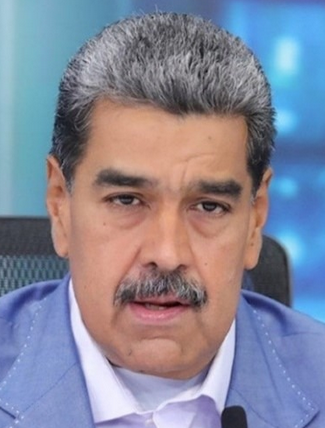
The American military’s execution of Operation Absolute Resolve on Jan. 3, 2026, which led to the capture of Nicolas Maduro, has once again exposed the deep fault lines in U.S. politics. Carried out under the Trump administration’s orders, the mission’s aftermath followed a familiar script—Republicans met the news with applause, while Democrats denounced the escalation. But are Democrats truly lamenting over the capture of a dictator, or is it a partisan reaction of the man who ordered it? While the methods of the recent U.S. intervention in Venezuela remain a subject of intense debate, U.S. party leaders on both sides of the aisle have historically supported efforts to end the country’s corruption and have advocated for the removal of the Venezuelan dictator.
For decades, the United States has viewed Venezuela with growing suspicion, particularly as relations deteriorated under the authoritarian leadership of President Hugo Chávez (CRS, 2022). After the death of Chávez in 2013, Nicolás Maduro narrowly won the presidential election, further heightening U.S. concerns and leading Washington to label Venezuela a national security threat. In response to the Maduro government’s actions, President Barack Obama issued an executive order in 2015 imposing sanctions on the regime for public corruption and human rights abuses. Although the order did not directly target Maduro, it placed financial and travel restrictions on seven high-ranking Venezuelan officials in an effort to pressure the government to preserve democratic institutions and protect the rights of its citizens (The White House, 2015).
Despite persistent pressure from the Obama administration, the Maduro regime remained largely undeterred. This defiance culminated in 2018 when Maduro claimed a controversial reelection victory, a move the Venezuelan National Assembly denounced as an unlawful power grab. In response, more than 50 nations, including the United States, withdrew their recognition of his presidency. The Trump administration escalated these efforts in March 2020 by indicting Maduro on narco-terrorism and weapons charges, accompanied by a $15 million reward. Yet, Maduro remained unmoved, declaring another disputed presidential victory in 2024 despite evidence to the contrary. Seeking to maximize diplomatic leverage, President Biden subsequently increased the reward to $25 million, though the regime remains resistant to U.S. intervention (U.S. Department of State, 2025).
Driven by an intensifying strategic imperative to dismantle the Maduro regime, President Trump took the unprecedented step of doubling the existing bounty to $50 million; this escalation distinguished Maduro as the first individual in the history of the Narcotics Rewards Program to surpass the $25 million threshold, signaling a peak in U.S. efforts to leverage financial incentives for his capture; nonetheless, this historic measure failed to yield a tangible impact on the regime’s stability (U.S. Department of State, 2025).
Despite being subjected to an ever-evolving array of U.S. sanctions and rewards brought forth by the Obama, Biden, and Trump administrations, the Maduro regime had remained fundamentally unyielding. That defiance finally ended on Jan. 3, 2026, with a decisive U.S. military operation to capture the Venezuelan leader. Although the methods of the arrest have sparked immediate controversy, the event marks the culmination of a long-standing, bipartisan effort to force Maduro from power.
References
Congressional Research Service. (2022, November 27). Venezuela: Background and U.S. relations (Report No. R44841). https://www.congress.gov/crs-product/R44841
U.S. Department of State. (2025, August 7). Nicolás Maduro Moros. https://www.state.gov/nicolas-maduro-moros
The White House. (2015, March 9). FACT SHEET: Venezuela Executive Order [Fact sheet]. Obama White House Archives. https://obamawhitehouse.archives.gov/the-press-office/2015/03/09/fact-sheet-venezuela-executive-order
