

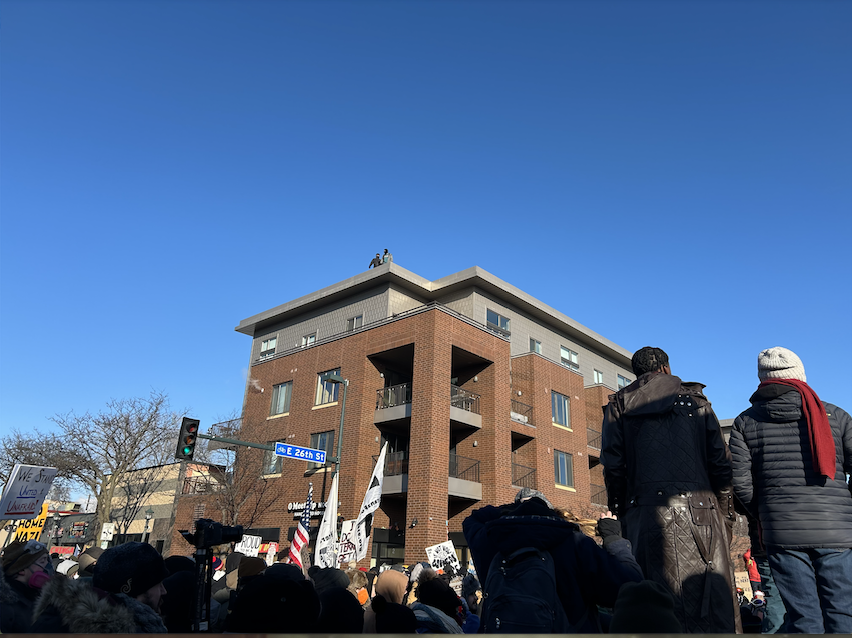
The fatal shooting of Alex Pretti this week has dominated our screens, mere weeks after the tragic shooting of Renee Nicole Good.
We have all undoubtedly seen both incidents from countless angles and heard endless debates over the legality or circumstances that led to each. Being bombarded with these disturbing images of violent interactions and protests, it is hard to see Minneapolis as anything other than a war zone. What these images overlook is the daily lives of those who live and work amongst the chaos. To capture the day-to-day for these Minnesotans is to understand the impact ICE is having on the city and reactions to it.
As someone who lived in Minneapolis for four years and a native Minnesotan, I wanted to give ONC readers a different perspective, one of hope and community amidst uncertainty. To do so I contacted three friends who work or live in Minneapolis to tell me their stories and how they see this watershed moment in American history. I will be omitting their real names to ensure privacy and substituting them with pseudonyms for clarity.
I first interviewed my friend Lily who works in the business district of Minneapolis, a few blocks from where protests are taking place. She expressed the strange dichotomy of starting a new job in a structured corporate setting, versus the protests going on outside. According to Lily, most of these protests had been planned for after 5 p.m., allowing those with nine-to-five jobs like her to attend the gatherings, which she described as “rejuvenating.” However on one occasion a large protest took place during business hours. Her concerns about taking off work during the trial period of a new job were outweighed by an intense need to show up for her community, “In a moment of need this great, people are willing to do whatever they need to further the change.”
Lily’s decision inspired cautious coworkers, many of whom were afraid to go on their own, to attend together. In her words, “it’s a lot harder to stand alone, than stand with a group.” This statement also evokes the sense of community many Minnesotans, especially Gen Z are finding in uniting around this cause. For Lily in particular, this cause comes at a time where graduation has separated from her college community, and allowed her to create a new one. Having a sense of belonging has allowed her and other Minnesotans, to share the burden of “grief carried as a community,” a key “part of the recovery process” after the loss of two of their own, and the arrests of many more.
Despite the deep commitment Lily has to the cause, there remains a palpable sense of fear, “that you have to carry with you until it’s over.” One morning on the way to work she was flanked on either side by military looking Humvees, which she felt were boxing her in despite attempts to accelerate away. Lily came away from the incident with the impression that ICE wants Minnesotans to know “we’re everywhere and you can’t escape us,” calling their presence “cartoonish in its propaganda.”
While white Minnesotans like Lily are experiencing intimidation and fear tactics at the hands of ICE, she wanted to stress that minority experiences are “being paved over,” emphasizing “centering the stories of those most at risk,” that “already have an air of apprehension.” For Lily, sacrificing for these community members is imperative as someone who has the “privilege” of not being targeted by federal officers. At a time like this, Lily sees participating as the most important part of the process, “if you can’t give 100%, give 50%, give 35%, just show up.”
It was clear that Lily wasn’t the only one who shared that sentiment when my friend Nick was late to our interview because he was handing out hot chocolate with his neighbor at a protest. I interviewed both Nick and his roommate (and my other friend) Daniel, who live just blocks over from where Renee Nicole Good was shot. The pair also frequented a record shop on the street where Alex Pretti was killed, a place Nick said has now been tainted by makeshift barricades, and the reminder of the tragedy. “Living here is scary, everyone is on edge, anyone could be ICE,” Nick told me before explaining how this tension had led some protesters to damage a vehicle, believing it belonged to ICE, only to learn afterwards it wasn’t. Daniel added “paranoia” is rampant, and it “Feels like we are in a war zone,”something he said the constant helicopter noise a neighborhood over did nothing to remedy.
“Its surreal it’s so close to our house, like being on the frontlines,” but “It feels like I have an impact,” Nick admitted. Distancing themselves from the more physical confrontations with ICE, the roommates have frequently attended peaceful protests, and in Nick’s case acted as an ICE observer, patrolling in his car and checking license plates through a community maintained database. He relayed an instance where an ICE vehicle was parked on their block, and around ten observers were monitoring it within minutes, a response he found surprising but representative of how people are showing up for the community. Daniel was struck in a similar way that donation centers were experiencing a “good problem” of having too many donations, “It’s good to see the community come back in a new way.”
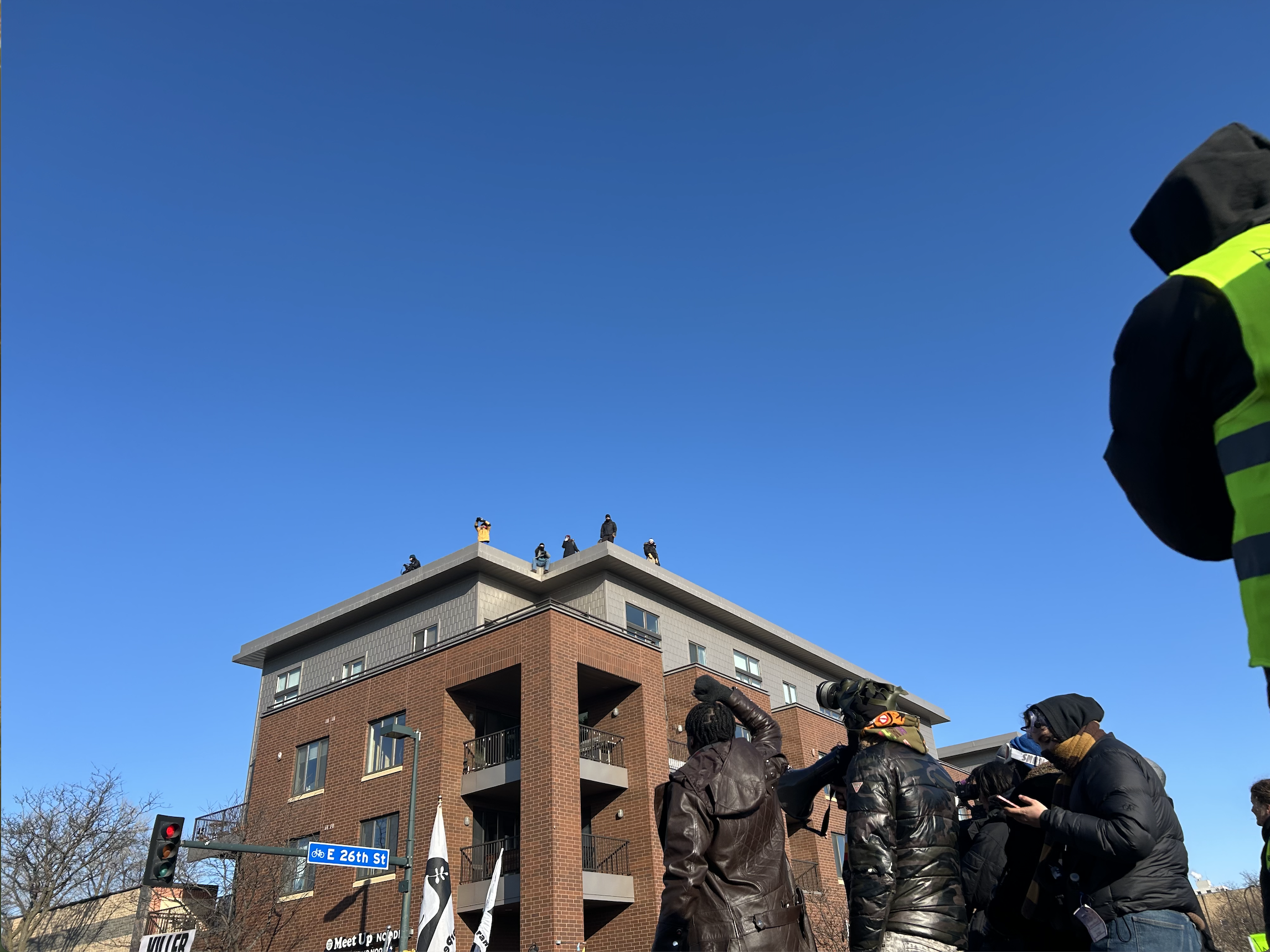
I asked if the way ICE is operating has changed at all, and as well as the community’s response to them. Nick stated “The sentiment is so negative towards [them], ICE now hates the community, it feels like they are trying to get back at [it].” Daniel was clear, “the community always denounced ICE,” “[ICE] fought fire with fire…and it only got people killed.” They were both cautiously optimistic that Trump’s call with Governor Walz and the removal of Greg Bovino from ICE leadership, would in Daniel’s words “reel things in” but that “it’s hard to tell right now, things can go south really fast.”
The violence feels even more jarring because both Nick and Daniel don’t understand why ICE is in Minneapolis in the first place. “It’s confusing to think about why ICE is in Minneapolis,” Nick admitted. Daniel echoed this uncertainty, asking “Who is making these decisions… saying we should target Minneapolis? It doesn’t seem like just Trump.” Additional officers were deployed soon after fraud investigations implicated members of the Somali community, but because the Somali population is almost entirely naturalized citizens (87% with 58% born in the U.S.), ICE lacks the authority to deport them.
Both said they had observed few ICE officers or arrests in Riverside, the predominately Somali neighborhood of Minneapolis. Instead, they reported seeing concentrated activity in midtown, an area where many Mexican restaurants and other hispanic-owned businesses are located.
Daniel also refuted the “the claim that ICE is deporting violent individuals when there wasn’t as much violence until they arrived.” This reflected a previous anecdote Nick had made. One day during work, Nick noticed a coworker taking out the trash, something he had never done before. When asked, his coworker told him their janitor had been taken by ICE. Nick and Daniel also stressed that Federal officers’ actions are not just creeping into work but school as well. The two know a teacher who has now been forced to teach completely virtually as it has been deemed too dangerous to send children to school. Although the end of ICE’s heightened presence in Minneapolis remains uncertain, Nick and Daniel remain hopeful, and “proud to live in Minneapolis.”
I was struck by the bravery and conviction my friends have shown throughout this crisis. It is one thing for us to watch the ongoing situation in Minneapolis from afar, but quite another to live it. The way the community has rallied together is nothing short of inspiring. At a time when American identity seems so fraught, almost shameful, it is people like them who remind us what being an American truly means.
I am reminded of Ben Franklin’s response when asked whether the new nation will be a monarchy or a republic. “A republic, if you can keep it.” I have no doubt that we will keep it.
