
Much like the introduction of the smartphone today, Johannes Gutenberg’s 15th-century invention of the printing press sparked a technological revolution. This innovation enabled the mass distribution of reading materials. By the 16th century, Martin Luther had transformed the industry by printing the Bible in the vernacular (Karant-Nunn & Lotz-Heumann, 2017). This allowed people to read the sacred text for themselves rather than relying on the interpretations dictated by the institutional church. In this search for truth, English Separatists, including the Pilgrims, fled the mandated practices of the Church of England to seek religious freedom in the New World. This pursuit for truth laid the foundations for a free nation: The United States of America.
In 2026, Americans are in search of the truth once again—not through smartphones or software, but through an ancient path: the Bible. A Gallup poll review showed a significant drop in Christianity among American adults, falling from around 90% in the late 1990s to close to 60% by the mid-2020s. But recent data suggests this decline may be leveling off (Gallup, 2024).
Like the Pilgrims and Separatists toward organized religion, modern Americans are showing a similar detachment from established religious institutions. This skepticism extends to information sources as well, with U.S. citizens reporting a trending decline in trust toward national and local news, and even lower levels of confidence in news found on social media (Eddy & Shearer, 2025). Information gathered from various news outlets shows nearly 80% of all Americans are tired of the political polarization, fearing the divide could destroy the country (Listen First Project, n.d.).
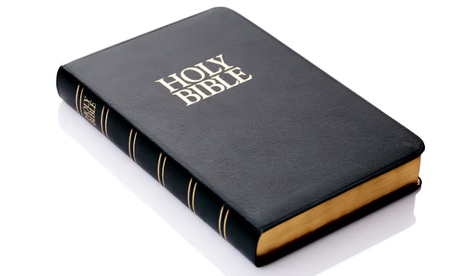
While Americans are increasingly tired of organized religion, untrustworthy news outlets, and political division, Bible sales tell a different story. Although just 49% of the population views religion as a central pillar of life, Bible sales have grown steadily since 2021. After reaching a 20-year peak in 2024, the market expanded another 11% in 2025, totaling over 18 million Bibles sold (Smietana, 2025).
Gen Z and Millennials are the driving force behind these Bible sales and this newfound interest in Christianity. Where Gen X, Boomers, and elders once held the mantle as the reliable church attendees and Bible readers in America, it is now the younger generation, the next generation, who are showing the highest level of church attendance and regularly reading the Bible (Barna Group, 2025).
Why does such an advanced generation seek answers in such a limited and dated doctrine? We are in a digital age with endless information within a pocket’s reach. There is seemingly no limit to the knowledge one may acquire on any given topic. It is an abundance of everything one could ever want or need to know at the touch of a screen. From babies to boomers and beyond, nearly everyone owns or has access to this modern technology. But just as everyone has access to the information contained in these sleek tools of the future, they also have the power to share, spread, or create information—whether that content is factual, subjective or, dare I say, “fake news.”
Ay, there’s the rub. For in that search for truth, what truth shall be found? Is it the conservative truth that a noble, national agent abided by protocol during a disrupted mission? Is it the liberal truth that a citizen was violently killed during a peaceful protest? Can both things be fully true at once? Or can so much information coming in from every side of an argument make a person question the very nature of reality? What is truth?
I asked Siri what truth was, and she gave me a definition from Wikipedia that seemed correct. Then I asked Siri if Wikipedia was always truthful, and she replied:
“No, Wikipedia is not always truthful. It operates on a principle of verifiability, not truth, meaning content must come from published, reliable sources that readers can check, rather than editors’ personal beliefs or experiences. The platform itself includes a general disclaimer that it makes no guarantee of content validity. “
Within Siri’s response was a hyperlink to a Wikipedia page where the first line reads: “‘Wikipedia: Wikipedia is not a reliable source’ redirects here” (Wikipedia, 2026, para. 1).
Let this be the only time I ever cite Wikipedia.
We live in a digital world where massive amounts of conflicting information can lead one in many directions toward several subjective truths. It is no wonder that millions of Americans are turning back to a book that claims to be “the way, the truth, and the life” (John 14:6, 1973/2011).
References
Barna Group. (2025). The state of the Bible: Gen Z and the future of faith. https://www.barna.com/research/young-adults-lead-resurgence-in-church-attendance/
Eddy, A., & Shearer, E. (2025). Trust in news and social media: A 2025 report. Pew Research Center. https://www.nphic.org/news/news-highlights/2515-how-americans-trust-in-information-from-news-organizations-and-social-media-sites-has-changed-over-time#:~:text=A%20recent%20Pew%20Research%20Center,to%20submit%20this%20form%20Subscribe
Karant-Nunn, S. C., & Lotz-Heumann, U. (2017). The European Reformation. Routledge. https://exhibits.lib.arizona.edu/exhibits/show/reformation/role-of-printing
Listen First Project. (n.d.). The polarization crisis in America. https://www.listenfirstproject.org/toxic-polarization-data#:~:text=National%20fear%20and%20personal%20pain,UVA%20Center%20for%20Politics)
New International Version Bible. (2011). Bible Gateway. https://www.biblegateway.com/passage/?search=John%2014%3A6&version=NIV (Original work published 1973)
Smietana, B. (2025). Bible sales reach record highs amidst cultural shifts. Religion News Service. https://www.latimes.com/world-nation/story/2025-11-27/bible-sales-keep-growing-even-as-many-americans-lose-their-religion
Wikipedia. (2026, January 14). Wikipedia: Wikipedia is not a reliable source. https://en.wikipedia.org/wiki/Wikipedia:Wikipedia_is_not_a_reliable_source

3 Comments
I just read a book by Robert L. Hilton called “The Book on the Shelf.” It’s available on Amazon. He points out an interesting paradox — that Bible sales outpace sales of all other books, and that this has been true for years and years. But he asks: How many people have ever actually read the Bible? Or is this a book people buy and then leave on the shelf? In his book, Hilton gives explanations for what the chapters are telling us, noting even the Bible is subject to interpretation. Abraham Lincoln famously said both sides in the Civil War read the same Bible and relied on it to justify their causes. I have read the Bible several times now and have been attending a Bible study class for years. I think hanging out with people who have really studied the Bible and who can explain it is super helpful — much more revealing, I think, than just reading the Bible on one’s own. Even the words of Jesus can be hard to understand, for he often spoke in parables that his own apostles couldn’t understand at the time. If you read the Bible — which I highly recommend — I recommend you join a Bible study group at the same time. And yes, Dominick Blanda, many of the Bible tales, written thousands of years ago, are highly relevant today. The world is a crazy and broken place. The Bible helps make sense of it all.
It has always amazed me, particularly in our country, how so many Christians were, are and continue to be uneducated about the content of the Bible and its teaching. After all, we’re talking about eternity–and where we might spend it. One would think that all of us would be anxious to read the Bible and garner an understanding of what it is teaching us. Instead, the Christian church in the US is in decline. Church membership and attendance is at historical lows. So I encourage all to dive in. Join a Bible study group as Jeff Hall suggested in his message. Get to know and fellowship with mature Christians who have study the Bible. Yes, the church is full of hypocrites. After all, we remain in our sinful nature which results in hypocrisy. But thanks be to God, Jesus intervenes on our behalf. I encourage everyone to get to know Him and Who He said He was. It will change your life, even if you already are a Christian.
Well said by both of you. This reminds me of when people object to Christianity, church attendance, or Bible study groups, claiming they are “full of hypocrites,” Christian apologist Dr. Frank Turek often responds with, “Come on in! We have room for one more!” Looks like I’ll be adding “The Book on the Shelf” to my shelf this week.