

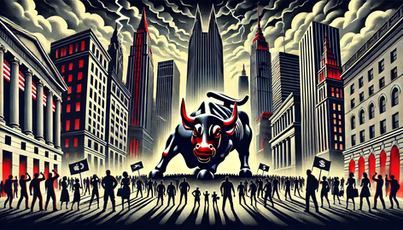
The source of current global economic turbulence is multifaceted. Despite legacy media outlets routinely trumpeting a booming domestic economy benefiting millions of Americans, a short chat with your neighbor or colleagues at work might say otherwise. The seemingly endless increase in staple commodity prices has many Americans caught between a rock and a hard place, with little to no savings for a rainy day. So the question remains, how did we get here? The answer is lengthy and to many, shrouded in tedious economic quagmires. Luckily, much of what we find ourselves scratching our heads over can be broken down into digestible segments with enough care and thoughtful effort.
The response to the 2008 financial crisis, where major banks defaulted on the back of careless financial practices, was met by two types of solutions, both starkly juxtaposed in theory and practice. In Europe, initial reductions in government expenditures (better known as ‘austerity measures’) on public services, welfare programs and public sector employment cuts combined with tax increases traded increased poverty rates and reduced economic growth for a balanced budget. Thus Europe was caught in a ‘no-growth, low-growth trap’ in the years that followed.
The U.S. took a different approach, instead opting for stimulus action called ‘quantitative easing,’ a process whereby the Federal Reserve injected an eye-watering $3.9 trillion into the economy with the aim of providing liquidity to the markets, thereby boosting a wounded American economy. Great! So money printing helped the U.S. economy and by extension, the average American recover from one of the largest financial catastrophes in recent memory, right? Not exactly. Understanding the root cause of the 2008 crash can help us make sense of where we stand today. 16 years ago, major U.S. banks single-handedly crashed the economy and proceeded to pass the tab on to the American people. Let’s take a look at exactly how this disaster unfolded.
During the 2000s, the U.S. housing market was running hotter than ever. It didn’t take much more than a pulse to guarantee you a mortgage loan on a home, regardless of whether you worked part-time at a fast food joint or major law firm. The dangers associated with the prospect of a growing housing bubble was scoffed at by most. After all, the U.S. housing market had always remained a stable asset class. People don’t default en masse on their mortgages nationwide, or at least that was the common wisdom of the day. In time, the chickens came home to roost and millions of Americans who were never qualified to take on a mortgage in the first place began to default on those loans, sending the economy into a death spiral. In short, the greed of the banks led them to risk the well-being of our economy in favor of record profits. In the wake of the crisis, many Americans lost their jobs and saw their real wages decrease on the back of inflation caused by the Federal Reserve’s decision to essentially print money in order to bail out the banks. Well, that money helped restart our economy, right? The answer is again, not exactly.
The emergency ‘easy money’ given to the banks was intended to be loaned out to businesses and Americans alike; to aid our economy. Instead, financial institutions used it to buy back company shares, boosting stock prices while working class Americans experienced little to no benefits.
So what does this have to do with our economy in 2024? The short answer is that this exact cycle repeated itself recently during the pandemic. Another massive wealth transfer from poor and middle-class Americans took place when the Federal Reserve stepped in and injected approximately $4.6 trillion into the economy. The result this time around was hardly distinguishable from the last go in 2008. Once again, unfathomable amounts of money were printed, corporations bought back the same shares they sold off at the start of the pandemic instead of investing in tangible business assets that would help restart the economy and create jobs, and stock prices rose to record highs while investors benefited. Meanwhile, the effects of rampant inflation generated by a drastic increase in the money supply continues to erode the wages and spending power of tens of millions of Americans. If one thing was made clear in recent years, it’s this: the American system is broken. Time and time again, the middle class has been dressed down for all its worth while a detached aristocracy on Wall Street continues to gamble in an apparently risk-free casino.
