

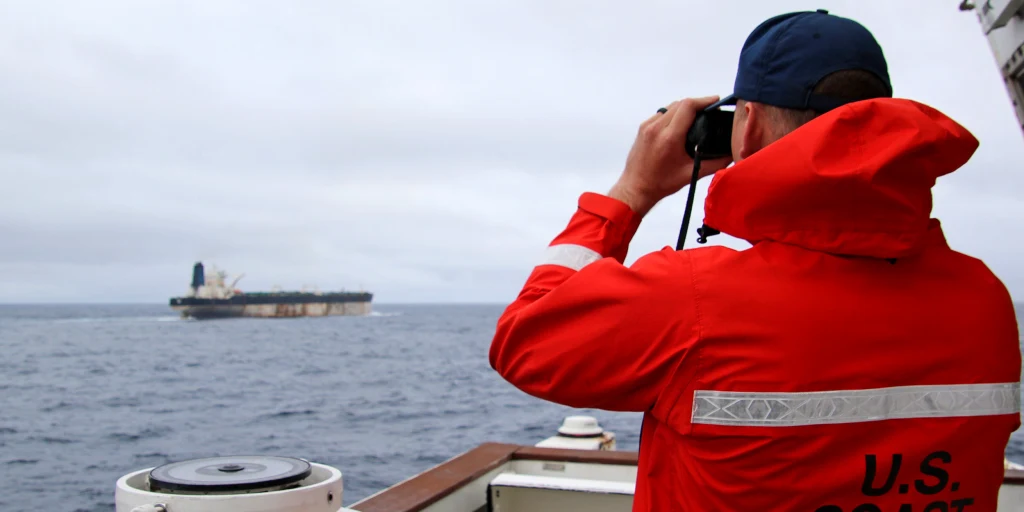
The United States has seized a Russian-flagged oil tanker tied to Venezuelan oil shipments, after tracking the ship across the Atlantic Ocean. The craft, now named the Marinera, once called the Bella 1, is believed to be connected to a “shadow fleet” used to move sanctioned oil. Officials state that the seizure is a part of a broader effort to enforce international sanctions on Venezuela’s energy sector.
What Happened
Military personnel and the U.S. Coast Guard boarded the tanker in the North Atlantic after following it for roughly two weeks from waters near Venezuela. Before the seizure, Russian officials had urged the U.S. to stop pursuing the ship. Arguing that the ship was operating legally under its national flag. The United States continued to track down the vessel despite these objections. The ship had already tried to evade U.S. interception in December, only to reappear under a new name and flag.
Alongside this, the U.S. forces also seized another tanker in the Caribbean, which was believed to be moving sanctioned Venezuelan oil.
Why This Tanker Matters
The Marinera is believed to have connections with a global network of vessels that change names, flags, and tracking signals to move sanctioned oil. This practice is called “ghost fleet”; shipping makes monitoring oil flows difficult and complicates sanction enforcement. Some vessels carrying Venezuelan oil have also been reported sailing without clear flags or safety documentation, further complicating tracking efforts. Raising questions about accountability, safety, and transparency in global energy shipping.
U.S. officials mention that these seizures are aimed at reducing illegal oil profits that are flowing to sanctioned governments. Critics warn that actions at sea may increase tensions and risk of unintended escalation. Especially when foreign-flagged ships and crews are involved.
Internal Reaction
Russia has condemned the operation, stating that the seizure is a violation of international maritime law and comparing it to piracy. Russian officials assert that this ship was legally registered and boarded in international waters.
The United States argues that the seizure is lawful under sanctions and court-issued warrants, all of which point to the tanker’s shifting identity and role in sanctioned oil transfers as justification. This story has also been covered in real time as a part of broader reporting on U.S.-Venezuela policy and global reactions.
How This Connects to U.S. Policy
The seizure is part of a bigger U.S. campaign, intending to enforce sanctions on Venezuela’s oil industry. The goal of these sanctions is to limit funding to the Venezuelan government while pursuing political change. Supporters express their concerns that they restrict illegal finance streams. Critics worry that broad sanctions can deepen economic hardships for civilians.
This operation sends a signal that the U.S. intends to enforce sanctions far past Venezuelan waters, even in an open ocean.
Why This Matters Now
This event highlights how energy trade, sanctions, and great power politics are extending onto the world’s oceans. This only raises important questions:
- How far should the government go with enforcing sanctions at sea?
- What protections should be applied to foreign-flagged commercial vessels?
- How will actions such as this affect Russia’s and the U.S. relations moving forward?
As these investigations continue and the crew’s situation is reviewed, the Marinera is becoming a symbol of the growing intersection between maritime security and global diplomacy.
Sources:
U.S. seizes Russian-flagged oil tanker linked to Venezuela after weekslong pursuit
US seizes Russian-flagged oil tanker in North Atlantic and 2nd tanker
Venezuela Updates: U.S. Forces Seize Two Tankers; Rubio Lays Out Plan for American Control
US seizes Russian-flagged tanker in Atlantic as UK confirms it gave support to operation
Russia asks US to stop pursuit of fleeing oil tanker, NY Times reports
