

On Thursday, March 26, the U.S. The Treasury Department announced plans to put President Donald Trump’s signature on new U.S. paper currency. This follows the many instances of Trump putting his name and face on cultural institutions, including the U.S. Institute of Peace, the Kennedy Center performing arts venue and a new class of battleships. Additionally, earlier in March, the U.S. Commission of Fine Arts approved a final design for a 24-karat gold commemorative coin bearing Trump’s likeness for America’s 250th birthday on July 4. The commission’s members, appointed by Trump earlier this year, voted on this design without objection.
“There is no more powerful way to recognize the historic achievements of our great country than with U.S dollar bills bearing Trump’s name,” said Treasury Secretary Scott Bessent in a statement on Thursday. Bessent’s signature is also said to be printed on new U.S. currency.
Democrats criticized the move because the announcement comes as Americans face rising grocery and gas prices. Representative Shontel Brown, D-OH, tweeted on X Thursday evening that the Treasury plan is “gross and un-American. But at least it will remind us whom to thank when we pay more for gas, goods, and groceries”.
Trump’s addition of his signature breaks a 165-year tradition. This would be the first time a sitting president’s name appears on American currency. The only signatures allowed on paper currency were those of the Secretary of the Treasury and the Treasurer of the United States. In 1866, a federal law was passed prohibiting the depiction of a living person on American currency. This was done to reinforce the idea that banknotes commemorate national heritage rather than individual political power. However, this law applies only to portraits on currency, so it’s unclear whether signatures are illegal.
Cash has generally fallen out of use since the introduction of mobile wallets, credit cards and debit cards. In 2025, cash accounted for only 7-9% of total transaction value, with mobile wallets, credit cards and debit cards accounting for 35%, 30% and 15%, respectively. Debit cards power everyday spending, while cash is used in low-dollar purchases. This data is truly telling: Trump’s signature on cash doesn’t mean as much as we think. Truly, when you pay with cash, you don’t really notice the smaller design details on the bill. You mainly see the portrait: that’s how you know how much the bill is worth. I think this is why Trump chose a signature instead of a portrait, because he could face less backlash and work around the law.
“Why does a signature on a dollar bill matter?” is something you might be asking yourself right now. Why is this matter relevant? It’s simple: It’s relevant because it’s ultimately pointless and self-serving. Americans today have to pay more every day to survive in this country. Not even live, just to survive. And every time Americans dig in their wallets for cash once these new bills are printed, they’re reminded of the person who made them use it all in the first place. All Trump has done with this move is feed his ego instead of feeding the American people, who are starving and tired. If President Trump continues to add his handprints to American history, he will only further taint it.
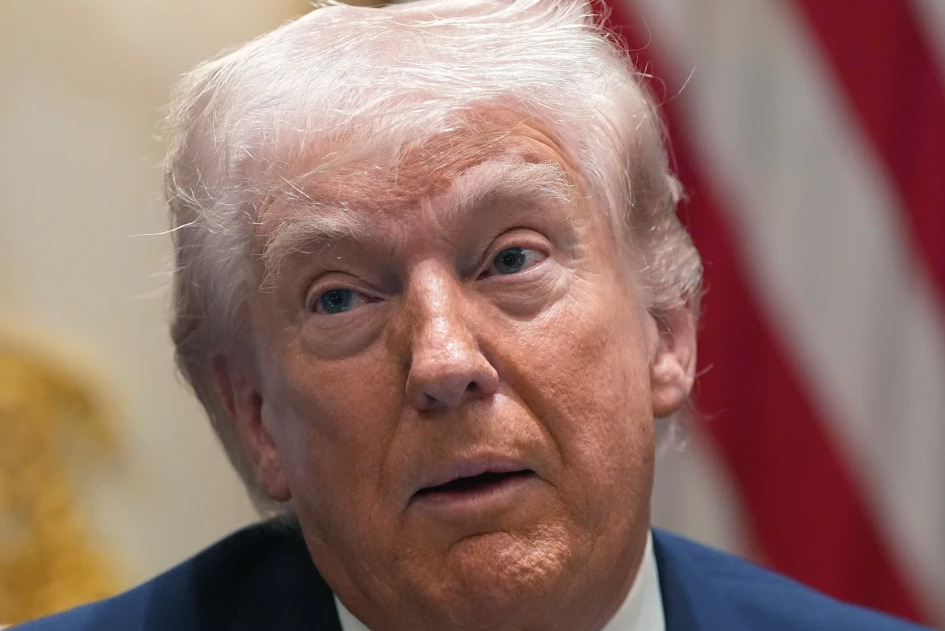
The picture accompanying this article was taken by Alex Brandon for the AP News.
Acknowledgement: The opinions expressed in this article are those of the individual author, not necessarily Our National Conversation as a whole.
