

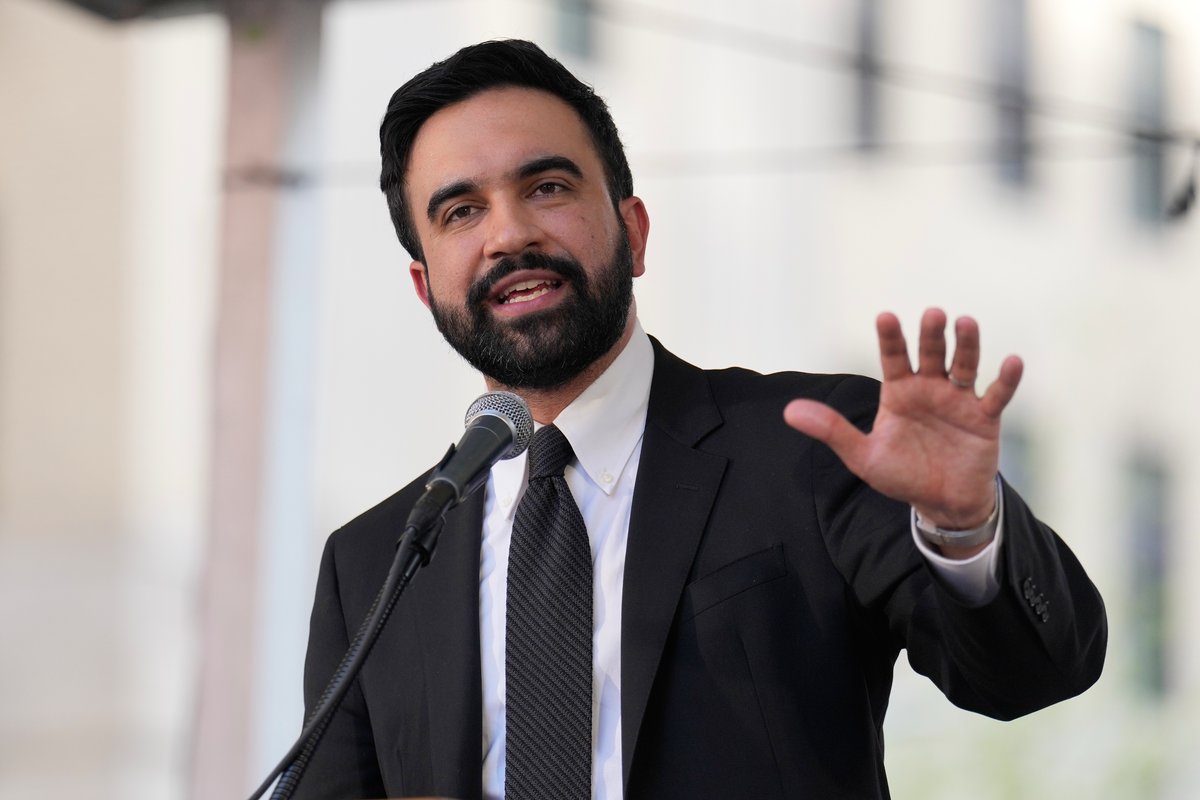
In the 21st century, society is no longer defined by kings, inherited aristocracies, or rigid class systems where wealth stays permanently concentrated in a few hands. We do not live in a world where people are forced into fixed social positions based on birth. Instead, we live in a democratic, market-driven era where economic outcomes are fluid: the child of a billionaire can lose everything, while a child born in poverty can become a global success. This fluidity is one of the defining features of modern capitalism and it is what makes opportunity powerful. Against this backdrop, Zohran Mamdani’s economic approach—where he sharply increases taxes on the wealthy—raises a deeper question: does it strengthen opportunity, or does it risk weakening the very system that allows people to rise?
Mamdani’s central argument is that taxing the rich more heavily will generate resources to support ordinary people and address inequality. On the surface, this message resonates in a city like New York where housing costs, income disparities, and living expenses remain high. However, the core issue is not whether the rich should contribute—most already do through taxes and economic activity—but whether higher and more targeted taxation of wealth creators can reliably improve long-term outcomes for everyone else. The danger, critics argue, is that redistribution alone does not generate new wealth; it only reallocates existing wealth.
The deeper flaw in this approach is the assumption that wealth is static and simply concentrated in a fixed group. In reality, wealth in America is constantly being created, lost, rebuilt, and transferred across generations. The modern economy is not a closed system of permanent elites; it is a dynamic environment shaped by entrepreneurship, risk-taking, innovation, and failure. Policy, therefore, should focus not only on redistribution, but on preserving the conditions that allow upward mobility to continue.
This is where the broader story of economic success becomes important. Many of the individuals often labeled as “wealthy elites” are not products of inherited privilege, but of dramatic upward mobility. For example, Oprah Winfrey rose from extreme poverty in rural Mississippi to build a global media empire.
This is not an isolated case: Howard Schultz grew up in Brooklyn’s public housing before transforming Starbucks into an international brand; Ralph Lauren came from a modest immigrant family in the Bronx before creating a fashion empire; Larry Ellison was adopted into a working-class household and went on to found Oracle; Kenneth Langone, the son of a plumber and a cafeteria worker, helped build Home Depot into a retail giant; David Murdock struggled financially after military service before becoming a major business leader; Alan Gerry grew up during the Great Depression before building a telecommunications empire; John Paul DeJoria was once homeless before creating Paul Mitchell and Patrón; Harold Hamm rose from the son of Oklahoma sharecroppers to build an energy fortune; J.K. Rowling went from financial hardship as a single mother to global literary success; Guy Laliberté began as a street performer before founding Cirque du Soleil. There are even more to name: Kenny Troutt, Do Won Chang, Stephen Bisciotti, Shahid Khan, George Soros, Jan Koum, Roman Abramovich, Leonardo Del Vecchio, and François Pinault. They all reflect variations of the same theme which is that wealth in modern economies is often created, not inherited.
The same pattern is visible within New York’s own economic story. Howard Schultz’s journey from Brooklyn public housing to global entrepreneurship and Jan Koum’s rise from immigrant hardship to building WhatsApp both demonstrate how the city and its broader ecosystem have historically enabled upward mobility. Kenneth Langone’s path from a blue-collar family to high finance reinforces the idea that opportunity—not origin—is the key driver of success.
It is precisely this mobility that makes the debate over taxation so consequential. Critics of aggressive tax policies argue that while the intention may be to reduce inequality, the unintended consequence could be reduced investment and slower economic growth. Business leaders have voiced concern about rhetoric that frames wealth creation negatively. Citadel CEO Ken Griffin criticized Mamdani’s messaging as hostile toward successful entrepreneurs, warning that such attitudes can influence where firms choose to invest. Others, including major financial leaders like Jamie Dimon, have cautioned that policy discussions should prioritize long-term economic competitiveness and growth rather than focusing narrowly on redistributive measures.
Supporters of higher taxation argue that the goal is fairness and social support, not punishment of success. And it is true that inequality is a real and persistent issue in modern cities. However, reducing inequality can happen in two fundamentally different ways: by lifting those at the bottom or by discouraging those at the top. History shows that cities and economies thrive most when they expand opportunity broadly rather than shrink success.
The concern, therefore, is not whether the wealthy should contribute—they already do—but whether policy will maintain the conditions that allow future entrepreneurs to emerge. New York became a global financial and cultural center precisely because it attracted investment, ambition, and talent from around the world. If the city becomes perceived as a place where success is heavily penalized, capital and talent may increasingly flow elsewhere.
Ultimately, the debate is not about protecting billionaires, but about protecting mobility. A healthy economy is not one where wealth is frozen and redistributed, but one where new wealth is constantly being created and more people have the chance to rise. Mamdani’s “tax the rich” agenda may generate political support in the short term, but the long-term challenge is ensuring that New York remains a place where the next generation of entrepreneurs, innovators, and workers can still build something from nothing. That is the foundation of the American Dream, and it is what determines whether prosperity expands—or simply gets reshuffled.
