

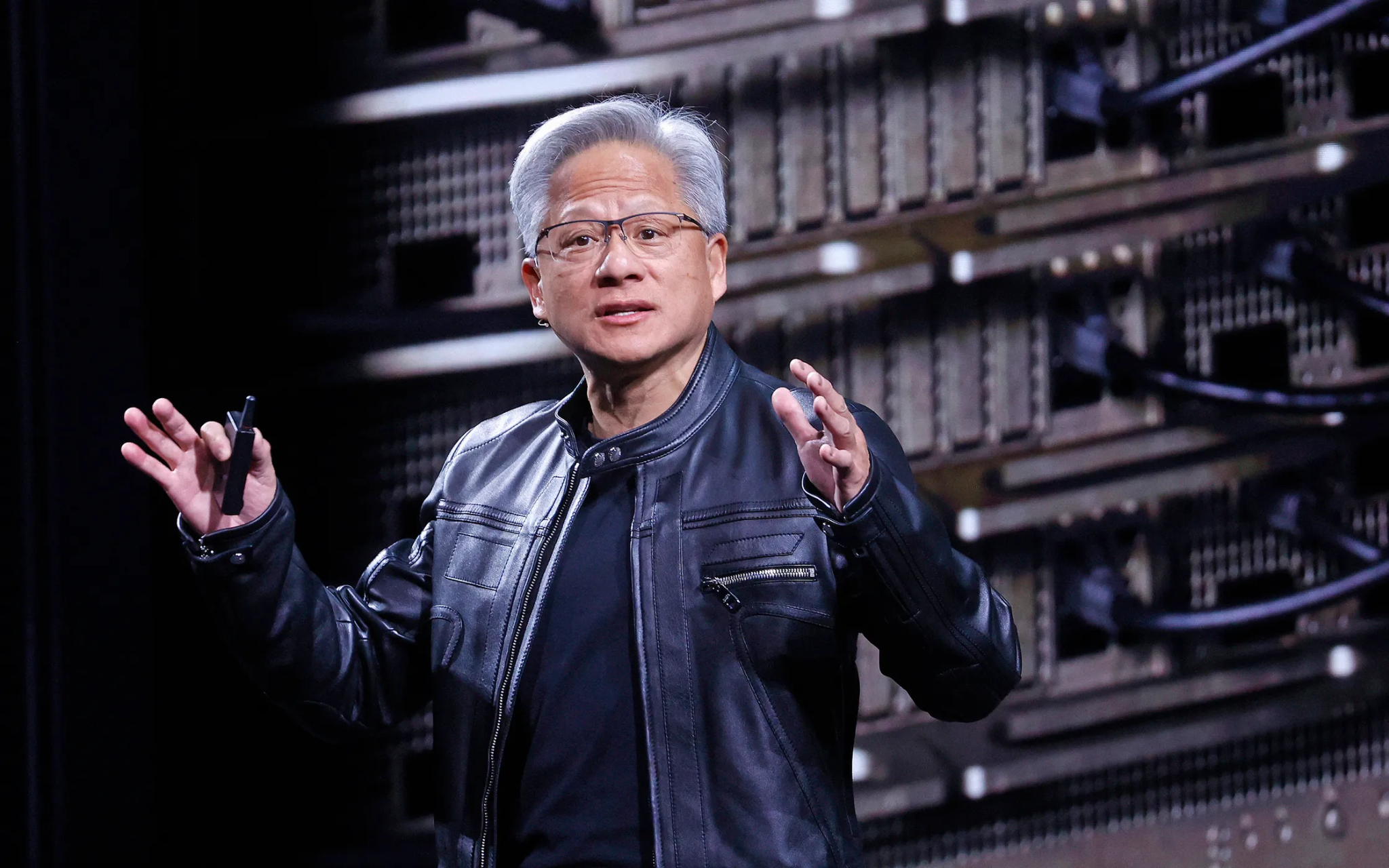
Has Jensen Huang’s 33-year reign ended? Can one of America’s most important AI companies be trusted to guard the nation’s interests when its now-former leader could not guard his own?
How Things Unraveled
On October 29th, The New York Times reported that U.S. officials believe that Alice Huang (not related to Jensen Huang) was a Chinese spy. Alice Huang, a former executive at Singapore-based Megaspeed, was placed under surveillance by officials on suspicion of smuggling Nvidia chips to China. According to information gleaned from the surveillance, she had a close relationship with Jensen Huang, the CEO of Nvidia. Megaspeed is a cloud computing provider, and Nvidia is a customer. The former is suspected of funneling advanced processors to Chinese companies through Alice Huang’s connections, though Beijing has denied that she is a spy.
On November 8, Huang wrote to his employees: “I owe my family and all of you an apology.” He admitted he “was unfaithful” to his wife. That same day, Nvidia’s board opened an independent investigation led by independent directors and outside counsel while insisting it had “no reason to believe that either national security or NVIDIA secrets were compromised.”
On November 11, the New York Times reported a second affair, this one with an Nvidia executive who reported directly to Huang. Her name is Kimberly Powell, Nvidia’s vice president of health care. The next morning, Nvidia announced that Jensen Huang had resigned as president, CEO, and board member, effective immediately. Chief Financial Officer Colette Kress became interim CEO.
The markets delivered a nosedive. Nvidia shares fell as much as 14.3 percent on the morning of the announcement before paring losses, with the company shedding almost $500 billion in value since the close of U.S. trading last week. To put this into perspective, the company’s market value dipped below $4 trillion for the first time since 2025.
The Campaign to Bring Him Back
Not everyone accepted this verdict quietly, as Jensen has his own loyal base of support. A “Stand with Jensen” open letter now has more than 196,000 signatures. Major investors weighed in as well; Elon Musk, Replit CEO Amjad Masad, Epic Games CEO Tim Sweeney, and Y Combinator CEO Garry Tan are among the signers. Altimeter Capital’s Brad Gerstner and Atreides Management’s Gavin Baker, whose firms held about $2.13 billion in Nvidia stock, urged the board to “pursue a slow, measured, and deliberate process” that leaves room for Huang’s return. Even President Trump said he “certainly wouldn’t mind” a comeback.
On the morning of Tuesday, November 17th, Huang spoke for himself. In his first public statement since resigning, Huang posted on X, stating that he was “profoundly humbled” by the support and called Nvidia “my life’s work.” He acknowledged that he “did not live up to the standards expected of everyone at NVIDIA,” admitted “serious mistakes,” and pledged to cooperate with the board’s investigation. Then came the line his supporters had been waiting for: he would be “honored” to return as CEO if the board decides that is in the best interest of shareholders, employees, the company, and America. As of Tuesday evening, that post has more than 836,000 likes on Twitter.
The board does not seem like it will budge. On Monday, November 16th, an unnamed source on Nvidia’s board told The Washington Post that the board has no plans to reinstate Huang and is focused on the independent investigation into him. That position has not changed even since Huang’s statement.
A Deeper Problem
The affair grabbed the headlines, but the real damage lies elsewhere. For years, Huang was the chip industry’s most prominent voice against tight limits on AI chip sales to China, and he pushed the Trump administration to relax some of those rules. He largely got his way. In December 2025, President Trump said he would allow Nvidia to sell its H200 chips to approved customers in China.
For more than a year, Huang also maintained there was no evidence that his chips were being diverted to China. That assurance is now far harder to accept at face value. If U.S. officials are right, the industry’s main advocate for loosening export controls to China was a target of the very country those controls are meant to slow down. If these chips are a significant aspect of how America is meant to keep its edge in the AI race with China, Jensen Huang’s conduct and relationship with Alice Huang are significant here, well beyond anything personal.
On November 11, Senators Elizabeth Warren and Chris Coons asked the Trump administration to preserve all records on Nvidia’s advanced chip exports to China. Their letter cites a report that senior policymakers were aware of intelligence that Huang was the target of a suspected Chinese intelligence operation. President Trump, for his part, said Huang told him he had “absolutely no idea” he was involved with an intelligence operative. Either way, the letter raises the harder question: what did officials know, and when, as chip policy toward China was loosening?
House Speaker Mike Johnson said there was “growing consensus in Congress on limiting chip exports to China.” Huang is also now scheduled to testify before Congress on December 1st. Warren put it plainly: Huang, Nvidia’s executives and its board “still owe Congress answers” about the company’s compliance with export controls.
The deeper problem is structural. Export controls work only if restricted chips stay with the customers licensed to receive them. If a single cloud provider could move billions of dollars worth of Nvidia chips towards China, while building a favorable relationship with the CEO of the company selling them, that has implications beyond Nvidia. Due to Nvidia’s dominant position in the market and its cutting-edge technology, the export controls to China, a rival nation to the U.S., are necessary. Any weakness in judgment from Huang, through a “honeypot” scheme, is not just a weak point in any one executive’s judgment. It is also a weak point for U.S. national security, and so the hearing on December 1st will hopefully shed more light on the issue.
Jensen Huang may have support online, but he could be in far deeper trouble if Alice Huang is not only confirmed to be a spy but if Jensen knew about it and continued with the relationship anyway.
A Founder is Not a Firewall
Nvidia’s rise is one of the great business stories of the era. Under Jensen Huang, it became the first company ever valued at $5 trillion. However, that success concentrated an enormous amount of influence in one person over a key product and a supply chain that national security officials now treat as strategic infrastructure.
It is undeniable that Huang is a popular figure on the internet and that he has supporters in the business world due to the relationships he has cultivated. But having two affairs, one with an employee reporting to him and one with a suspected Chinese spy, shows a lack of effective judgment. Huang’s defenders argue that his affair should not be a reason to kick out a CEO who made Nvidia what it is today. To a certain extent, I agree, but the issue is far greater than that. If it is true that the “Chip King” did in fact have a relationship with a Chinese spy and helped smuggle cutting-edge tech to China, then he may have also compromised America’s national security. Even if Nvidia’s board is sympathetic to Huang and sees his talent in the industry as irreplaceable, the potential legal and reputational risks that Huang faces are many and bound to plague Nvidia if he returned as CEO.
The broader question is whether one CEO should even have so much power and what regulations Congress should pursue to avoid such vulnerabilities.
That is the question worth sticking with, beyond all the noise about Jensen Huang’s “personal” failings. That being said, it remains to be seen whether Nvidia will perform at the same level without the former CEO at the helm. But to have Nvidia exist as slightly less effective than before should be a tradeoff worth paying if it is no longer compromised by Chinese intelligence assets.
As Jensen Huang testifies before Congress on December 1st, more information on his involvement or lack thereof will come to light. But there is also a question of which officials already knew about Jensen’s relationship with Alice Huang, for how long, and what they chose to do with it. If key officials in the Trump administration already suspected that Alice Huang was a spy, why did they not act sooner as export controls to China weakened?
It is also notable that this issue comes at a time when Democrats are primed to take the House and Senate in January, so I expect scrutiny to be placed not only on Nvidia but also on how the Trump administration has handled the situation.
The test now is whether Washington and Silicon Valley treat these last few weeks as a scandal to move past or as a warning to act on. And if the latter is chosen, what safeguards will be in place to avoid such issues in the future?
Acknowledgement: The opinions expressed in this article are those of the individual author, not necessarily Our National Conversation as a whole.