

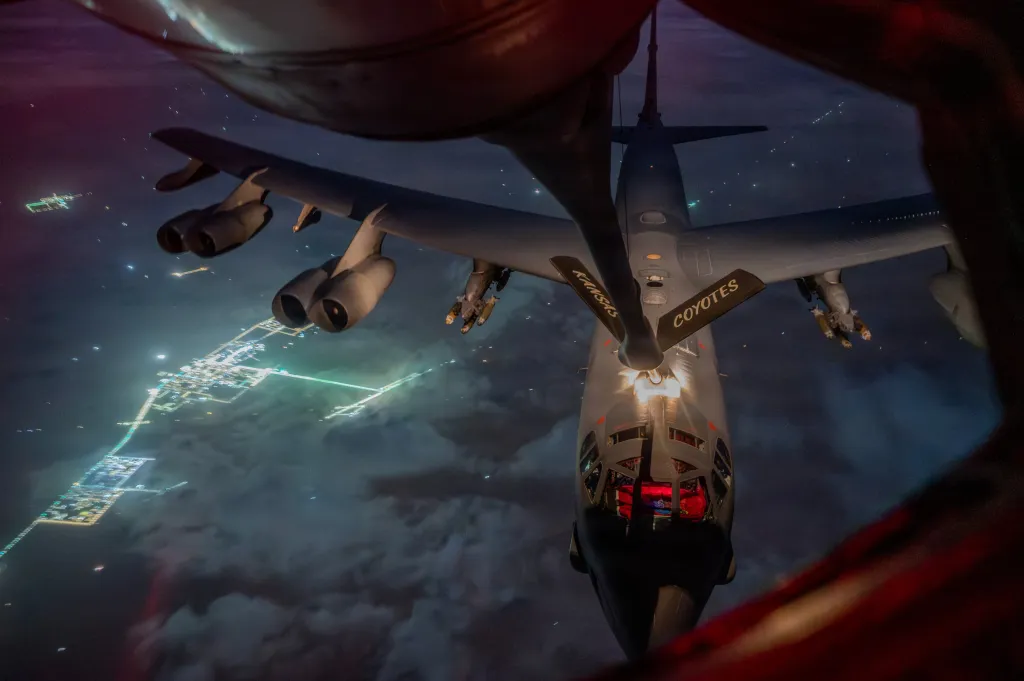
In a landmark escalation, the United States Air Force has flown B-52 Stratofortress bombers directly over Iranian territory for the first time. This action highlights America’s increasing air superiority as Operation Epic Fury enters its fifth week, during which U.S. and Israeli forces have targeted thousands of locations, including missile production sites, launch bases, and IRGC (Islamic Revolutionary Guard Corps) infrastructure.
It is crucial that the war comes to a swift conclusion. Recent polls indicate that a majority of Americans—approximately 55-64%—disapprove of President Trump’s handling of the conflict and the initial decision to strike Iran, reflecting sharp partisan divisions.
However, the stakes remain high. The Iranian regime has a long history of sponsoring proxy terrorism through groups such as Hezbollah, the Houthis, and various militias, posing direct threats to American interests and allies. It is essential to disrupt Iran’s ability to finance and direct these networks for the sake of long-term U.S. and regional security. The current pause in major energy strikes reflects efforts to minimize civilian casualties and keep diplomatic channels open, even as Iran rejects ceasefire proposals.
Critics have pointed out delays and have criticized Trump while downplaying Iranian losses, which are estimated to be in the thousands, including both military and civilian casualties. When Trump previously pursued negotiations, opponents accused the U.S. of showing weakness. Current reports suggest that Iran is slowing its missile and drone operations as U.S. forces maintain dominance in the airspace.
Regardless of partisan criticism, regime change in Iran—whether through internal collapse or decisive military pressure—remains the clearest path to lasting peace. A government that emerges post-regime is likely to abandon the slogans of “Death to America” and “Death to Israel,” which could end state-sponsored terrorism and nuclear ambitions that have destabilized the Middle East for decades.
The coming days are being described as critical. Ending the threat posed by the current regime is not just a strategic imperative; it is essential for American safety and regional stability.
