
It is easy to see capitalism as natural to humanity. The system seems so ordinary that hierarchy, ownership and competition look less like enforced societal conditions and more like the natural architecture of life. We work, we rent, we borrow and we compete our way through systems we rarely control. This mechanism is all too familiar to human civilization, and shares an eerie resemblance to capitalism’s predecessor.
America’s present crisis is not only capitalist, but also Neo-feudal.
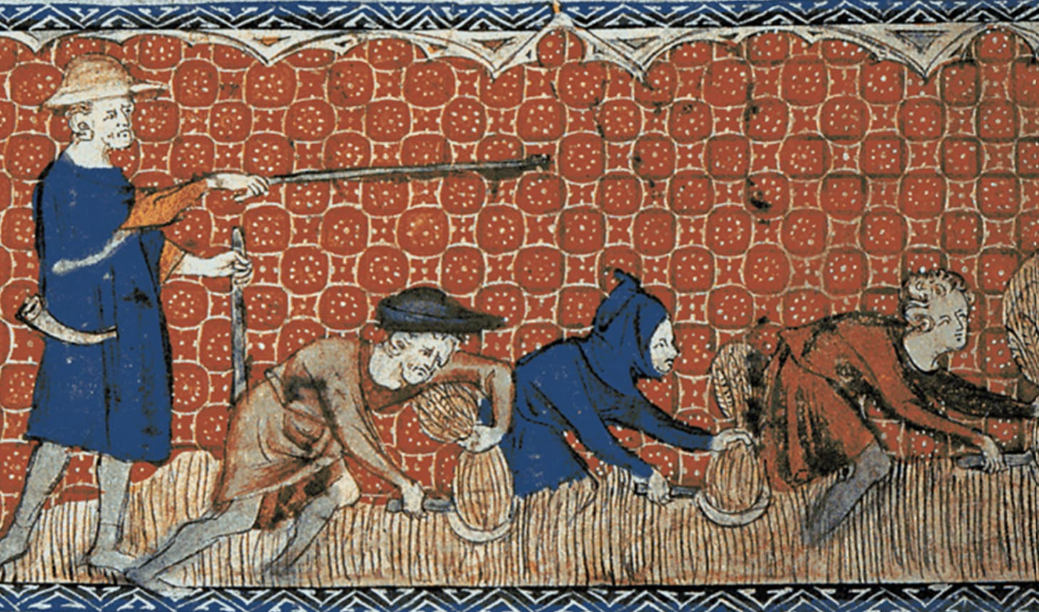
Feudalism refers to a social and political structure that is built around land, hierarchy and obligation. Power was not concentrated as it is today, but spread throughout lords and estates. Those beneath, peasants and serfs, were not simply poor; they were practically owned by their superiors. Their humanity was bound to the land in which they worked, with their labour being traded for food and survival. Feudalism was not just an economic system; it was a way of cementing class into unescapable conditions. Neo-feudalism does not signify the return to medieval Europe. It refers to the reemergence of feudal-like conditions within modern contexts under capitalism, where citizens are forced to navigate concentrated power, stagnant class mobility and a life organised through dependency. It is not the death of American democracy, but rather a slow migration to what once was.
While it may be a stretch to imagine that feudalism will return as the dominant social mechanism, it is not difficult to see why the comparison can be drawn so closely with modern America. The United States is not becoming feudal because it has left capitalism behind; rather, the conditions of living are producing new forms of dependence that are strikingly similar to feudalism. Public authority is weakening due to political fragmentation and economic crises, while the private sector continues to prosper and even builds further wealth from the class disparity. Citizens remain formally free, but more of daily life is increasingly governed by corporations, landlords and digital platforms that all contribute to the restriction of true freedom.
This contradiction is not new. Keidrick Roy’s work on “racial feudalism” highlights that America has carried feudal shadows within its democratic discourse for a long time. Dartmouth’s discussion of Roy’s American Dark Age discusses how while American thinkers rejected the feudal hierarchies spreading across Europe, slavery sustained anti-liberal relations at home. Black abolitionists understood this contradiction and used words like “feudalism” and “serfdom” to name the republic that promised freedom while preserving racial hierarchies.
Cullen Murphy’s Atlantic essay, “Feudalism is Our Future”, captures this shift into modern privatisation. He argues that these feudal-like conditions become visible when governance, laws, rights and wealth are channelled unequally and decentralised into private hands. Brookings notes that before Trump’s second term, there were roughly twice as many people employed by private contractors to carry out federal government activities than there were federal employees.DOGE and the Trump administration pushed to prioritise running government business through private avenues, including proposals around federal buildings, the post service and foreign aid. This is of paramount danger because democracy depends on equality and accountability. But when public work is funnelled through private chains of contractors, those two things become harder to trace.
This represents one of Neo-feudalism’s most dangerous qualities:where the state rules not through open coercion but through obscure tactics that do not serve public interest. It rules through diffusion, where power is fragmented into pieces, distributed to private bodies and protected by contracts, incentives and complete opacity. A democracy cannot survive on mantras of freedom alone. It requires public power that is visible and genuinely shared by everyone. When power is dissected into concentrated hands and private actors, democracy is compromised. Neo-feudalism refers to a country that still uses discourse coherent with democracy while surrendering more of democratic life to private rule.