

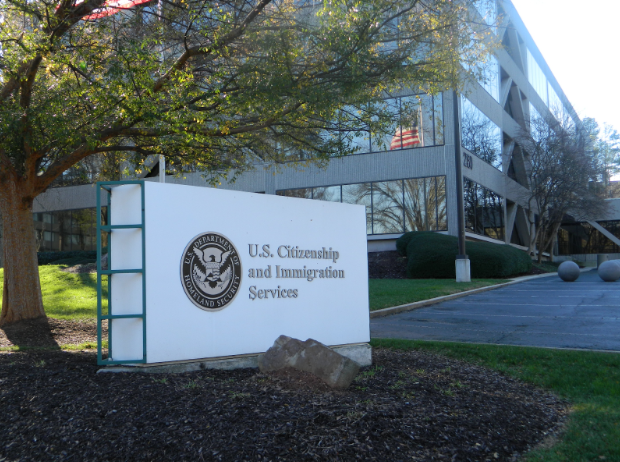
Supporters of the Democratic party are constantly calling for updates to our constitution, including abolishing the Electoral College, adding the Equal Rights Amendment, and especially reconsidering the Second Amendment. They argue that because the constitution is such an old document, the ideas written in it decades or centuries ago are not suited for our modern world due to changes in technology, cultural shifts, and national interests. Perhaps no portion of the law of the land fits that description as well as the Fourteenth Amendment. Currently the Supreme Court is evaluating whether the amendment’s “Citizenship Clause” nullifies Trump’s executive order to require an American born child’s parents to have legal immigration status if said child is to be granted American citizenship.
From Reconstruction to the Roaring 20’s
The 1857 Dred Scott vs. Sanford decision by the Supreme Court that ruled black people, enslaved or not, were not entitled to American citizenship ultimately provoked much outrage among abolitionists in Northern states. Therefore, as part of reconstruction, this amendment was implemented mainly to ensure that the large population of freed slaves would be full citizens. And although this included children of noncitizen immigrants born in the United States, immigration to the United States occurred in a vastly different context in the mid 19th century. From the 1850s to 1870s, the dominant immigrant groups were from culturally similar Northern European countries, such as Ireland and Germany, which meant America’s culture and demographics would not be radically altered during this time. Furthermore, the welfare state funded by massive taxes on income and profits did not exist back then, so immigrants and even their descendants would not come to America if they could not find jobs to support themselves. Even then, immigration restrictions were later implemented in the 1920s, in response to an influx of immigrants from less culturally similar countries such as Italy and Poland, as well as concerns over wage suppression of native-born Americans that resulted from said influx.
Immigration Within Our Lifetimes
But ever since 1965, immigration to America became much less restrictive due to the Hart Celler Act. From the late 20th century to today, a great majority of immigrants have not even come from European countries that were targeted under 1924’s quotas. Instead, they have originated largely from Latin America, East Asia, and South Asia, whose cultures, institutions, and economic development contrast much more with that of the United States. Furthermore, much of this migration has not even been legal, and disproportionate amounts of these migrant populations and their descendants are dependent on taxpayer-subsidized benefits, such as food stamps and Medicaid. This is especially visible among migrants from non-Western countries, such as Somalia and Afghanistan, whose differences in culture produce vastly different institutions and affluence. As a result, America’s economic and demographic future are rapidly changing to accommodate this new population, at the cost of hundreds of billions of taxpayer dollars annually. Furthermore, many of these countries’ human rights records show a lack of respect for freedoms that we in the west take for granted. In China, even suspected political dissent is met with violent crackdowns and surveillance. Many countries in Africa and Middle East have abysmal protections for women against gender based violence, and sentence people to death for being gay. And in India, child marriage is the norm for tens of millions of boys and girls. Perhaps the cultures of the main source countries of our modern immigration are not compatible with those of the West. But with mass unfiltered migration that is currently occurring, it is only more likely that American values will end up under threat in their own country.
A Matter of National Security
This wave of immigration is magnified by the hundreds of thousands of children born in the United States each year to unauthorized or temporary-status parents. Due to chain migration and family sponsorship laws, when these children become adults, it is possible for them to not only stay in or return to the United States indefinitely, but also to bring their parents, siblings, and spouses. And if they are also citizens of hostile countries, such as China and Russia, it would not be hard for said countries to threaten our national security simply by sending them to the United States. To preserve our liberties, security, and economic affluence, we must ask: Would John Bingham still have proposed the same 14th Amendment after living in America today?
Acknowledgement: The opinions expressed in this article are those of the individual author, not necessarily Our National Conversation as a whole.