
In the age of abundant information, where consumers can shop for information that confirms their biases, how is speech regulated, if at all?
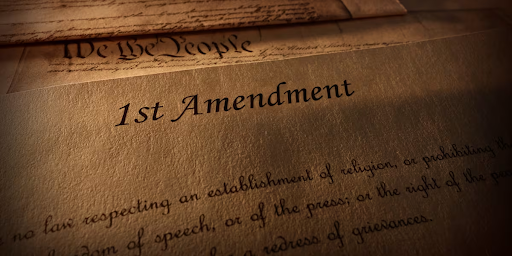
In the United States, we have the 1st Amendment, which states the following:
“Congress shall make no law respecting an establishment of religion, or prohibiting the free exercise thereof; or abridging the freedom of speech, or of the press; or the right of the people peaceably to assemble, and to petition the Government for a redress of grievances.”
Essentially, the Constitution prohibits the government from making certain forms of speech illegal. If Congress were to pass a law that makes it illegal for me to criticise the government, that law would be struck down by the courts because it is unconstitutional. In essence, speech is protected by our founding document, making it very difficult to regulate in the U.S.
There are consequences that come from this level of freedom. Namely, in a world of misinformation and disinformation, people with large platforms can spread information that can have harmful effects. If a company is marketing a health product to a large audience, but it neglects to mention some of the negative side effects, that could create harm. If the audience buys these products without being informed of the harms it could pose, then effectively the advertisers have contributed to their harm via speech.
Purposeful uses of information to mislead audiences can have a variety of impacts. If I sell you a car that is cheap and seemingly works well, but I neglect to mention that the brakes are faulty and need repair, that is a form of deception by omission. But that sleight of hand is enough to put a customer in danger of a car crash, should they not address the faulty brakes on time.
But this is why, even with the near absolute nature of the 1st Amendment, there are some limitations. In the landmark 1985 case of Zauderer v. Office of Disciplinary Counsel of the Supreme Court of Ohio, the U.S. Supreme Court decided that “commercial speech, such as attorney advertising, is protected under the First Amendment, provided it is not false or misleading. Restrictions are permissible only if they serve a substantial governmental interest and are narrowly tailored to advance that interest”.
This means that an advertiser’s speech is protected under the 1st Amendment, unless the speech is false or misleading, and that laws to restrict this form of speech serve a narrowly defined “government interest”. To go back to the car salesman example, if a state or federal law established regulations that required him or her to disclose information about faulty brakes and other safety issues with a car they are selling, that law would not be struck down by the courts. Put simply, a seller is not protected under the 1st Amendment in this narrow example, when providing false information, especially where the restriction on speech is narrow and is connected to “government interest”, or public welfare as defined by the government.
Courts evaluating restrictions on commercial speech apply a four-part test, called the Central Hudson test, which was applied in Zauderer:
1. The speech must concern lawful activity and not be misleading.
2. The asserted governmental interest must be substantial.
3. The regulation must directly advance the governmental interest.
4. The regulation must not be more extensive than necessary.
On point 1, speech that is factual cannot be regulated and is protected under the 1st Amendment. If the speech is misleading, then it may be regulated depending on other factors.
On point 2, the government’s interest in regulating speech must be “substantial”, which means the government must prove that its interest in regulating the speech is about protecting the welfare of the people in a way that is significant. If misleading speech exists, but you cannot prove a significant harm from it, then this speech cannot be regulated.
On point 3, after proving that the speech is both misleading and can cause significant harm, the government has to prove that the regulation in question actually does advance the government’s interest in reducing this harm. So, with the car salesman example, if we prove that the salesman’s ad is misleading, and that his lack of disclosure of safety issues causes significant harm to consumers, then the government’s regulation on that ad has to actually address that.
On point 4, any regulation on speech to address a harm must be narrowly tailored. So if the government makes a law to force car salesmen to disclose safety issues in their ads, the government cannot then also ban car salesmen from marketing their cars. It is one thing to require that the ads disclose safety issues, and it is another to ban the ads altogether. One approach is narrow and tailored, which is allowed, and the other approach is broad and not protected by the Constitution.
What does this all mean? It means that freedom of speech, even in the U.S., where we enjoy the 1st Amendment, has its limits. The government can, and often does, limit speech under narrowly tailored rules to protect public welfare. The question that remains, however, is whether these exceptions to free speech are good enough to protect our safety and well-being. The internet, for example, is a space of abundant information, where the harms of misinformation can run amok. Yet, choosing to regulate it further can open a new can of worms, opening up the precedent for restricting more speech. As with all things, balance is necessary.
That balance between security and freedom remains an age-old question.
Acknowledgement: The opinions expressed in this article are those of the individual author, not necessarily Our National Conversation as a whole