

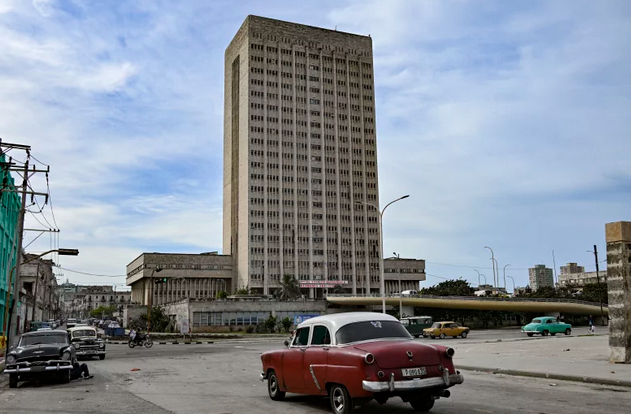
A recent article written by Juan Forero and Ryan Dubé for the Wall Street Journal has brought attention to the deteriorating quality of life in the Republic of Cuba, which is evidently about to be exacerbated due to the U.S. seizure of Venezuelan oil.
However, the situation in Cuba does not, in my opinion, appear to have gained the attention it perhaps deserves from the American mainstream media. Going off my own memory, which I acknowledge is not wholly accurate, I cannot recall cable news channels such as CNN or Fox News reporting on the declining living conditions in Cuba since 2020.
The humanitarian disaster in Cuba has been going on since 2020, when its economy significantly contracted due to the effects of the COVID-19 pandemic, and has since been dealing with power outages, food shortages, public protests, and reports of repressive police action. The extreme poverty and spread of preventable diseases due to the failures of public sanitation efforts have caused a quarter of the Cuban population to emigrate from the country since 2020.
However, the Cuban government’s response to its people’s dissatisfaction has been more focused on subduing protests than on addressing concerns. On November 15, 2021, police officers prevented people who wished to protest from leaving their homes and organized citizens into brigades against potential protestors, armed with clubs and, according to Amnesty International, if their source for this claim is a Twitter video that can no longer be found, baseball bats.
The Cuban government is openly using repressive tactics, such as the restriction of internet usage, to silence discontent and calls for reform, using time, money, and resources that could have been spent on addressing the causes of the discontent. This behavior of focusing more on keeping officials in power has only been exacerbated by the U.S. seizure of Venezuelan oil. Cuban security agents now have Venezuelan President Nicolás Maduro ensconced in an effort to ensure that he is not forced out of office.
I can understand the rationale behind the decision to protect the Bolivarian Republic of Venezuela from regime change, as Cuba needs Venezuelan oil for electricity, which preserves food from spoiling and keeps facilities such as schools and hospitals running. I do not condone the repressive actions taken by the Cuban and Venezuelan governments against their own people who are suffering from humanitarian emergencies. My sympathy is for the ‘average’ person in these two countries, not the governments, as I believe corruption and inaction have manufactured the decline in quality of life.
However, I contend that the U.S. is also partially responsible, as the reduction in food imports in both Cuba and Venezuela can be attributed to U.S. embargos. Venezuela has been in an economic crisis since the price of oil, its primary export, decreased in 2014, resulting in the government being unable to fund many of the social programs that it once had, yet the sanctions remained in place, creating obstacles toward addressing the crisis.
The narcotics present aboard the oil tankers can be attributed to the unfortunate reality that criminal behavior is one of the only ways that people can make money within Venezuela since its economic downturn began. Ostensibly, the collapse of both communist regimes would be a boon to Cubans and Venezuelans.
Still, I am less concerned with the pressures being put on ‘enemy’ governments, and more concerned with the daily realities of their people. I purport that if the U.S.’s current administration were serious about combating drug trafficking, mass migration, and improving the circumstances of those suffering under unjust regimes, it would have put aside differences in ideology and either sent relief funds or lifted the embargoes.
However, the U.S.’s recent actions in the Caribbean suggest there is no interest in helping these countries rebuild. The U.S.’s seizure of Venezuelan oil has the potential to not only increase human suffering in Cuba, but also exacerbate the U.S’s crises with illegal immigration and drug trafficking, as well as negatively impact the well-being of the average American person.
