

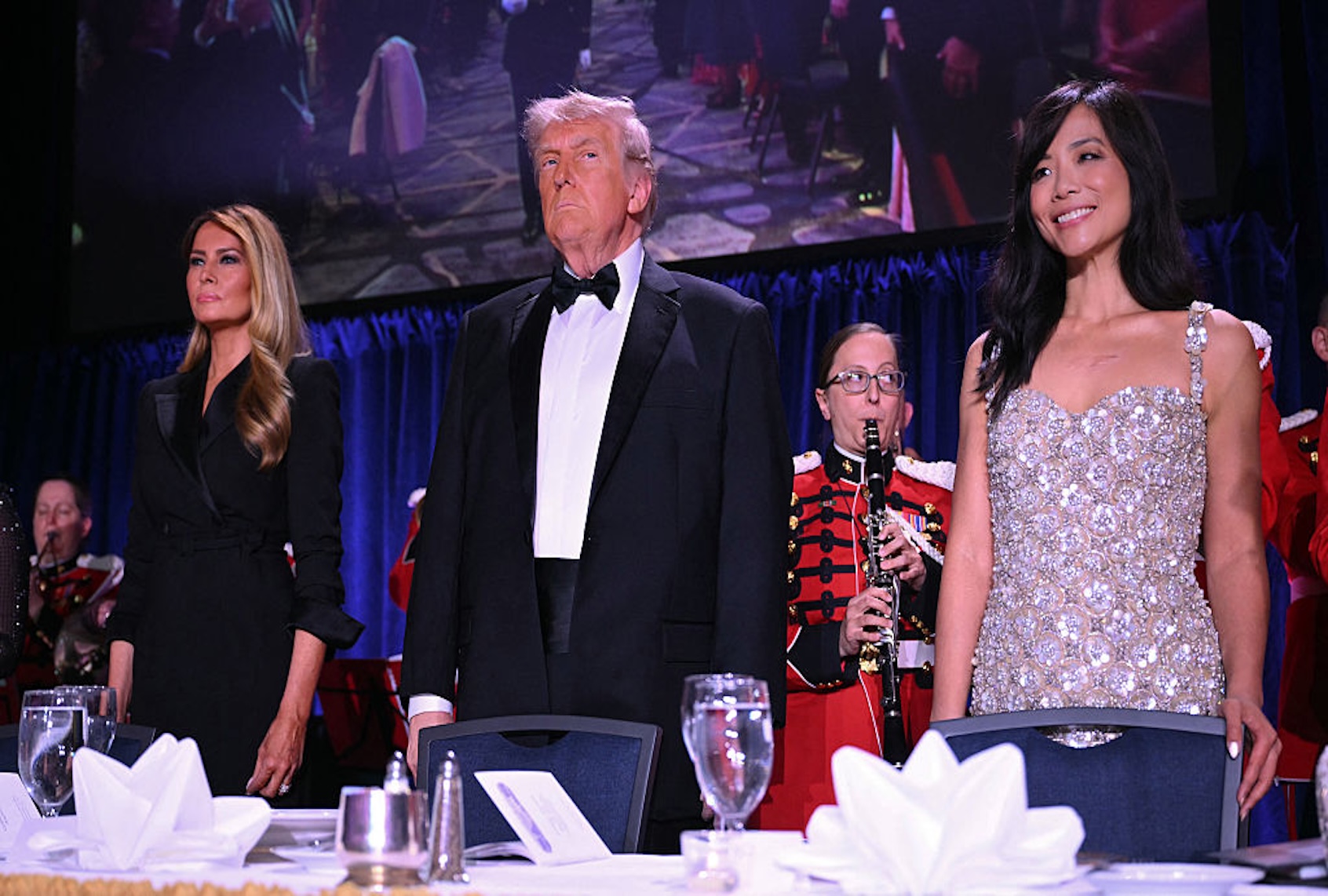
Prior to his assassination attempt on President Donald Trump, the suspect of the incident at last Saturday’s White House Correspondents’ Dinner wrote a letter (or a manifesto) to his loved ones and the nation explaining his actions. In his letter, he wrote his justification for what he was about to do, listed who he would target, and responded to hypothetical objections.
The last part is interesting because, from what the suspect writes, he appears to have been expecting criticism from Christians. The suspect himself is a Christian: based on his letter and other reports, we know that he attends and serves at his local church. His letter utilizes Christian principles to justify his actions from last Saturday.
Some have called the suspect “sick” or deranged. I do not disagree that the potential outcome would have been horrible if the suspect were successful. However, I do not think we should label him “sick.” Based on his letter, he actually appears to be in his right mind. He is presenting arguments in a logical progression and even listed an informal “rules of engagement.”
However, those with good intentions can still commit evil. And, those who are rational can still be wrong. History is full of tragic examples of both these ideas. In this article, I would like to engage with the suspect’s arguments and show that he is a misguided individual.
The suspect: “Turning the other cheek when *someone else* is oppressed is not Christian behavior; it is complicity in the oppressor’s crimes.”
Here, the suspect is responding to an anticipated argument that, as a Christian, he should “turn the other cheek.”
First, I want to generally agree with him. That verse is misused by both Christians and non-Christians alike. Christians (and all humans made in the image of God) have a duty to seek justice for the oppressed. They are not to turn a blind eye to someone else’s suffering; that is not what turning the other cheek is about. It is about enduring shame and insults that others throw at you; indeed, by turning the other cheek, you would have been opening yourself to a backhanded slap which, in Jesus’ time, was one of the most common ways to physically insult someone.
However, when Jesus said those very words (“turn the other cheek”), he was speaking during a time when the Roman Empire had conquered Judea (his and his neighbors’ homeland) and were mistreating the people there. We may say many things about the actions of the Trump Administration against certain groups of people, but in Christ’s time, there was an empire subjugating Christ’s fellow people. If Christ called upon his fellow Judeans—who had little to no rights under the Roman Empire—to refrain from violent, revolutionary tactics, then what would he say to us Americans who have political rights and methods to influence our leaders through civil engagement?
And yet, Christ not only taught others to “turn the other cheek” but also approached the oppressors with grace. For example, he interacted with tax collectors, such as Matthew (who became a Gospel writer) and Zacchaeus, despite their reputation for the unjust siphoning of extra money out of their neighbors. He also invited Simon the Zealot (the Zealots were a group of Judeans who sought to violently overthrow the Roman government) to follow him, and though we do not have much information about Simon, it is hard to imagine that Jesus would have wanted him to continue his potentially violent lifestyle.
To be clear, Jesus positioned himself against injustice and evil. He did not—and does not—advocate for a complacent status quo. I argue that, in a fallen world, sometimes violence is an option to fight evil. However, I would ask: is violence Christ’s first option? Christians do profess that Jesus will come again to “judge the living and the dead” and destroy all evil. But, the first time he came, he first approached the world—with all of its evil and injustice—with extended hands that were later nailed upon a cross for sinners.
We Americans should not resort to violence as our immediate option, even if we think the President is oppressive or evil. If you disagree with what the President does, as I often do, you should first exercise the right to speak your opinions, advocate for the oppressed, and vote for representatives that you think will enact just laws.
The suspect: “The United States of America are ruled by the law, not by any one or several people. In so far as representatives and judges do not follow the law, no one is required to yield them anything so unlawfully ordered.”
Here, the suspect is responding to someone hypothetically bringing up what Jesus said: “Yield unto Caesar what is Caesar’s.” In essence, he is responding to the idea that Christians should just submit to the state.
Once again, I generally agree with the suspect as this is a paraphrase of a Bible verse that is commonly discussed out of context. What Christ said concerning Caesar was not a blanket statement for Christians to support the government in all cases. And yes, America is ruled by the law and the Constitution, not by the whims of leaders.
But, we are still called to obey moral laws, which includes the law against murdering others. I understand that the suspect justified his attempted actions by calling Trump a pedophile, rapist, and traitor. Those are serious accusations. However, they are still only allegations as of yet. One may have an opinion on how likely it is that Trump is any of those things, but there has been no court of law that has convicted him. To those who think that my words are incredulous, do we not say that people are innocent before proven guilty? Rumors and hearsay do not count as evidence.
Even if those accusations were true, that does not justify vigilante violence. There is a reason that we have established courts and processes to convict criminals. Those processes are not perfect, but neither are humans with guns running on heated emotions. That isn’t to say that rage is a bad thing (we should be enraged at what we perceive to be evil), but rage can cloud our decision-making, which is why we construct legal frameworks to deal with criminals.
To call on the conduct of Dr. Martin Luther King Jr., a Christian minister: he did disobey laws that he deemed unjust—laws about segregation or policies that tried to prevent him and his followers from peacefully protesting for equal rights. Despite his calls to disobey unjust laws, not once did he advocate for or enact political violence against politicians—even those that supported segregation and discrimination.
Yes, Christians may not have to follow unjust laws that go against conscience. But that does not mean they get to disobey moral ones.
A Better Way
Instead of resorting to violence to achieve political change, we should take advantage of the better methods that are given to us. We have our voices and votes as well as the ability to peacefully protest and petition. There is an alarmingly growing number of Americans who think that such methods are not enough to fix America’s problems. Such a mindset shows impatience with democratic institutions, which are meant to be slow and frustrating. The best way to prevent the abuse of power is to make it difficult to wield. Both Trump and his opponents must realize that.
For Christians, they ought to think of the better way: love. Love is not merely sentimental. Love can also mean seeking the welfare and good of others, even if you have negative feelings towards them. It means a willingness to work with people you dislike. This is why the Apostle Paul calls for Christians to pray “for kings and all who are in authority.” Christians were called to pray for the “kings” despite the fact that the Roman government committed all matters of injustices in their day. Paul calls on Christians to do this so that they and their neighbors (Christian or not) may be able to live peaceful lives.
We need peace, not heated rhetoric, especially during these turbulent times. Instead of shooting politicians and trying to justify such actions, Christians—like the suspect—ought to pray and engage in civic processes as citizens. We are called to make good changes by being good neighbors, not revolutionaries.