

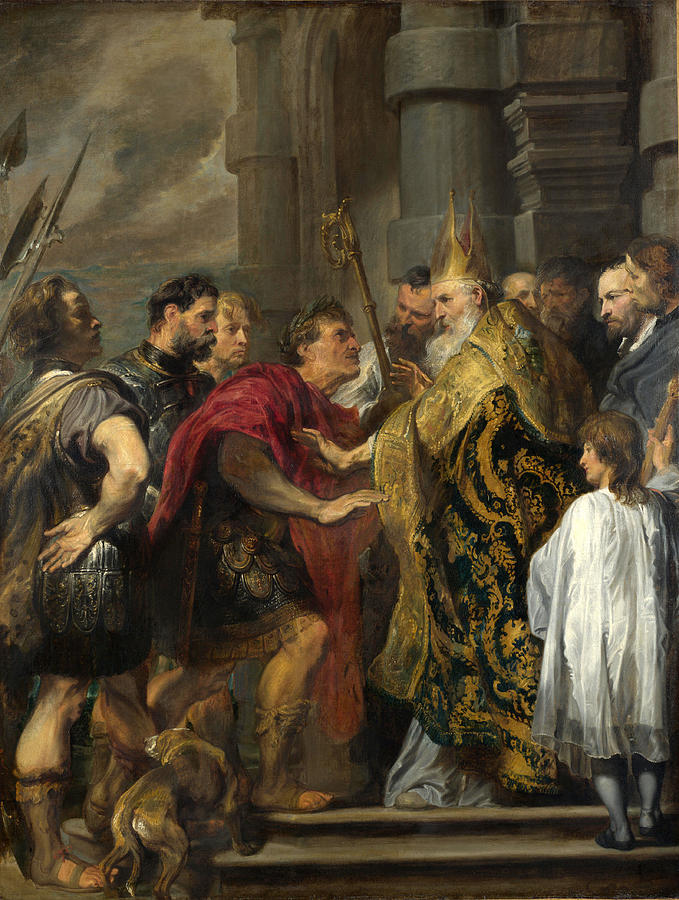
Many Americans strongly believe in the separation of church and state. It is an important principle that the government should not dictate or interfere in an individual’s religious conscience. However, many misunderstand the principle to mean that the Church cannot engage with the government.
However, it is the duty of the Church to influence the world, including the world’s political leaders, with the Gospel of Christ. Such influence also involves criticism. Christian history has a long tradition of the Church standing against what is unjust and profane behavior. For example, Ambrose, Bishop of Milan, barred Emperor Theodosius I from Communion after a massacre of Roman citizens in the city of Thessalonica. Ambrose demanded that Theodosius repent; the emperor complied, appearing at church without his imperial robes as a sign of penitence.
Political leaders, such as President Donald Trump, should not be surprised to face backlash from Christian leaders and Christian populations for extreme speech or blasphemous behavior. Furthermore, Christians who want to defend certain political leaders should recognize that even leaders that are sympathetic to Christianity can, and should, be criticized.