

Blaming Western countries and civilization for the world’s tragedies and inequalities is common among progressives on virtually every issue, and environmental protection is no exception. The United States and countries in the European Union are widely criticized for their high ecological footprints and greenhouse gas emissions but the methodologies used to calculate their environmental damages are likely severely flawed. This becomes apparent when they are compared to many non-Western countries, whose cultural norms have led to massive pollution, environmental destruction, and inefficient resource usage that plague their lands’ sustainability. The governments’ reluctance to encourage their citizens to become more environmentally conscious implies that these patterns are not the result of European colonialism, no matter how much leftists use it as a scapegoat.
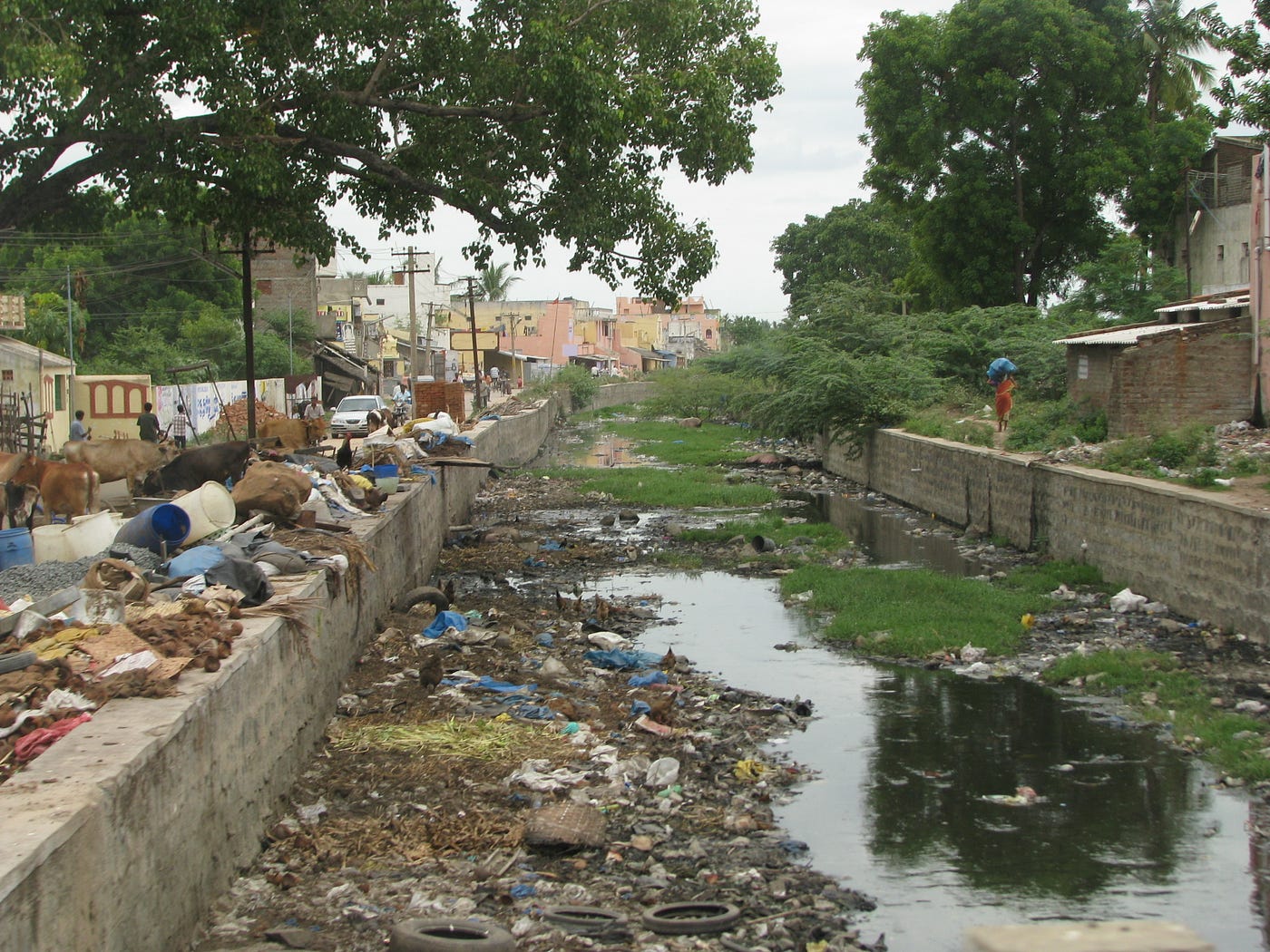
A simple visit to India shatters the anti-Western narrative. Indian rivers have been filled with trash and sewage due to local manufacturers’ dumping their waste without regard for those that rely on those same water sources. In addition, despite India’s per capita waste generation being magnitudes lower than that of western countries, its lack of sanitation facilities and failure to enforce laws on waste removal have resulted in landfills of plastic waste that line streets throughout most of its cities. Climate activists regularly scrutinize the use of natural gas or coal-powered plants for electricity generation in the United States, but the air pollution generated from those is miniscule per energy unit in comparison to power generators widely used in Indian households. This is widely due to catalytic reduction and desulfurization processes required by American law on power plants, which successfully controls air pollution in the United States. In contrast, Indian cities’ air regularly ranks among the most polluted in the world due to generators that lack these filtration processes, costing Indians billions of dollars each year in healthcare. Yet environmentalists are strangely silent on urging India to become more sustainable.
Capitalism is often blamed for environmental catastrophes, despite the tendency of many high-performing countries on the Index of Economic Freedom to have strict regulations on asbestos, carbon taxes, pesticide use, and nuclear power plant safety. In contrast, the communist USSR was responsible for the destruction of the Aral Sea, some of the world’s most polluted mining towns, and the Chernobyl Nuclear Disaster. Despite the Chinese Communist Party’s strong grip over the national economy, it has failed to control smog and air pollution from the rapid industrialization that has occurred in the 21st century. In addition to these pollutions, two communist states suffered from major famines. were exporting vast quantities of grain while tens of millions starved to death. When the behaviors tolerated by these countries are ignored by climate activists, the question rises: Is their movement more about sustaining the planet for our descendants, or tearing down Western civilization and capitalism, which have produced the most affluent and environmentally conscious countries in human history?
1 Comment
Hi Edward, this is an interesting article regarding the Global South’s impact on climate change. I am wondering, given the recent Nepal flood, the Nepali government is arguing that their emissions do not match those of Western nations, and thus the West is morally liable for the melting of the glacier and the flood which killed more than 1300 people.
Do you think this argument is valid, and complicates your analysis, or do you think Nepal’s framing here is equally as incorrect as the climate activists you are critiquing here.
Curious to know your thoughts!