

Charter Schools have been growing rapidly in some states. But what does this mean for their students? Wikimedia Commons

American education has been on the decline for the past decade. Across all subjects, school districts are reporting that test scores have been in a state of free fall for years—before and after the COVID-19 pandemic. The vast majority of Americans are dissatisfied with our current educational system despite massive public spending per K-12 student. Clearly, the problem is not a lack of funding, but rather where that funding is going. Traditional public schools have long dominated education nationwide, but charter schools are an alternative that are rapidly growing in popularity.
Charter schools, like public schools, receive funding entirely via taxpayers rather than tuition fees. But in contrast, charter schools have far more autonomy over their administration and curricula for students. As they operate independently from the public school districts of their area, they are instead governed by contracts between themselves and local or state governments, allowing them to set customized learning standards and methods. As a result, charter schools often specialize in specific subjects, from STEM to vocational training, which offers a clear career path for students that show a strong interest in said subjects, rather than forcing them to devote equal effort to subjects that will be irrelevant to their careers. Also, charter schools are usually more receptive to input from parents and local community members, often integrating them into their boards of directors, such as in states like Illinois.
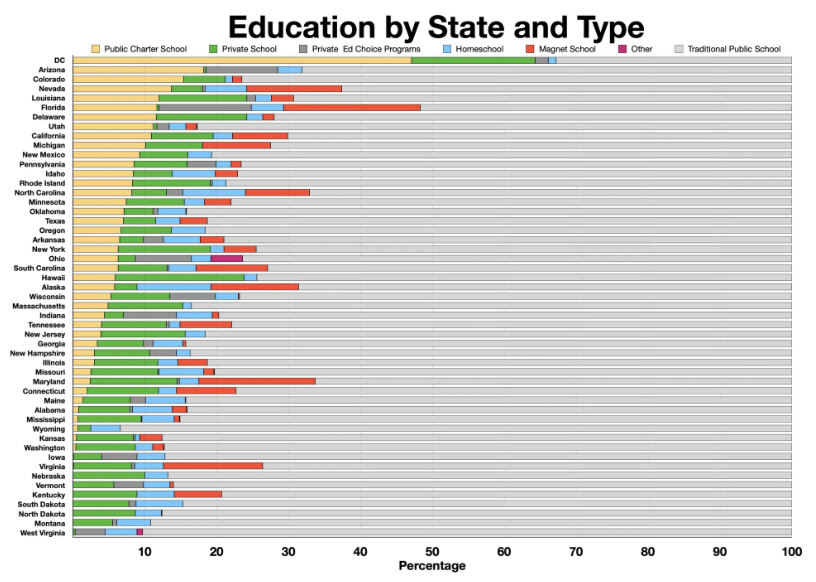
Although far from perfect, charter schools have shown promising success in the past decade for their students, if following specific models. For example, they have had the most positive impact upon students from impoverished urban communities and minority backgrounds. In California’s major urban centers like Los Angeles County, they regularly rank among the best in the state, and perform even better when adjusting for the economic background of their students’ families. According to the Center for Research on Education Outcomes, their students accumulate six and sixteen extra days worth of math and reading education, respectively, per year more than their public school counterparts. And although for-profit charter schools (i.e. those in Michigan championed by former Education Secretary Betsy DeVos) have seen questionable progress, areas that force them to be non-profit, such as the District of Columbia, have seen rapid improvements in their students’ success. As of 2026, roughly twice as many American students attend charter schools compared to a decade before. If these success stories continue to come about, they could pose a competition to public schools to keep them in check.