

On Wednesday, September 30th 2026, the last of the remaining US military personnel stationed in Iraq withdrew from the country, making it the official end of the US military’s operations there. After more than two decades of American involvement, thousands of deaths, and a 13-figure price tag, we must ask:
Was the cost of the Iraq war justified by what it ultimately accomplished?
The Human Cost
The Iraq war represented a catastrophic toll on human life. Not only have US forces lost an estimated 4,432 in this conflict, there have also been 9.2 million Iraqis internally or externally displaced. The fatality count of Iraqi civilians and soldiers is at an estimated 300,000 but some estimates cite it higher at up to 601,027.
These numbers are more than statistics. These were human beings that were family members, friends, and colleagues. These wrongful deaths and displacements are a testament to the negligence of the United States and Coalition forces in handling another country’s citizens and communities with care.
There were also approximately 31,994 US soldiers wounded in the conflict, leaving thousands of soldiers with permanent injuries and without limbs. A great portion of the financial cost of the war is represented by the cost projections of their future medical care.
The Finances
Not only did the war extract a severe human toll, it also required a consequentially large amount of US taxpayer money to fund, at an estimated $2.89 trillion cost to the United States.
Most do not comprehend the magnitude of this figure, especially as it relates to what the United States could have used this large sum on alternatively. That figure could’ve paid the estimated $220 billion in medical debt 13 times over and the $1.8 trillion held up in student loan debt.
The United States government has seen these vast domestic problems and chosen to continue involvement in other Middle Eastern countries like Syria and Afghanistan, while American citizens struggle with their daily lives and expenses.
And while these financial hardships occurred, companies like Haliburton and KBR were treated to no-bid oil contracts for Iraq’s then recently vacant and damaged oil fields. US Vice President, Dick Cheney, was formerly the CEO of Haliburton prior to the Vice Presidency, and these contracts prompted the start of an FBI investigation into the contracts.
Political Instability and Long-Term Consequences
Perhaps the most damning result of this massive expenditure of human life and capital are the ripple effects of overthrowing Iraq’s government and disbanding their military.
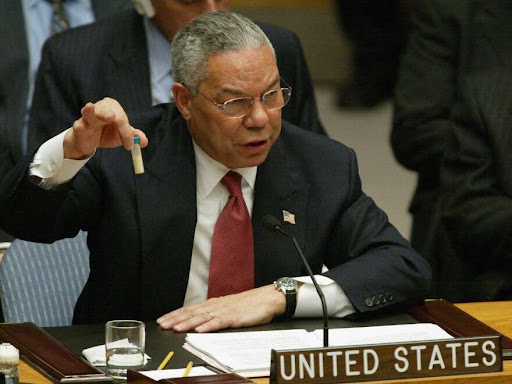
Saddam Hussein was Iraq’s President from 1979 until US forces took control of the Iraqi capital, Baghdad, which led to his subsequent capture by coalition forces in 2003. Saddam was falsely alleged to have connections to terror groups like Al-Qaeda.
The previously acknowledged displaced people of Iraq included many people from skilled professions such as doctors, who fled in large numbers after war came to the country. The mass casualties, coupled with the shortage of medical personnel, devastated Iraq’s medical sector. This disparity still continues into the current decade.
The power vacuum left by Saddam’s overthrow gave way for an Islamist government to proclaim control and gain power. This made it more difficult for both Iraqi civilians and US forces to operate in the country safely, as Iraq was practically turned into an anarchist state.
The Verdict
Can we truly say there was any benefit to such activities? In the eyes of most rational people, the answer is no.
The United States has decimated the Middle East to an extent where nearly all other operating countries, with the exception of Israel, have in some way condemned US foreign policy and diplomacy over the years following involvement in Iraq.
This conflict, coupled with the Afghanistan War, led to the United States becoming comfortable with a more long term presence in the Middle East and North Africa. This led to the beginning of US involvement in Syria in 2011, where US forces helped to destabilize and eventually overthrow another leader, Bashar Al-Assad in 2024. US forces also chose to intervene in Libya in 2011, overthrowing Prime Minister Muammar Gaddafi in a violent bloodbath.
The United States clearly is not richer, safer, or happier as a result of US tarnishment in Iraq. Subsequent involvement in other countries such as Syria and Libya, has only deepened an already exhausted US obligation to spending more American taxpayer dollars rebuilding countries that our forces destroy.
To truly achieve a safer, more prosperous United States, the federal government must direct our best and absolute efforts towards our own domestic hardships and problems.
Acknowledgement: The opinions expressed in this article are those of the individual author, not necessarily Our National Conversation as a whole.
1 Comment
Hi Theodore. Well, let’s not forget ISIS and their surge in 2014 which forced U.S. troops back into conflict in Iraq and the Middle East. I feel U.S. involvement in war is necessary because it helps keeps our borders safe from terrorist attacks.