

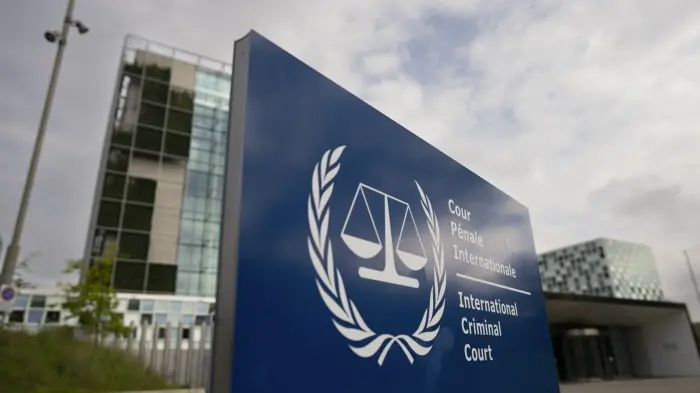
Russian President Vladimir Putin was welcomed into Mongolia this past month with open arms. This decision stands at odds with Mongolia’s membership in the International Criminal Court (ICC). ICC member states are obligated to detain those who have been accused of war crimes by the court. However, Mongolia took no action to detain Putin for his alleged war crimes. This decision by Mongolia has again called into question the authority of the ICC, and moreover, its ability to deal with international crime.

The ICC was founded with the goal of obtaining justice for victims of heinous crimes such as genocide, crimes against humanity, war crimes and aggression. Many members of the ICC, like Mongolia, have signed and ratified the Rome Statute, meaning they have obligations to the court and its rulings. When these crimes occur, the ICC has the power to issue warrants for the alleged perpetrators.
Member states are obligated to detain those who have had a warrant issued against them by the ICC. Despite this obligation to the ICC, however, Putin was not detained in Mongolia and still remains free.
Lack of tangible enforcement
One of the biggest weaknesses of the ICC is its dependence on the voluntary cooperation of its member states in order to detain accused criminals. The organization itself has no policing or military body to execute its warrants.
Without their own executive authority, any ruling made by the court can be jeopardized by the inaction of a single member nation. Without any mechanisms to reliably enforce or uphold the decisions of the court, the authority of the ICC can be challenged. The overall lack of tangible enforcement underscores the ICC’s weakness and is a major flaw in the organization’s structure.
Non-membership of Key States
The world’s three leading powers are not members of the ICC. The US, Russia and China have not signed the Rome Statute and currently have no plans to do so. The absence of these powers further calls into question the efficacy of the ICC. The US, in particular, is a power that could help establish a sense of authority for the ICC, and its absence speaks volumes to the apparent lack of strength of the court.
The absence of the US from the ICC might be due to its own concerns over potential court action against its citizens. In 2019, the US warned that they would revoke visas for any ICC staff member involved in the investigation of US citizens. These words of intimidation followed news that ICC was possibly investigating US citizens in Afghanistan, specifically on alleged acts of torture and abuse towards Afghan detainees.
The ICC has also been asked by two Uighur activist groups to investigate China’s crimes against humanity and genocide towards the Uighur population.
The two groups who brought the case against Beijing to the ICC are the East Turkistan Government in Exile and the East Turkistan National Awakening Movement. They claimed that China had committed acts of genocide by capturing Uighurs, forcibly indoctrinating them with culturally suppressive campaigns and sterilizing them to dilute the group’s identity. Unfortunately, the ICC cannot proceed with a case due to insufficient evidence that these acts were performed outside of Chinese territory, since China is not an ICC member. The court lacks jurisdiction to act against anything within the country’s borders.
Russia was an original member of the ICC but they ultimately decided to withdraw from the court. A representative spoke on their behalf, claiming that they “hoped that the ICC will become an important factor in consolidating the rule of law and stability in international relations. Unfortunately, to [their] mind, this did not happen.”
With prominent political powers absent from the organization, some of the world’s worst criminals remain free from accountability and persecution.
Implications
Without any enforcement mechanisms or major powers as members, the ICC struggles with legitimacy and often fails to deliver justice on a global scale. Justice cannot be trusted to be served voluntarily. For the ICC to become a powerful institution that can remain true to its mission, it needs authority to keep states accountable and major powers as members to establish legitimacy. Without this, the ICC will remain underpowered to create lasting change and continue to allow notorious criminals to run free.
Acknowledgement: The opinions expressed in this article are those of the individual author.
