

It is really no secret that America’s infrastructure leaves much to be desired. Public transit options are limited across the country, and the ones that are available are often outdated and not very well maintained. America is simply not building, or maintaining on the scale that a nation of its caliber should be. In fact, Americans lose around $275 a month due to infrastructure inaction.
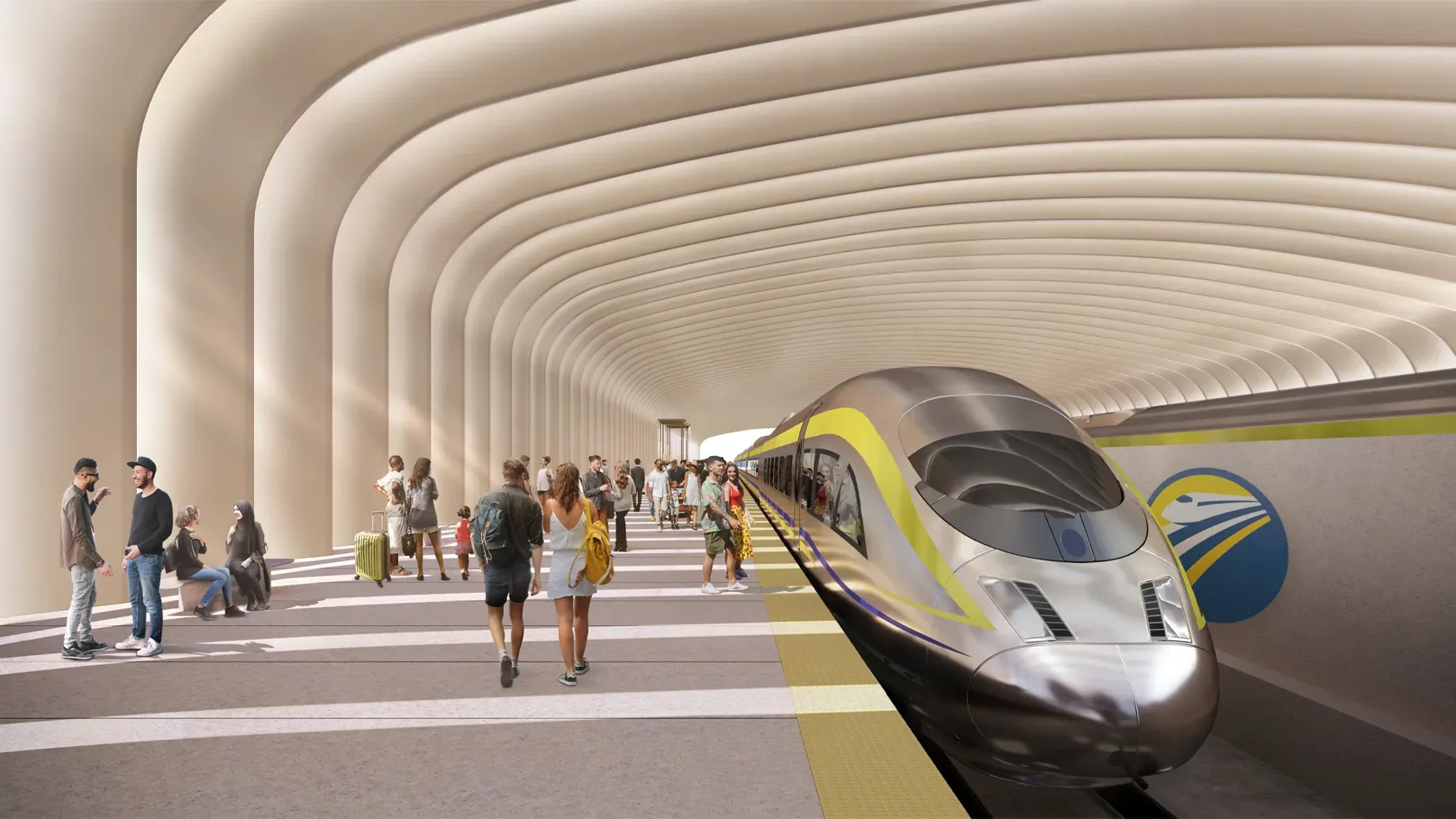
California High Speed Rail (CAHSR) has been one of the most anticipated construction projects in the nation. While it was approved in 2008, giving 9.95 billion dollars of funding to build an 800 mile network by the year 2020, there currently isn’t a single mile of operational track, and estimates predict that the entire project will take over $100 billion. What should have been a monumental accomplishment for both the state of California and the United States as a whole, has become an embarrassment and a massive failure.
Two years ago, in March of 2024, the Francis Key Scott Bridge in Baltimore Maryland collapsed after being struck by a container ship. As of now, the rebuild plan hasn’t even been finished. But America wasn’t always this slow at building great things. From 1930-1931, the Empire State Building was constructed in only 13 months. Despite America being a much wealthier and more powerful nation now than it was 80 years ago, we are unable to build at that same speed.
The United States has also struggled to deliver things like clean water access. Flint, Michigan was famouslysupplied lead-contaminated water from the Flint River, andalso failed to sufficiently disinfect the water of fecal bacteria. It took until 2025 to complete the pipe replacement in Flint. Around 2.2 million Americans do not have access to clean and reliable drinking and wastewater systems.
Across the world, other countries continue to outclass us in terms of infrastructure. The Chinese city of Chengdu had only one line in its rapid transit system in 2010, but as of 2026, it now has seventeen operational lines. China as a whole has been able to lay 50,000 kilometers of track since its first line opened in 2008, and plans to have 70,000 kilometers down by 2035. This dwarfs the United States, which currently has no high speed rail. The train systems that we do have are ridden with issues that other countries do not have. Amtrak for instance, often has delays that can take hours and can often be even pricier than flying. Compare that to Japan’s Shinkansen system, where trains are so punctual that they must leave within 15 seconds of the scheduled time to be “on time”.
While politics is currently centered around identity politics, partisan divides, and global conflicts, we have lost track of the fact that our country is degrading before our eyes. We should not settle for crumbling infrastructure, and second-tier cities. America’s cities, systems, and structures should be the best in the world, and reflect the greatness of our nation and its people.
Acknowledgement: The opinions expressed in this article are those of the individual author, not necessarily Our National Conversation as a whole.

2 Comments
Alexa, thank you for bringing up this issue. As a Californian, I am saddened by how the infrastructure projects in this state have resulted in lots of waste. The thing is, I actually love the idea of fast, efficient, and beautiful public transport. Hopefully there can be a bigger focus (state-wide and nation-wide) into creating great infrastructure systems.
Thank you Jason, I totally agree!