
Ever since I first saw Tom Hanks in Forrest Gump, I fell in love with history. Unfortunately, as a woman-of-color, history has only ever been a space of erasure for “mystory.”
If history in academia is to truly be the narrative of time, we must expand—yes, buzz word of the century expand—the narrative beyond white perspectives, white legacy, and “theirstory.”
In high school U.S. History, I learned of the 1992 L.A Riots. However, I quickly learned that my preconceptions of what actually catalyzed the riots were not true. This uproar against police brutality, turned-uproar, was also a resistance against institutionalized race wars. At its root the protest was also a result of the 1991 shooting of Latasha Harlins by Soon Ja Du, a store owner.
If Latasha Harlins was 1. defenselessly murdered, 2. by a deadly weapon, and 3. a victim of Du who was found “guilty of manslaughter” by a jury of Harlins’ and Du’s peers. . .
Then why does our society prioritize anthropological, sociological, psychological, historical, scientific, and technical information for the sake of asserting loose constructs over detailed, historical facts?
Not only this, but by the time I was exposed to urban history spanning the 1920s through the 1970s, I realized our nation has altered cultural diversity into cultural alienation. Common verbiage used to describe this era of urban history, like “ghettos,” “lower-class,” or “maintaining the ‘homogenous’ nature of the U.S. population,” has added onto this realization for me. Despite the proposal of a “melting pot population,” in reality, our nation only furthers a white, Christian, Eurocentric, upper-class, male-oriented narrative.
This form of systemic erasure against minority races is why violence is catalyzed, as seen in 1992. This ongoing “race war” was a fight for the Black body, not Black domination. Not even Black power, just Black lives and our right to exist—and matter.
Unfortunately, even in university, I still felt like I was in the margins because cultural coursework is always an “optional elective.” Even within core curriculums, our story and role in history is told from a context of suppression and/or oppression.
Thankfully, as an English Literary Studies major, I was immersed in social discourse from an academia perspective. My professor and mentor, Dr. Burton, allowed me to understand reform and social justice instead of experiencing it alone. Essentially, my professors encouraged me to think about communities outside of my own.
By reconfiguring my understanding of history as human history instead of biography, my historian mindset from primary and secondary education was rewired. To learn about all perspectives is to ensure that no one’s story is erased again.
For any form of social justice concerning the quality of life for minorities, it must start with our engagement, what we promote politically, and what knowledge we pass onto the next generation. However, if we manipulate and erase historical narratives, our nation cannot achieve social reform.
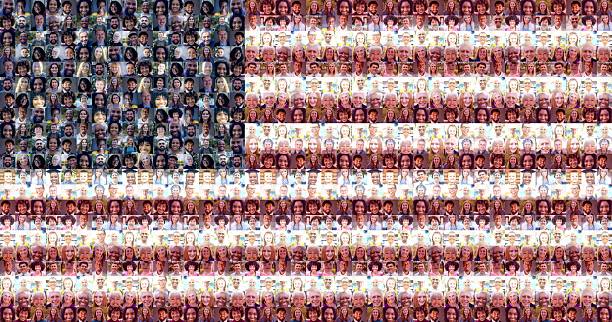
History is our mosaic that can be beautifully told. Because the story never truly has a beginning or an end, a living archive saves space for every narration, not just the narrator, so we must begin to tell the story.