
The case against foreign aid has a reasonable premise: to the public, the money is difficult to track, and the outcomes are even more challenging to measure. In a country rife with political division and economic inequality, wherein the middle class is struggling to afford a comfortable life, taxpayers are rightfully skeptical of tens of billions of dollars going towards foreign projects.
That money could be used here at home to fix roads, build affordable housing, and invest more in underfunded communities. Why invest abroad when we have so many issues right here in America?
The short answer is America does not live on an island, and our international investments are a driving force of American prosperity today. Foreign aid, if done correctly, is America first.
What Was USAID, & What Happened To It?
The U.S. Agency for International Development (USAID) was founded in 1961, which “served as the lead international humanitarian and development arm of the U.S. government” (Congressional Research Service, 2025). This agency was created under President John F. Kennedy to combat Soviet influence abroad during the Cold War, using strategic generosity to gain influence around the world.
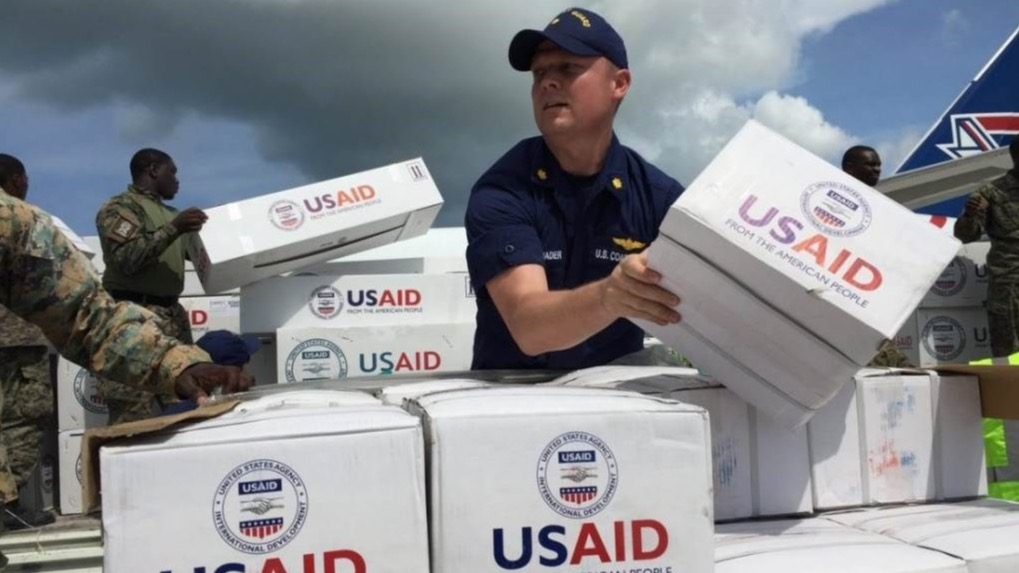
USAID was a pivotal tool to deliver humanitarian relief, fostering democratic institutions, and strengthening alliances that underpin U.S. global leadership. In 2024, USAID provided aid to approximately 130 countries, with a total appropriation of $35 billion for that fiscal year (approximately 0.7 percent of the federal budget).
However, during the Trump Administration, the USAID has been largely gutted. As of July, 2025, the Secretary of State, Marco Rubio, announced that 83% USAID foreign assistance programs are cancelled, while remaining programs would be subsumed under the Department of State.
The Trump Administration’s targeting of USAID comes from his view that U.S. foreign aid does not align with American interests and that money spent on it represents government waste. By targeting this agency, Trump is signalling to his supporters that he supports removing fiscal waste and that he is putting America first.
But does the signal match reality, or is there a more nuanced picture?
The Three Powers of American Power – Defense, Diplomacy, & Development.
To understand USAID’s role, we must first understand how America maintains global power. The U.S. has a 3 D’s approach to international relations, consisting of the following:
1. Defense (Administered by the Department of Defense)
2. Diplomacy (Administered by the Department of State)
3. Development (Administered by the USAID)
USAID primarily addresses this third prong of international engagement, but each prong is useful. Soldiers enforce American power under the Department of Defense, diplomats engage with allies and adversaries alike under the Department of State, and aid workers provide institutional support to developing countries under the USAID.
Contrary to the views of critics, development is not based on random charity; the “aid” in USAID serves to buy America the goodwill it needs to establish better business relations, impart cultural influence, and stop deadly health epidemics from spreading and eventually affecting Americans.
USAID is not really a humanitarian project, but rather an arm of American soft power. What does this mean in practice, however?
USAID Is An Investment Device, Not A Charity.
What critics miss about framing foreign aid as a “giveaway” is that when developing countries receive U.S. investments through the USAID, that money comes back to America in the form of new benefits.
USAID Improved Trade Access With Developing Countries
A 2013 report from the World Trade Organization (WTO) found that “an increase in aid for trade of 10 percent (or about USD 1 billion) would increase exports of developing countries by about USD 9 billion in recent years” (WTO, 2023, pg. 154). Thus, when America invests in building export infrastructure in Africa, for example, it leads to money coming back to us in the form of cheaper exports, and in some cases, a new market for American producers to sell to.
We see this most distinctly with the African Growth and Opportunity Act (AGOA), where the USAID worked with other agencies to develop trade hubs in sub-Saharan Africa. As a result, U.S trade in goods with sub-Saharan Africa increased from $24 billion to $49.9 billion between 2001 and 2022. To break it down further, U.S. exports to the region increased from $6 billion to $18.5 billion, and U.S. imports increased from $17.9 billion to $31.4 billion in that 21-year period. Thus, through the USAID, the long-term benefit was that not only were American consumers able to access 1800 more goods at a cheaper rate, but American businesses also gained a new market in 40 African countries.
USAID Was A Vital Resource For American Farmers
As Gary Wertish, president of the Minnesota Farmers’ Union, put it regarding the USAID cuts, “It definitely does make a difference. Because we produce more within the state than we can consume. So, we do need to export, and this is another one of the markets that we’re able to export around the globe through the USAID program” (MPR, 2025). By gutting USAID so abruptly, the Trump Administration has weakened the access to global markets that farmers like Wertish rely on. And by doing this, farmers will have to find other ways to raise revenues, like raising prices, making it more expensive to feed American families. And vice versa, if USAID were still intact, farmers could use that to export more food, generate income, and afford to lower prices.
USAID Weakened Terror Links
In the Sahel region of Africa, USAID investments helped curb terrorist group recruitment by helping communities deal with climate hazards and food shortages. If you help feed vulnerable families in unstable regions, terrorist organizations like Boko Haram have less financial leverage to recruit new members. If young men are starving, with no support, and terrorists hand them guns while promising food and financial support, it’s not so easy to refuse if the alternative is starving to death. A world where civilians in these regions are supported, even minimally, can go a long way to reduce the leverage terrorist recruiters have. Furthermore, broader research shows that governance and civil society aid reduces the incidence of terrorist attacks: a $10 million increase in such assistance reduces terrorist incidents by approximately 1.6 percent, and a $60 million increase reduces it by 9.6 percent (Savun and Tirone, pg. 12). Therefore, foreign investment is a meaningful tool for America to keep its enemies weak.
The Un-Strategic Retreat
To the uninitiated, USAID may seem like a simple charity organization that America can no longer afford. The word “aid” in USAID has created a branding issue: Americans see the organization merely as a foreign aid agency, and President Trump has exploited that. But USAID is not merely an organization that provides aid. It is an agency that provides strategic investments in America’s interests, while seeming generous to its benefactors.
With the shutdown of USAID, American businesses lose access to the trade hubs it has built over decades. American consumers face higher prices as the global supply chains that USAID helped establish and maintain begin to weaken. American farmers lose export markets that they rely on for their income, the same farmers who help feed Americans. Americans are less safe, as terror organizations can recruit from unstable regions that USAID was keeping from collapsing. And while this all goes on, China sees an opportunity, gaining influence and prosperity that America chose to surrender.
Foreign aid was never just about being generous; it was intentional and served American interests. But now, America has lost its third arm, and we will all feel its absence.
Acknowledgement: The opinions expressed in this article are those of the individual author, not necessarily Our National Conversation as a whole.
2 Comments
VS, this is a good explanation of the current state of affairs. I doubt we’ll ever go back to the way things were, even post-Trump. It’s all just too politically unpopular, with many agreeing much of the money spent on USAID was wasted (of course, the same could be said for many of our domestic programs). Is there a viable way forward to engage in overseas development that Republicans and Democrats could agree on?
Thanks for the thoughtful comment, Jeff.
I first want to add that foreign assistance itself is not unpopular, as Americans vastly overestimate the amount spent on US foreign aid. Americans believe that at least 20 percent of the budget goes to foreign aid, when the actual amount is 1 percent. When they are asked what amount is ideal, Democrats say 10 percent and Republicans say 5 percent, still way above the budget from even before the gutting of USAID. (Source: https://publicconsultation.org/foreign-aid/large-bipartisan-majorities-oppose-deep-cuts-to-foreign-aid/)
Regarding your question, I think there is a model, though it may not be in the form of the return of the USAID. As I allude to briefly in the article, USAID has a branding issue due to Americans seeing it as an organization that provides aid, rather than strategic investments that benefit America.
I’d argue that if you can frame overseas development from the America First perspective, showing how certain programs benefit American farmers, businesses, and our national security, then it can be popularized across the board. Therefore, instead of USAID, we could see the creation of an agency that does practically the same thing, but it is called something different, such as USDFI (US Department of Foreign Investment), or something like that. This way, the organization can be more readily branded as an investment, which is branding that Americans could buy into more easily.
That, on top of ensuring sharper guidelines to demonstrate the benefits of foreign assistance programs to America, could garner more bipartisan support.