

Big Picture
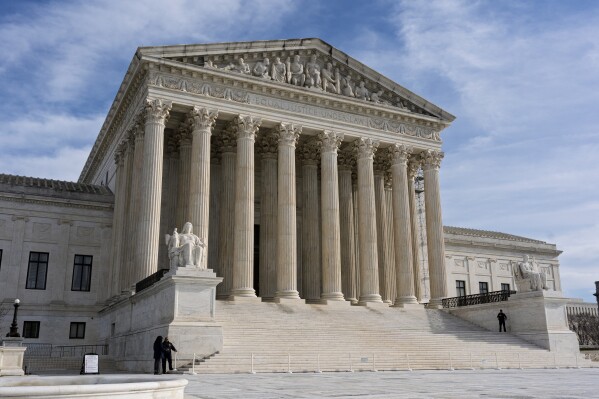
The Supreme Court of the United States is one of the oldest institutions in the country. It was created in 1789 with the signing of the Constitution. The court’s exact makeup and role were not always clear. It is common for American historians to remark that the court system was an afterthought for the founding fathers. For example, the concept of judicial review was not clear until 1803. However, the most dangerous area of the court’s vague structure is the number of judges that must sit on the highest court of the land. The number of justices that must sit on the Supreme Court is not listed in the Constitution. This fact has led to much political maneuvering throughout history.
Before 1869, the number of justices changed six times. Franklin Delano Roosevelt famously threatened to add six new justices, bringing the total to fifteen. This action would have given him unprecedented power over court agendas and the interpretation of statutes. Similarly, prominent Democrats such as AOC entertained the idea with the Judiciary Act of 202,1 which would have increased the number of justices to thirteen. Either party threatening to pack the court is a sign of political turmoil. If one party successfully added justices, it is possible that the next time their opposition had the power to do so, it would as well.
Operative Definitions
- Court-Packing: The act of adding new justices to the court to change its political constitution.
- Article III, Section I: “The judicial Power of the United States, shall be vested in one supreme Court, and in such inferior Courts as the Congress may from time to time ordain and establish. The Judges, both of the supreme and inferior Courts, shall hold their Offices during good Behaviour, and shall, at stated Times, receive for their Services, a Compensation, which shall not be diminished during their Continuance in Office.” –The portion of the constitution that creates the Supreme Court. The section gives Congress the ability to create lower courts and mandate payment for the justices. Its language on “Good Behaviour” has been interpreted to mean life terms for justices.
- Judicial Review: the ability of the Supreme Court to determine the meaning of the words in the Constitution. This power was given to the Supreme Court by itself in 1803 via Marbury v. Madison.
Important Facts and Statistics
- Marbury v Madison was a massively influential case in 1803. In 1800, Thomas Jefferson defeated John Adams in the presidential election. In the twilight hours of Adams’s presidency, the Judiciary Act of 1801 created numerous lower courts and gave him the power to appoint their judges. The Senate approved the appointments, but the Secretary of State had to approve the commissions. James Madison, the Secretary of State, refused, and a legal battle ensued. Marbury, one of the new appointees, won his case against Madison, and the appointments were finalized. The case established the concept of judicial review, which was, until then, unclear. The case shows how little is definite about the Supreme Court’s role as enumerated in Article III, Section I.
- There are three main layers of courts in the current federal judicial system. The lowest being the Federal District Courts (93). The second layer is aptly named the Court of Appeals (13). The final and most powerful Court is the Supreme Court, whose dominance is made clear in Article III, Section I.
Single-point plan
(1) The number of Supreme Court justices should be permanently set at nine to prevent court-packing and preserve judicial independence. A constitutional amendment should prohibit Congress, the Executive Branch, or the judiciary itself from altering the structure of the federal court system, ensuring that no party can manipulate the courts for political advantage. By solidifying the existing three-tiered judicial hierarchy—District, Appellate, and Supreme Courts—this measure would block attempts to expand or weaken the Supreme Court, preventing the erosion of its legitimacy. Without such safeguards, court-packing could spiral into a cycle of partisan retaliation, undermining the judiciary’s role as an impartial check on government power.
Why this Initiative is Important
Regardless of political affiliation, court-packing threatens the integrity of the U.S. government. In today’s volatile political climate, the ability of the executive to add justices could spiral into a tit-for-tat. For example, if President Trump raised the number of judges to eleven to further conservative dominance, the next Democratic President would have cause and precedent to add as many justices as necessary to regain power in the name of stability. If this pattern were to continue, the court system would become completely obsolete.
The court system in the United States is multi-layered. There could be circumstances that tempt Congress, the Executive Branch, or even the Supreme Court itself to change the structure of the U.S. federal court system. The current system allows for cases to flow upward towards the Supreme Court from the District Courts. A shift to this structure or an attempt to elevate a separate court to beyond its current capacity could undermine the entire court system.
Without the power of judicial review, there is no check on the laws that Congress can make and how the executive can behave when enacting those laws. Needless to say, this power vacuum would degenerate into power struggles between the legislature and the President. The impact of the Constitution would be lost, and the US would lose the tripartite checks and balances that have sustained liberty and freedom for more than two hundred years.
Sources
Court role and Structure. United States Courts. (n.d.). https://www.uscourts.gov/about-federal-courts/court-role-and-structure
Swoyer, A. (2021, April 15). Alexandria Ocasio-Cortez backs court packing, says Court shouldn’t overturn laws backed by advocates. The Washington Times. https://www.washingtontimes.com/news/2021/apr/15/alexandria-ocasio-cortez-backs-court-packing-says-/
Supreme Court and Congress | Constitution Annotated | Congress.gov | Library of Congress. (n.d.). https://constitution.congress.gov/browse/essay/artIII-S1-8-3/ALDE_00013559/
Legal Information Institute. (n.d.). Marbury v. Madison (1803). Legal Information Institute. https://www.law.cornell.edu/wex/marbury_v_madison_(1803)#:~:text=Primary%20tabs-,Marbury%20v.,Court’s%20power%20of%20judicial%20review.
Marbury v. Madison. Oyez. (n.d.). https://www.oyez.org/cases/1789-1850/5us137
