

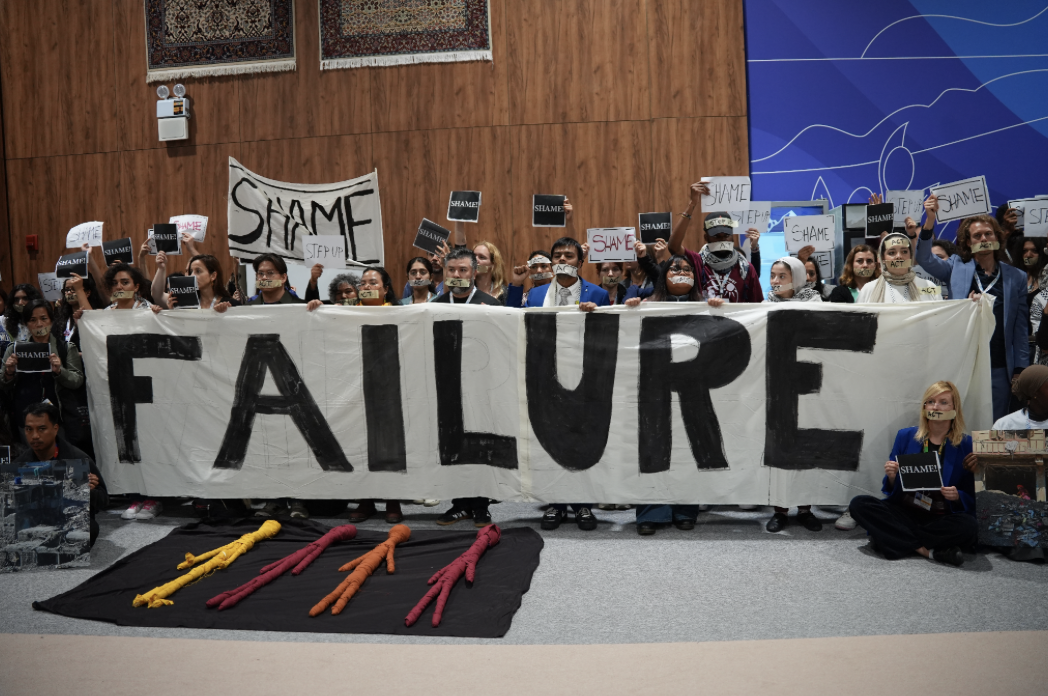
Anything related to climate change has become frustrating recently. It seems every time progress is imminent, it gets dashed. This was no different at the 2026 United Nations Climate Change Conference—otherwise known as COP.
This year’s conference, COP31, ended in no resolution for the first time since 2009 after countries clashed over the wind-down of fossil fuels. The conference went two days over its original deadline, making it the longest UN climate summit in history.
The controversy stems from Saudi Arabia introducing a proposal, one backed by other petrostates like Russia, that dismissed any mention of fossil fuels as the root cause of global warming. The European Union, Panama, Belize, Vanuatu, the UK, the Marshall Islands, Norway, and others rejected the cover decision.
The Australian Prime Minister, Anthony Albanese, who hosted the talks, blamed the lack of agreement on “difficult geopolitical times” to reporters.
This year has been plagued by deadly heat waves in Europe, floods in Nepal, and an El Niño. But at the same time, economic hardship has put many climate solutions on the back burner.
Governments have been focused on bringing down the cost of fuel, which has risen sharply due to the War in Iran. Canada has approved a new pipeline and the US has used trade policies to promote fossil fuels abroad.
At the same time, other countries like Denmark, Spain, and Portugal have announced plans to phase out fossil fuels. This dichotomy caused a lot of tension as the conference approached.
The COP serves as a way for 190 countries to meet every year to discuss the advancement of goals from the 2015 Paris Agreement. The primary goal was to lower global heating from the estimated 5°C by the end of the century to 2.6°C. COP31 came two months after the UN acknowledged it had failed to meet the Paris Agreement’s initial benchmarks. The US could not even reach an acknowledgment of failure as Trump withdrew from the Paris Agreement in 2025 to put “America first in international environmental agreements.”
At the beginning of the 2010s, many scientists believed we would be 4°C or more over preindustrial temperatures by the end of the century. However, modern estimates believe we will be able to limit warming to over 2.8°C by 2100. To get down to 1.5 °C, there will need to be a faster development of technologies that reduce carbon dioxide in the atmosphere.
To address this issue, the first draft of the deal cited the necessary reduction of fossil fuels, which is what ultimately led to the Saudi Arabian proposal.
Other than fossil fuel qualms, some countries objected to the lack of clear financial commitments to potential solutions in the draft. At last year’s talk, COP30, nations agreed to extend finances to more heavily impacted countries. This year’s deal gave no indication of concrete figures or a baseline for how success would be measured.
It’s important to note that there were some achievements at the conference. The Just Transition Mechanism was agreed upon, which would establish a framework to help communities economically shift towards clean energy. 80 countries also backed Turkey’s goal to increase the global share of electrical energy to 35% by 2035.
Ultimately, though, since the conference operates under a consensus vote, a minority of countries caused the resolution rejection despite the fact that a majority of countries felt fossil fuels needed to be mentioned in the proposal. This has caused some to propose a supermajority vote.
“World leaders no longer want to settle for the lowest common denominator,” said former US vice president and climate activist Al Gore in an X post. “They want real action to implement and finance a just transition away from fossil fuels. It has been clear for years that the COP process is in need of significant reform.”
Defenders, however, argue that consensus voting worked to create the 2015 Paris Agreement.
Indu K Murthy, principal research scientist at the Centre for Study of Science, Technology and Policy think tank in India, told the Guardian, “Consensus and multilateralism still matter, perhaps more than ever. A majority vote can pass a decision, but it can’t make an unwilling country cut emissions, and countries that keep getting outvoted will simply walk away.”
Murthy continued, saying, “A rule that protects every nation’s voice protects the most ambitious and the most vulnerable too. What the COPs need is faster delivery and accountability, not a fight over voting rules that would itself need consensus to change.”
The UN’s Climate Chief, Simon Stiell, stated they would be seeking advice on potential reform at the next conference in November 2027 in Ethiopia.
“Acknowledgement: The opinions expressed in this article are those of the individual author, not necessarily Our National Conversation as a whole.”