

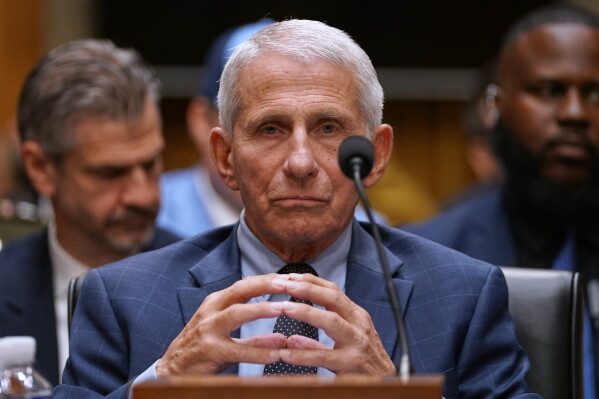
It’s been six years since the world shut down. Society seems to have moved on, with vaccination requirements dwindling and a growing desensitization toward social isolation. Dr. Anthony Fauci stepped back into the limelight this week, though not as gleefully as he did before. Appearing before the senate, the defamed scientist faced a reckoning after Senator Rand Paul released Fauci’s personal diary. Among the 1,110 pages written by a man basking in his own glory, critics have found indications that his public certainty was a carefully managed front rather than a reality.
As Senator Paul and conservative media outlets quickly highlighted, Dr. Fauci’s early entries documented private deliberations over a potential lab origin. References to intelligence meetings also contradicted Fauci’s previous denial of any such communications. Overall, the diary leak has strengthened allegations that national intelligence and public health officials downplayed the virus’s nuanced data before a panicked public. Fauci’s scandal has been politicized as rapidly as the pandemic that launched him into public eyes, with progressive leaning outlets coming to the doctor’s defense and right-wing conspiracy theorists claiming complete vindication.
Countless headlines have passed since the COVID days, and the resurging debates of 2020 may seem another short-lived churn of the rage machine. But this scandal is not just fuel for partisan sparring. It accelerates an incredible cultural trajectory that was already on the rise.
Conspiracy theories have long been a popular source of entertainment. When Alex Jones took the internet by storm in 2001, his fame was earned by being outrageous, not for being right. Those who wholeheartedly bought into Jones’ journalistic cosplaying were societally shamed, forced to find like minded individuals in the shadows of chatrooms. The last few years have proven that this tide has been turning.
What used to be fringe conspiratorial thinking has seeped into the mainstream, even creating strange moments of common ground between opposites such as Hunter Biden and Nick Fuentes. Though research has had difficulty confirming a definitive increase in conspiracy thinking, its expanding scope has undoubtedly had an impact. The conspiratorial right now has a multitude of leaders—Candace Owens, Andrew Tate, Nick Fuentes, Tucker Carlson are but a prominent few.
Young people have proven to be especially prone to conspiratorial belief, with 81% of American teens reporting that they believe in at least one of the theories circulated online. This coincides with an erosion of trust, as 45% of teens believe professional news media does more harm than good to democracy.
The likes of Alex Jones and Candace Owens have gained significant ground in the digital landscape, but have been branded as unabashed truth tellers rather than shock-value entertainers. Their audiences flock to hear the latest secret that the “system” doesn’t want them to know and leave feeling empowered by anti-establishment zeal. Though there are many who are well-deserving of the label “conspiracy theorist,” the political order has been known to weaponize it against those who question anything within the mainstream narrative.
Covid went from a health crisis to a source of partisan leverage, and the public was essentially sorted into two camps: science and conspiracy. Both labels became code for ideas that were more controversial than the umbrella terms laid on top of them. “Science” referred to public health officials as much as the facts they were meant to publicize.
Dr. Fauci himself blurred the line between fact and face when he stated that attacks on his recommendations were effectively “attacks on science.” Ironically, a large portion of public criticism came from fellow scientists who published their own findings, many of which contradicted Fauci’s statements. Nonetheless, those seeking to follow the data from international studies or non-Fauci approved researchers were considered adversaries of the scientific institution.
Communities that expressed safety concerns over accelerated vaccine production were similarly assigned to the “conspiracy” camp, and the mass consequence in the workforce was noted by several members of the Senate on Wednesday. When the left used “conspiracy theorist” as a slur, the right considered it righteous persecution, and have been awaiting an inevitable triumph over the naysayers. For the lot, one of those moments is finally here: the face of a national shutdown stripped of credibility and exposed for lies. This shouldn’t be a victory for conspiracists, and yet it is.
When the left blended the tin foil hatters with the reasonable skeptics, it gave moderate consumers a straight shot to the extreme. Radical differences in worldview and rhetoric were worth overlooking in order to fight against a common enemy. The classic conservative was demonized as much as the Alex Joneses of the world, and there is nothing better than shared alienation to usher in a new alliance. Now that conspiracists have climbed the social media ladder, sharing grievances also means sharing victories that really shouldn’t belong to them.
COVID functions as a sort of generational symbol for real-life conspiracy as it forces many young minds out of senior years, job security, and social stability. Frustration against the system–economic, racial, or otherwise–has been ever growing among young adults, one of the demographics arguably most affected by the lockdowns. It’s difficult to say whether the disruption caused by the pandemic kickstarted the momentum of conspiracism, but it certainly helped. Broader messaging that the powerful are out to screw over the public has just been given a stamp of approval—signed and sealed by Dr. Fauci’s unredacted journal.
Major institutions now enter a zero-sum game. The scientific community along with the mainstream media can openly condemn administrative failure or try to soften the blow. To validate civic upset around COVID mishandling would surely weaken public trust, but understating the scandal might break it entirely. Pretending that Fauci’s incredible violation of ethics is not a win for conspiracy theorists would be more evidence of a broken system. Calling a spade a spade might not waver the doomsayers, but it might draw the moderates out from the rest.
When trust is broken, an apology can go a long way for the person who still has hope for resolution. That disposition cannot be said of political radicals. Both ends of the left and the right have concluded that traditional structures are too far gone, and thus the only way up is to tear them down. But many who have latched onto the bereaved party have done so as a last resort, not because they have analyzed and approved of its philosophy.
In order to slow the spread of conspiracy thinking, the moderates must first be given space somewhere else. If reasonable voices could question public policy, institutional authority, corporate dealings, and social movements without being vilified or unfairly lumped in with extremists, culture might be able to recenter. The majority of Americans don’t want to hear what closeted adversary is lurking around each corner—they just want common sense. If American institutions can shelve the catastrophe and simply say what is, maybe there would be less who want to see them destroyed.