

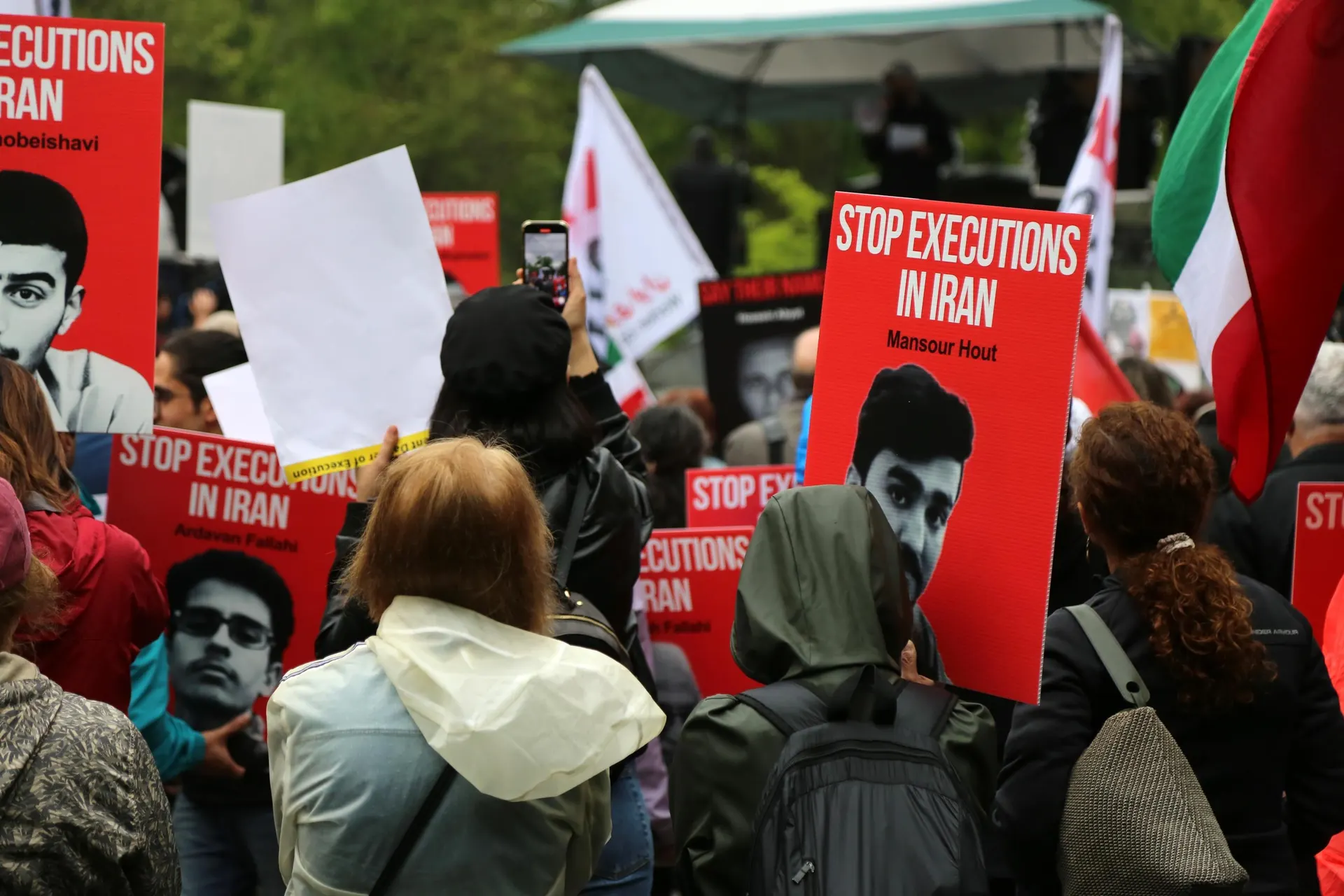
Mahsa Amini’s death in police custody in 2022 ignited widespread protests that briefly put the Iranian regime under severe pressure. Yet today, the mullahs desperately continue their brutal crackdown, killing tens of thousands and executing young people for simply participating in demonstrations. Despite the violence, an eerie silence has fallen.
Reports suggest Iran has killed over 35,000 people in the recent unrest, with some estimates reaching as high as 50,000. Despite this bloodshed, the regime presses on with public executions. They are often carried out under internet blackouts that conceal the true horror from the outside world. The brave “No to Execution Tuesdays” campaign, which began in January 2024, has already cost at least six veteran participants—Vahid Bani Amerian, Mohammad Taghavi, Babak Alipour, Pouya Ghobadi, Abolhassan Montazer, and Akbar Daneshvarkar—their lives this week alone.
Just in the first week of April, the regime executed several more young protesters from the January 2026 uprising. On April 2nd, 18-year-old Amir Hossein Hatami was put to death. On April 5th, Mohammadamin Biglari and Shahin Vahedparast were executed. On April 6th, they hanged Ali Fahim after accusing him of trying to access a military armory in Tehran and attempting to “overthrow the system”—the same vague charge repeatedly used to silence those demanding freedom. These are just three of the 160 verified executions that have been recorded since January, though the real number is almost certainly higher.
The regime’s repression extends beyond Iran’s borders. Iranians living abroad who dare criticize the dictatorship often see their families back home harassed, arrested, and taken hostage. In one recent case, several members of the Iranian women’s soccer team, who were in Australia for a tournament, desperately sought asylum to protect their relatives from retaliation. As a result, multiple players received humanitarian visas.
While political battles rage through the media surrounding President Trump’s fragile ceasefire—which included opening the Strait of Hormuz—the suffering of ordinary Iranians continues. Some on the left have rushed to pronounce the ceasefire a defeat for Trump, but the truth is far grimmer. As NATO members and others adopted an indifferent attitude, only the United States and Israel have consistently confronted Iran’s terrorizing regime, which continues to be backed by Russia and China.
If the regime is allowed to feel immune once again, the coming days will be even deadlier for the thousands of innocent people already in custody. The ceasefire may bring temporary calm for global powers eager to move on, but for the Iranian people fighting for their freedom, the world’s selective silence is a betrayal.
