

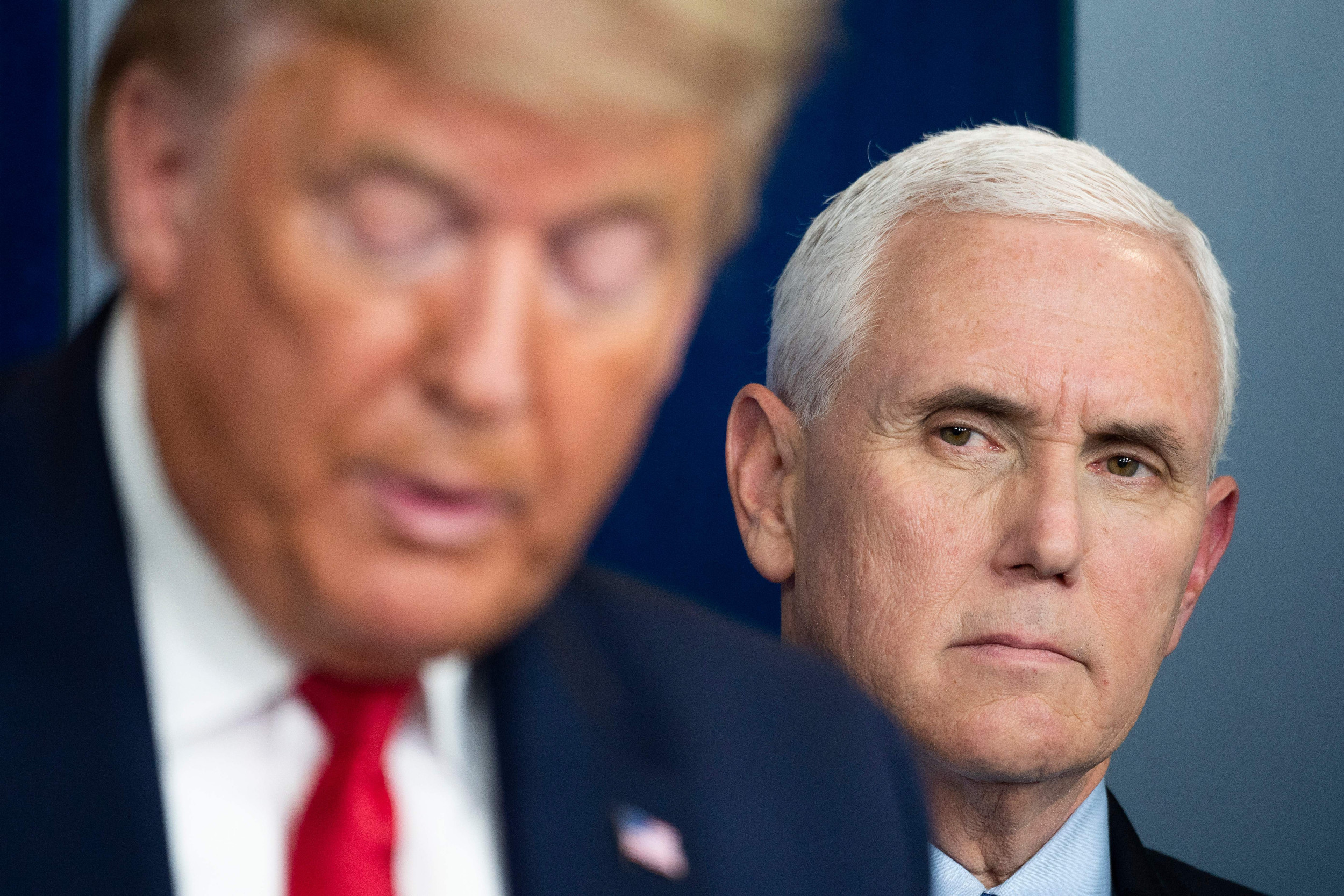
As we get further in time from the domestic terror attack of January 6th, 2021, Mike Pence’s criticisms of his former boss become more harsh. In his new book, “What Conservatives Believe”, he refutes the new American right, calling Trump’s populism “progressivism in disguise.” This conclusion is correct. A former Democrat, Trump is still the same man he was when he was putting thousands of dollars into the pockets of Chuck Schumer. He has always been more akin to William Jennings Bryan than Ronald Reagan — the latter of which was an enthusiast of amnesty and international free trade whose hawkish foreign policy was famously targeted at Russia’s norm violations.
As Pence points out in his “Wall Street Journal” article promoting and summarizing his book, Trump rather explicitly disavowed the roots of the Republican Party when he said, “I’m not conservative. You know what I am? I’m a man of common sense.” In Trump’s mind, conservatism and common sense do not go hand in hand.
But Pence runs into a glaring issue in his criticisms of President Trump: he elevated and worked with Donald Trump for four years. He has two options to explain those four years:
- Admit that he was wrong about Donald Trump in 2016 and that he never should’ve affiliated himself with the MAGA movement.
- Claim that he and Trump had a successful four years of advancing conservatism and that Trump changed on January 6th.
Pence has chosen the second option. In the aforementioned WSJ article, he writes of the President, “In his first term as president, he acted as a conservative who sought to minimize the power of centralized government, unleash the economy and restore judicial restraint to the courts.” Portraying the Trump administration Pence worked for as intellectually honest is good PR for the former Vice President. This approach imagines Pence as someone who has reliably and consistently made the best decisions to advance the conservative cause. But it is a fantasy. Trump’s first term was a disaster for conservatism.
Donald Trump did not “unleash the economy” in his first term. He only weakened it with his economic progressivism. The protectionist tariffs that have defined his second term were present, albeit to a lesser degree, in his first. The reckless spending Republicans have been railing against for decades was a defining feature of Trump’s first term, which saw over 8 trillion added to our national debt, almost reaching Obama’s historic spending in half the time. Blaming this solely on the COVID-19 pandemic is folly; Trump still added 4 trillion to the debt before the WHO declared the pandemic.
Further, Pence conveniently does not invoke the foreign policy of Trump’s first term, which is indefensible from a conservative point of view. Starting with Teddy Roosevelt, Republican Presidents hawkishly punished nations that violated international rules and norms. Though this started to change with Nixon’s embrace of the PRC over Taiwan, hawkishness was reinvigorated under Reagan and reinforced with both George Bushes. Trump ran away from that.
He abandoned our Kurdish allies in Syria and set into motion the disastrous withdrawal from Afghanistan. Trump failed to conserve our status as an international mediator, and now we do not even have the international credibility to exert negotiating power over Iran.
Pence is a respectable man who I have had the pleasure of seeing speak. I admire him greatly, and his defiance of Trump on January 6th was nothing short of heroic. I do not refute his portrayal of Trump’s first term to encourage resentment. Rather, I want to remind other anti-Trump Republicans that, in the future, when the party is restored to its former integrity, it would be foolish to look at Trump’s first term as a valuable model of conservative policy. Rather, both his first term and his second term so far are lessons learned on the errors of “progressivism in disguise.”