

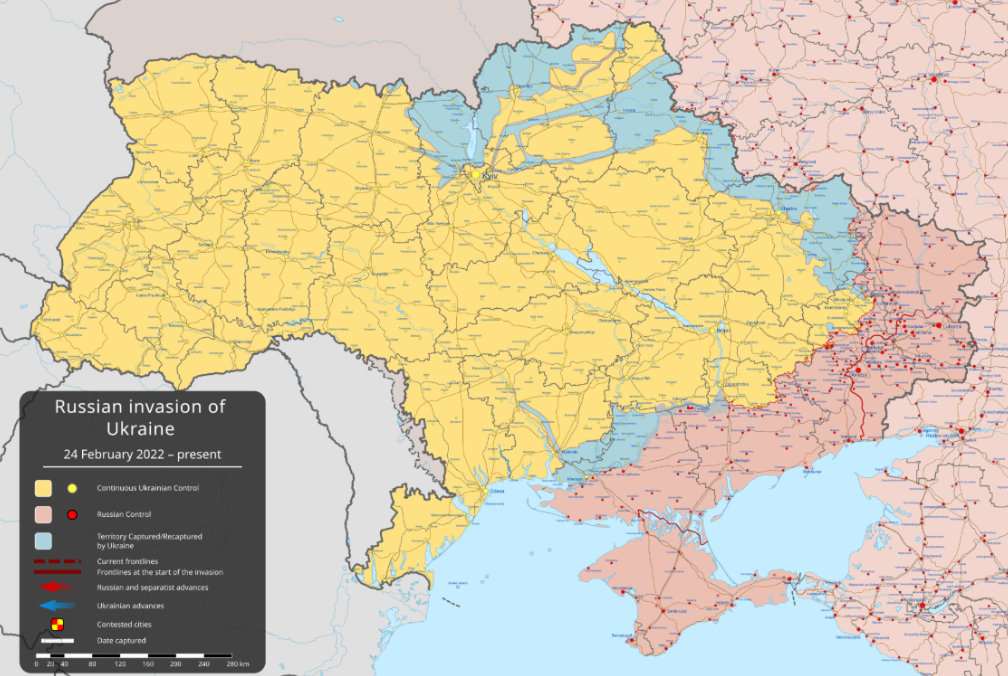
Over four years ago, Russian President Vladimir Putin launched a full-scale invasion of Ukraine. This followed eight years of conflict between the Ukrainian government and Russian proxy forces, as well as the annexation of Crimea in 2014, which drew massive international outrage. In response to Putin’s actions, Russia was sanctioned economically, diplomatically isolated and culturally shamed through banning Russian athletes from the Olympics. But since 2022, this conflict has lost the world’s attention due to wars in Israel, Gaza, Sudan and Iran. Despite Russia’s actions, a close look at Ukrainian President Vlodymyr Zelensky’s motivations for continuing the war—which has been a stalemate since 2023— reveals a silent invasion of his country.
Since the invasion, Ukraine has relied on conscripting its working-age men to repel the Russian military and has prohibited most men from leaving the country. Ukrainian women, children and seniors, in contrast, have undergone a mass exodus in Europe’s worst refugee crisis since the Second World War. It is estimated that this exodus will constitute over 30% of its pre-war labor pool, which was already shrinking rapidly due to emigration to European Union member states like Poland. In addition to this, a low fertility rate and a rapidly aging population is creating a massive labor shortage in the coming decades. And with the Ukrainian army suffering casualties in the hundreds of thousands, the country’s pool of adults who still live in the country will shrink even further.
To make up for this labor shortage, Zelensky could force businesses to pay Ukrainian workers fair wages and lure the diaspora back home. But instead of preserving Ukraine as a nation state for the East Slavic ethnic group, he plans to import laborers from less developed countries to fill the gap. Many of these countries from the Middle East, Africa and South Asia regions have already sent numerous migrants to European countries, especially within the past decade. When looking at the results of allowing mass migration, it can safely be said that it constitutes an invasion.
Migrants from the Middle East, Africa and South Asia are much more likely to commit a wide range of crimes, use excessive welfare and remain in low-skill occupations than native Europeans, all across the continent. This should not come as a surprise, given how Europe’s institutions and cultures contrast greatly from those of migrant countries, which are often governed by Sharia law, are rife with corruption and fail to protect the liberties of women and minorities.
In contrast, Russia, like Ukraine, is an Orthodox Christian country, and its ethnic group and culture have centuries of shared history with Ukrainians. Putin’s intent is not to wage war on the Ukrainian people, but rather reintegrate their country into Russia. He merely rejects the political and social separation of the two groups, not the existence of either one. Given the similarities of both East Slavic countries, Russification of Ukraine would hardly change anything about the former Soviet state. Yet Zelensky nevertheless considers annexation by Russia, even of only Ukraine’s southeastern region that is currently occupied, a threat to the Ukrainian nation. But why doesn’t he apply this same logic to demographic replacement of Ukrainians via mass migration from societies with radically different cultures and institutions?