

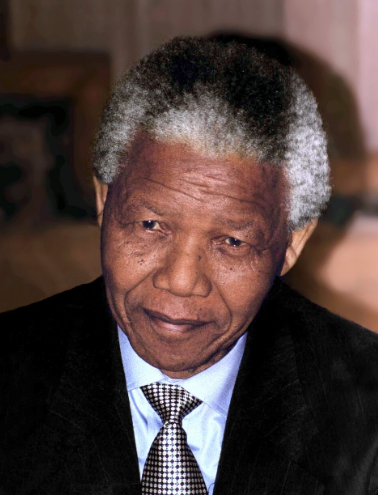
South Africa is infamous for a long history of enforcing violent and racist policies under the Apartheid system. From 1948 to 1994, virtually all political power in the country was held by the white minority, which forced the Black, Coloured, and Indian populations to live in designated areas under squalid conditions without full citizenship rights. Consequently, South Africa was the premier example of a pariah state during the second half of the 20th century, resulting in mass economic, diplomatic, and cultural boycotts. This backlash was successful in starving the Apartheid Regime, which resulted in universal suffrage that allowed Nelson Mandela to become the country’s first Black president. He peacefully transitioned South Africa to democracy and a race-blind meritocracy, easing decades of interracial tensions and violence. But instead of continuing his nonviolent legacy towards reconciliation, his successors have instituted a new form of Apartheid that has stifled prosperity for South Africans of every race.
The African National Congress (ANC), Mandela’s party, has been rife with corruption since the end of his presidency. The party has implemented numerous laws discriminating against the non-Black population under the guise of empowering historically disadvantaged ethnic groups. For example, one of these laws, The Employment Equality Act, mandates race-based quotas for businesses’ hiring designed to limit white employment. Similarly,
The Preferential Procurement Policy Framework Act of 2000 gives preference in awarding government contractors based on factors that include race. And perhaps the most destructive, the Broad-based Black Empowerment Act requires businesses in certain sectors to have at least 30% black ownership. The result of each of these laws, no matter how much their names try to sound uplifting in contrast to the dreadful Apartheid era, have had disastrous consequences largely for South African’s black population, ironically.
Elon Musk has attempted to bring satellite internet to South Africa’s impoverished communities, but his Starlink has been blocked from operating due to insufficient black ownership that violates the BB Black Empowerment Act. The law also has cost up to 4% of South Africa’s GDP in compliance costs and bureaucracy navigation alone, and with the others only moves the country away from meritocracy that would allow the most qualified businessmen of any race to generate wealth to reverse the country’s economic decline. Over a third of Black South Africans are unemployed, and the country has the world’s highest Gini Coefficient for income inequality. In terms of health, life expectancy has been worsened by the AIDS epidemic, and infrastructure challenges have brought long blackouts and poor road quality. But instead of allowing the training of doctors and engineers purely based on talent, South African universities use intense affirmative action that puts race before academic qualifications. Not coincidentally, much of the White population with valuable economic skills has emigrated in recent decades to Western countries, leaving a shrinking pool of talent for the country.
High-ranking members of other South African parties, such as Julius Malema, continue to worsen racial tensions by ignoring or even encouraging violence against white farmer communities. This has led to President Trump accepting many of said farmers as refugees, taking away what could be a vital food source for an economically struggling country. But his response to the new form of South African Apartheid, even including sanctions on many key ANC figures, will not be enough unless it is copied on a global scale reminiscent of the country’s isolation before 1994.