

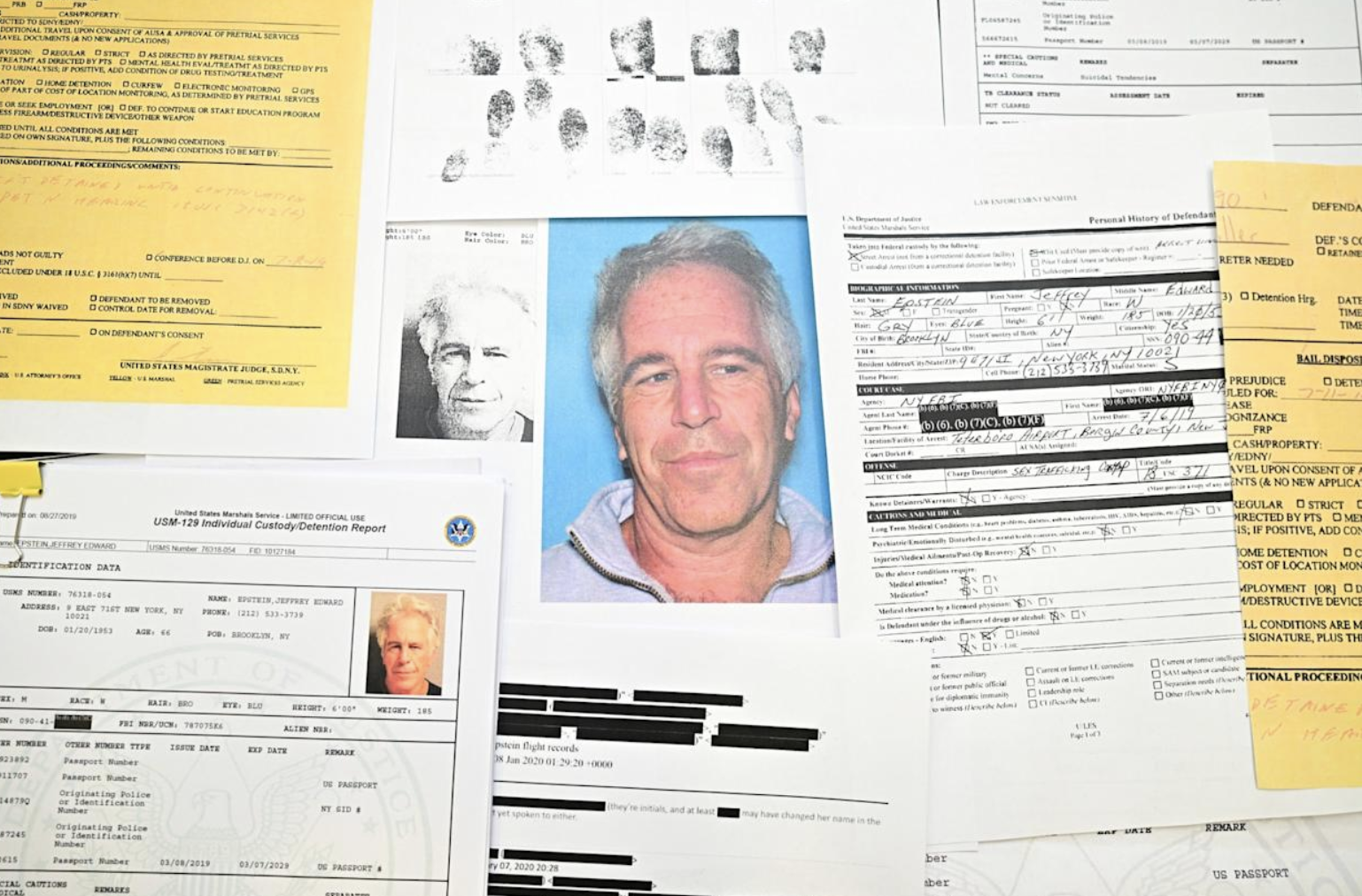
Jeffrey Epstein, the late financier and convicted sex offender, has long been associated with powerful figures in finance, politics and technology. After his 2008 conviction for soliciting prostitution from a minor and his death in 2019 while awaiting trial on federal sex trafficking charges, investigators and journalists continued to uncover the scope of his social and financial networks. In early 2026, the U.S. Department of Justice released millions of files from Epstein’s estate, revealing previously underreported ties to the early cryptocurrency industry (Fortune, 2026).
The documents describe investments in Bitcoin-related companies, correspondence with industry figures and repeated claims by Epstein himself that he had been involved in digital currency discussions. At the same time, they undermine many of the more sensational theories circulating online. Assertions that Epstein played a direct role in Bitcoin’s creation have been widely debunked and are not supported by the released records. Epstein’s entry into cryptocurrency appears to date to around 2014, a transitional moment when Bitcoin was moving from a niche experiment into a serious financial asset. One of the clearest links is his $3 million investment in Coinbase, the San Francisco-based cryptocurrency exchange founded in 2012 (The Washington Post, 2026a). At the time, Coinbase’s valuation was roughly $400 million, making Epstein’s stake well under 1% of the company.
The investment was facilitated through Brock Pierce, a controversial figure in crypto circles who later co-founded Tether and Blockchain Capital. Emails contained in the DOJ files show Pierce pitching the opportunity to Epstein, who wired the funds through his U.S. Virgin Islands entity, IGO Company LLC (The Washington Post, 2026b). Coinbase co-founder Fred Ehrsam attempted to arrange a meeting with Epstein in December 2014, although there is no confirmation that it ever took place (NBC News, 2026). By 2018, the value of Epstein’s stake had risen sharply. Blockchain Capital ultimately purchased half of it for $15 million, reflecting that Coinbase’s valuation was approximately $4 billion at the time (Fortune, 2026).
Epstein also invested in Blockstream, a Bitcoin infrastructure company focused on blockchain development and sidechain technology (Fortune, 2026). Founded in 2014 by prominent Bitcoin developers, including Adam Back, Blockstream aimed to improve Bitcoin’s scalability and security. Emails referenced in reporting show Epstein participating through an affiliated fund, although the exact size of the investment has not been disclosed (WazirX Blog, n.d.). One 2014 email chain captures Blockstream’s then CEO, Austin Hill, criticizing competitors such as Ripple and Stellar while copying Epstein and other investors. The exchange offers a glimpse into how closely Epstein was positioned to internal industry disputes during Bitcoin’s formative years (Binance Square, n.d.). Together, these investments placed Epstein early in companies that would later become multibillion-dollar enterprises. They also illustrate how his wealth, much of it accumulated through opaque financial arrangements, circulated freely within Silicon Valley’s venture capital ecosystem despite his criminal record (The New York Times, 2026).
Epstein’s influence extended beyond private investment into academic and research institutions tied to cryptocurrency development. He maintained a close relationship with Joichi Ito, the former director of MIT’s Media Lab, which housed the Digital Currency Initiative, a research group that contributed to Bitcoin-related projects (France 24, 2026). Emails show Epstein donating significant sums to MIT, and one investor later suggested that Epstein assumed an informal senior benefactor role after the Bitcoin Foundation collapsed in 2015. That support allegedly included a $500,000 contribution (Blockspace Media, n.d.).
By 2011, Epstein had reportedly contacted early Bitcoin developers. In a 2016 email, he claimed to have spoken with “some of the founders of Bitcoin,” describing them as enthusiastic about a Sharia-compliant digital currency concept he was promoting (WazirX Blog, n.d.). These claims remain unverified. No named Bitcoin founders have confirmed such conversations, and Epstein provided no specific details that could be independently corroborated (Techloy, n.d.).
Following the DOJ document release, social media platforms quickly filled with conspiracy theories suggesting Epstein was Satoshi Nakamoto, the pseudonymous creator of Bitcoin (Yahoo Finance, 2026). Some posts circulated fabricated emails that appeared to show Epstein claiming authorship of the Bitcoin whitepaper. Fact-checkers and independent investigators confirmed that these documents were forgeries (France 24, 2026). Authentic records mention Nakamoto only in passing and contain no evidence linking Epstein to Bitcoin’s original 2008 design or early development (Bitbo, n.d.). Researchers also note that the majority of Bitcoin’s codebase was written well after Epstein’s alleged involvement. Roughly 74% of commits occurred after 2011, weakening claims that he had any foundational influence (France 24, 2026). The persistence of these myths appears tied less to evidence than to Epstein’s documented relationships with prominent technology figures, including Reid Hoffman and Peter Thiel, both of whom expressed interest in cryptocurrency during its early years (NBC News, 2026).
The revelations raise broader ethical questions for the cryptocurrency industry. Despite Epstein’s conviction, companies such as Coinbase accepted his capital, reflecting the permissive culture of early Silicon Valley investing (The Washington Post, 2026a). Brock Pierce’s relationship with Epstein, including documented visits to Epstein’s private island, has drawn renewed scrutiny, particularly given Pierce’s later role in building Tether, a stablecoin central to global crypto markets (Fortune, 2026).
Epstein’s publicist, Masha Bucher, also benefited from these networks. With Epstein’s guidance, she transitioned into venture capital and later published a 2017 article discussing Bitcoin without disclosing his past or their relationship (Forbes, 2026). Together, these connections show how Epstein’s influence persisted even as his criminal history was widely known, raising questions about accountability and due diligence within the tech sector.
In the end, the DOJ documents establish that Epstein had real financial and social ties to Bitcoin’s ecosystem, but they offer no evidence that he created or fundamentally shaped the cryptocurrency. Instead, they depict financier adept at inserting himself into emerging industries, using capital and connections to gain access and legitimacy. As cryptocurrency continues to face regulatory pressure, the industry’s willingness to reckon with figures like Epstein may prove as important as any technical innovation.
SOURCES
Binance Square. “Epstein Files Reveal Bitcoin’s Secret War as Ripple Insiders Expose.”
Binance, n.d.
Bitbo. “Epstein Files Show Bitcoin Links, Ripple Rivalries.” Bitbo, n.d.
Blockspace Media. “Everything You Need to Know About Bitcoin and the Epstein Files.”
Blockspace Media, n.d.
Forbes. “How Jeffrey Epstein Helped His Publicist Become a Big-Time Venture Capitalist.”
Forbes, 4 Feb. 2026.
France 24. “Fact Check: Did Jeffrey Epstein Invent Bitcoin?” France 24, 2026.
Fortune. “DOJ Files Reveal Epstein’s Early Crypto Investments.” Fortune, 2026.
NBC News. “Epstein’s Tech Ties Reexamined After DOJ Document Release.” NBC News,
2026.
The New York Times. “Epstein’s Financial Network Extended Deep Into Silicon Valley.” The
New York Times, 2026.
The Washington Post. “Epstein Invested Millions in Coinbase, DOJ Files Show.” The
Washington Post, 2026a.
The Washington Post. “Emails Detail Brock Pierce’s Crypto Pitch to Epstein.” The Washington
Post, 2026b.
WazirX Blog. “Epstein Files and Bitcoin’s Early Power Struggles.” WazirX, n.d.
Yahoo Finance. “Why Social Media Thinks Epstein Was Bitcoin’s Creator.” Yahoo Finance,
2026.
Techloy. “Debunking Claims Linking Epstein to Bitcoin’s Founders.” Techloy, n.d.
