
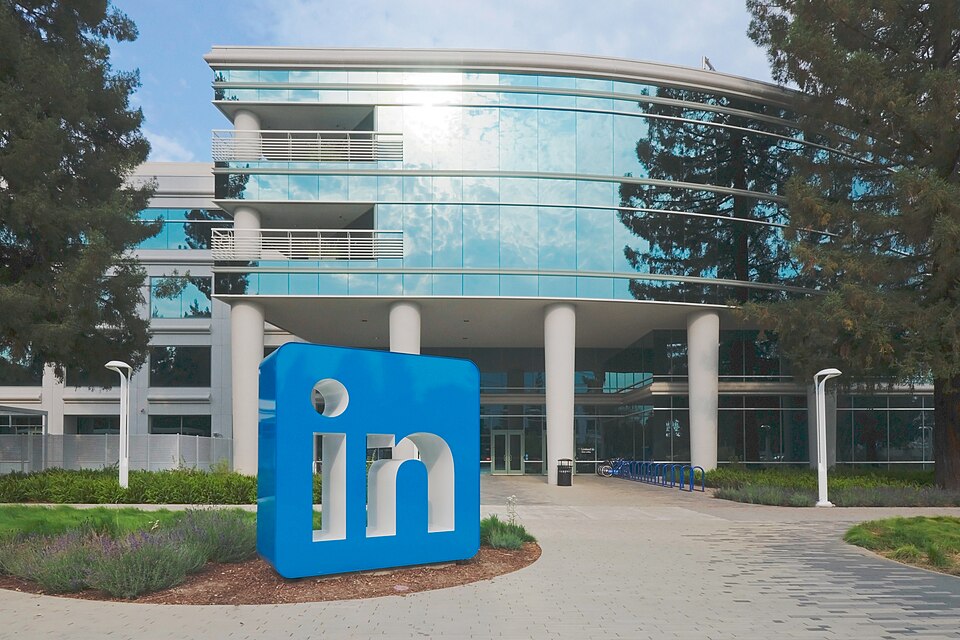
LinkedIn is easy to mock because it often feels ridiculous. Feeds are lined with posts of people claiming corporate prestige with saturated jargon that no one really understands. Layoffs become “new chapters”, and desperation is portrayed as being “open to new opportunities”. Ordinary employment is narrated as a moral awakening, with those who can’t follow the cryptic lexicon as simply not being on their level. The language is so polished it begins to feel inhuman, as if every post is passed through a motivational filter and carefully stripped of any real insight.
But the absurdity of LinkedIn is not the most interesting thing about it. The surface-level jeering about its content and audience – while amusing – overshadows the more serious question of why people feel compelled to perform this way at all.
In the United States, work has never been just a job. One’s profession has been treated as evidence of character, discipline, education, and personal worth. LinkedIn takes this philosophy and gives it a platform and a name. It repackages the worker into a public profile, an SEO project, and hosts a space to permanently market employability. It seems the point is not just being suited or capable for the job, because having the right requirements and a well-established CV is outdated in this age of corporate recruitment. Instead, you need to accompany this with a digital, legible mandate with at least 500 connections, or else who are you?
The platform is the epitome of late-stage capitalism. It not only connects people to jobs, but it also teaches people how to behave in a labour market where employability itself is theatrical. In 2025, LinkedIn reported 1.2 billion members globally and $17.8 billion in revenue, a staggering amount
in any case. Following suit with many other social platforms, they have introduced new AI tools for job seekers, hirers, and sales. This is important because not only do you have to perform within this stagnant job market, but you are also judged on this by AI. Reuters reported that LinkedIn’s AI hiring agents were projected to bring in $450 million annually by “helping” recruiters identify suitable profiles across the network. This shifts the focus entirely. In this respect, the game is no longer about experience; it’s about SEO and corporate literacy. The worker is not simply applying for jobs. They are processed as a signal, not a human; transformed into a set of keywords, a network, and a history of ambition within the confines of AI-approved jargon. The introduction of AI in workplaces across the U.S. has undeniably reduced job openings and is now cutting into the recruitment sector. Not only did you lose your job to AI, but you were denied your next one because you didn’t meet the lexical quota.
To Karl Marx, this advent is unsurprising. He argued that capitalism turns labour power itself into a commodity: the worker must sell their capacity to work in order to survive. LinkedIn expertly shows how far that logic has travelled and how conceited the job market has become. The worker is no longer selling only time, skill, or effort. They are expected to sell personality, resilience, digital consistency, network capabilities, and a narrative of constant self-improvement. One becomes part of the package. This commodification is the real poison of the platform. It makes the crisis of work, or lack thereof, a flaw of self-presentation. If you cannot get a job, the implied solution is to optimise your profile. If nobody replies, message better. If you are invisible, post more. If none of the above work, you can buy an “affordable” subscription of around $40 a month to help boost your presence.
The subscription becomes even darker when it’s realised that visibility has become monetised. Of course, capitalism and the ruling class have always understood this premise, as has society. But LinkedIn has attempted to remove these barriers in a way that fills its own pocket instead. The premium subscription advertises AI-powered tools for job searches and profile optimisation, along with InMail, profile view
numbers, personalised insights, and access to “top applicant” jobs. There is something dystopian about a labour market in which workers are already forced to compete for attention, then offered, as a necessity, a plethora of paid tools to become more visible in the competition. These class politics are not subtle. Despite LinkedIn’s attempts to profit from class visibility, they present as a neutral space for opportunity. They reward those who already understand the architecture of professional culture, and who have polished profiles, institutional confidence, internship language, and established networks. A working-class person may boast intelligence, be capable, reliable, and perfectly suited for a role, yet still be punished for not knowing how to read themselves in the approved style.
Pew Research Centre found that LinkedIn’s use in the U.S. is sharply divided by education. In 2024, a report showed that 53% of Americans with at least a bachelor’s degree said they use LinkedIn. This compares sharply to the 28% who have attended college but have not obtained a bachelor’s degree. Lastly, there were 10% of those who had high school degrees or less. This disparity paints an illustrative picture. If LinkedIn becomes part of how opportunity is accessed, then paradoxically, the unequal access to LinkedIn’s culture becomes yet another class barrier.
This is why LinkedIn is not just bad, it’s an active obstacle for those trying to find work in modern society. It is bad because it reveals a labour market that increasingly demands shallow performance. It is bad because it asks people to translate fear into marketable self-growth and instability into ambition. It turns structural insecurity into an expensive subscription.
The cruellest part is that opting out becomes even harder. Online resources are more essential than ever for American job seekers. Pew found that as early as 2015, a large majority of recent US job seekers had solely used online resources to look and apply for work. The point is that digital presence has become increasingly inseparable from employability itself. How much worse is it going to get?
LinkedIn is late-stage capitalism with a profile picture and a subheading. It relies on desperation, a failing job market, and those quick to reproduce its culture. Not only does it force workers to turn themselves into products, but it also helps build a world in which refusing to do so will cost them opportunities.
3 Comments
I always find your articles interesting. I’m not sure I agree on this one. I don’t use social media much but I do use LinkedIn. I have found people who become allies, partners, employers, volunteers and more. If you learn how to do the Boolean search thing — “social media + Los Angeles + news,” you can really zero in on those you want to find. People find me all the time using LinkedIn. True, it’s for the college crowd, but even the college crowd needs help these days.
Hey Jeff! I love to hear your thoughts so I’m glad you mentioned this! I understand the value of Linkedin and I totally agree it can be a valubale tool for connecting with people. However on the flip side its golden abilities have encouraged this culture of performativism ono the app. All I can say is I’m glad you are not in these circles so you don’t have to see this. As always thanks for your input, its great to hear something contrasting!
Hey Jeff! I love to hear your thoughts so I’m glad you mentioned this! I understand the value of Linkedin and I totally agree it can be a valubale tool for connecting with people. However on the flip side its golden abilities have encouraged this culture of performativism ono the app. All I can say is I’m glad you are not in these circles so you don’t have to see this. As always thanks for your input, its great to hear something contrasting!