
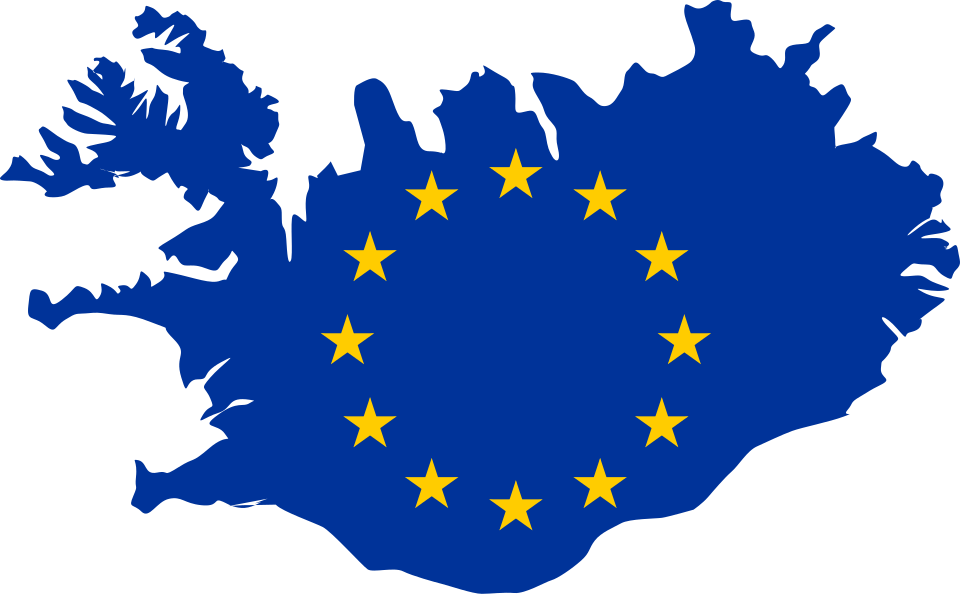
Iceland will soon vote on a referendum to reopen its application to formally join the European Union.
After World War II, the European Continent transformed from one marked by centuries of violent conflict between competing superpowers into one marked by unparalleled stability under the European Union (EU), which today encompasses 27 member states across the continent. However, there are four additional countries economically connected to it via the European Single Market (ESM). The ESM is governed by the EU’s member states, which aim to spur economic growth across the continent by removing international barriers to trade and economic activity. Specifically, the ESM’s four freedoms: free movement of goods, services, capital, and labor, establish it as one of the world’s largest single markets, rivaling NAFTA in North America or Mercosur in South America, controlling trillions of dollars of the global GDP.
The EU is not just an economic union but arguably the world’s only supranational one, meaning most of its laws take precedence over national regulations within its member states. Therefore, aspiring members of the EU must assess whether surrendering major aspects of their sovereignty is a worthy price to pay for the economic benefits of a broader market.
One of the four ESM members that remain outside the EU is Iceland, which is set to vote on reopening talks to formally join the EU on August 29th. The island country’s current status denies it participation in the EU’s governance, in exchange for a partial exemption from the supranational union’s jurisdiction. Specifically, unlike EU members, Iceland does not have any members of the European Parliament, the Council of the EU, or the European Commission, which act as the organization’s legislative body, nor does Iceland have veto power that is reserved for rare and consequential scenarios. More importantly, Iceland still participates in the single market in most industries and abides by their respective regulations, except for key sectors like fisheries and agriculture. Additionally, Iceland maintains independence over their monetary policy, nonrequirement for adopting the euro or joining the European Central Bank, and trade-policies with non EU states. However, the results of surrendering national sovereignty over domestic matters should compel Icelanders to appreciate their EU-lite membership status.
Indeed, the benefits of a unified market have been vast, with trade increasing drastically across the continent and free immigration between states unlocking new employment opportunities for millions. However, the EU’s strangling regulations have hampered innovation, small businesses, and growth in key sectors. Administrative burdens from compliance costs and navigating the red tape cost over 150 billion euros annually. Its agricultural policies forced farmers into financial ruin, sparking widespread civil unrest and soaring food prices. Regarding fisheries, Greenland and Norway have remained outside the EU to restrict harvests and profits from their coveted North Atlantic seafood to their local fishers, and Iceland, with its similar geography, has made the same consideration. Regarding monetary policy, many EU members have been reluctant to adopt the euro due to their differing approaches to economic recovery from financial crises, recognizing that a one-size-fits-all policy is risky for such a diverse continent. As an economic union, the EU’s success is unequivocal. However, forcing political integration has arguably only left the continent more divided, with populist movements and figures such as Brexit, Orban, and the AfD gaining prominence amidst each crisis. Iceland currently sits on a healthy balance between full integration into the European economy and exclusive sovereignty over its domestic affairs. It should seek to preserve that at the end of this month.