

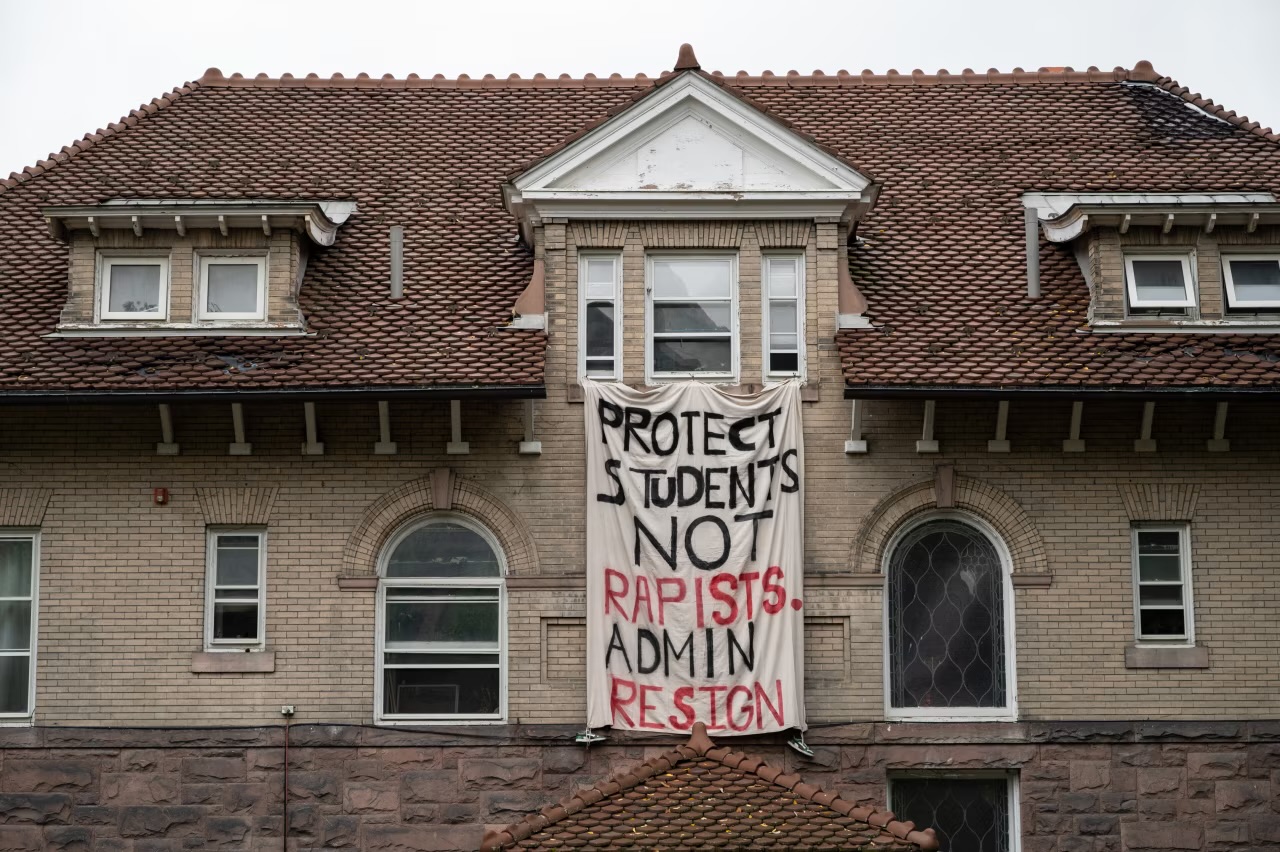
A nineteen-year-old walks into a campus police station to report the worst night of her life. She gives a six-page sworn statement. Then she waits. Nobody calls her back.
That, according to her attorney, is what happened to the woman now suing Cornell University and seven former and current Chi Phi members. Her lawsuit alleges she was drugged and gang raped at the fraternity house in October 2024. The defendants deny it, and their lawyers say the complaint misstates the record. Those claims will be tested in court, as they should be, and yet, there’s a secondary story that needs no trial to examine: how a case this serious went nowhere for two years.
District Attorney’s Explanation:
Matthew Van Houten says he declined to charge anyone in 2024 because the woman’s initial statement did not say she was drugged without her knowledge or physically helpless. He described her as credible,though he also admitted his office never independently investigated. Instead, he relied on the work of Cornell’s campus police, which he says is standard practice across upstate New York.
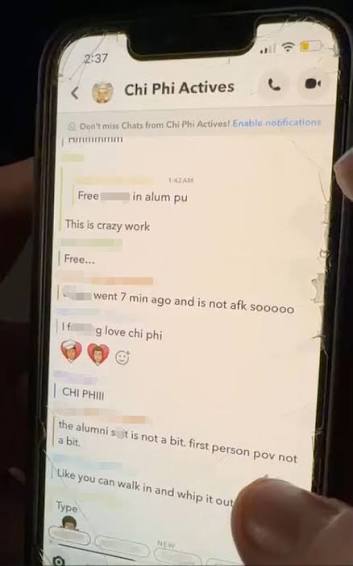
Ruminate on that. The people who decide whether a crime occurred outsourced the investigating to a university department. The department took a statement, and—by her lawyer’s account—stopped there. A Snapchat group chat that her attorney calls “critical” evidence was allegedly handed to authorities in 2024. The DA says it never reached him. Somewhere between the police report and the prosecutor’s desk, a critical piece of evidence simply vanished.
Survivors of sexual violence rarely deliver a clean, complete account on the first try, especially when alcohol and drugs blur the memory. Investigators trained in this work know that follow-up interviews are where the fuller picture tends to emerge. Treating one early statement as the final word does not make a process neutral. It makes it a filter, and the cases it screens out are often the hardest ones.
The DA has said prosecutions must rest on “evidence and not emotion.” Fair enough, but evidence does not walk into a courthouse on its own. Someone must go looking.
Cornell has its own questions to answer. The university says its Title IX process led to expulsions and suspensions and that the chapter was barred from campus. The lawsuit claims some of the men were given the chance to soften their punishment by writing essays, Cornell calls this false. Rather than trade press releases, the public deserves an answer from someone with nothing to protect. That is why Governor Hochul’s call for an independent review makes sense, and why Cornell’s move to hire outside lawyers should be treated as basic law enforcement, not a favor.
Universities can expel a student, but they cannot charge one with a crime. Their disciplinary systems are private, slow, and opaque. They are run by institutions with obvious reasons to protect their reputations,and asking a school to police serious violent crime is akin to asking a restaurant to inspect its own kitchen.
Then there is the culture underneath it all. Researchers who study fraternities describe organizations where toughness, dominance, and silence earn status. The lawsuit alleges that one member summoned others to the room through a group chat, which, if true, looks less like a lapse in judgment, and more like a performance for an audience of brethren. Closing one fraternity chapter will not resolve the issue, it just relocates the problem to places where universities have even less reach.
So, what would real change look like? Campus police should route serious assault reports to specially trained detectives immediately. Prosecutors should review those cases themselves instead of inheriting a first impression. States should fund regional response teams so survivors are not at the mercy of whichever agency answers first, and universities should publish, within privacy limits, how often misconduct findings lead to real consequences.
The plaintiff says that after she came forward many of her peers turned away from her. If so, she learned something about the system long before any jury did.
A grand jury may finally hear her out, but the real fight is making sure no one else has to wait two years to be heard.
Acknowledgement: The opinions expressed in this article are those of the individual author, not necessarily Our National Conversation as a whole.

3 Comments
“The DA has said prosecutions must rest on ‘evidence and not emotion.’ Fair enough, but evidence does not walk into a courthouse on its own. Someone must go looking.” First of all, well said. Second of all, this is exactly where the problem lies (obviously besides the fact that this happened to her in the first place). Women are oftentimes not taken very seriously in these reports, so the justice system does not go much further in bringing about a resolution. To your point, if detectives had spent more time with her to obtain evidence or further testimony, then there might have been real consequences.
This is a timely article, and I look forward to seeing how the case plays out. If it is true that the DA did not independently investigate the matter at the time of the incident, then that is an indictment on the system and how it works. I wonder if there are other cases like this, wherein a case never got a second look because of a prosecutor’s negligence.
I really enjoyed editing this article Isha. Thank you for bringing this case to light and not being afraid to talk about out it. The system is broken and so many victims go unheard and unseen. It is imperative, to the safety of women, that the system change and that schools are held more accountable for their Greek life. I’ve heard so many horror stories from not only women, but the pledges about the hazing that goes on. I think Greek life itself needs to change and the culture surrounding it needs to be abolished.