

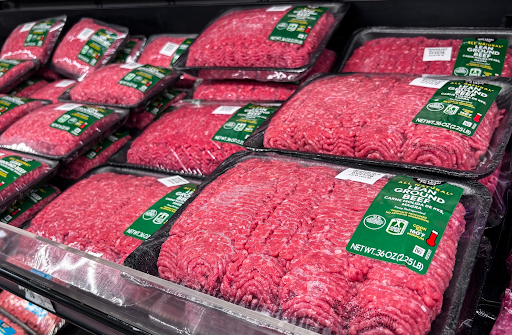
Trump’s 90-day beef tariff suspension rests on a simple bet: cut a tax on an imported ingredient, hamburgers get cheaper, and approval ratings improve before November midterms. Ranchers see a problem with this approach, while economists support the direction and are skeptical about scale.
What Was Announced
On Friday, August 21st, President Trump announced a new policy that will allow up to 300,000 metric tons of product for ground beef to be imported over the next 90 days without being subject to out-of-quota tariffs. Trump framed it as a deal, wherein importers would agree to sell the beef at 25% below the market price.
What is unclear is which countries are involved in this deal, and no executive order has been issued to implement the policy as of August 23rd. The White House did say, however, that an executive order is coming within the next 2 weeks, when more details will come through.
Cutting Tariffs Lowers Prices
The logic is simple. Imported beef usually faces a quota, and a 26.4 percent tariff for any beef imported above said quota. Under the quota, the nominal rate is 4.4 cents per kilogram. And based on a May report, The American Farm Bureau Federation calculates the gap can exceed $1.80 per kilogram, for beef valued at $7 per kilogram.
Research on Trump’s earlier trade policy supports the direction. A 2019 Amiti et. al. study found near-complete pass-through of tariffs to U.S. buyers, meaning American consumers, not foreign exporters, absorbed the cost of tariffs. If adding a tariff raised prices, removing one relieves them. Therefore, the logic follows that the current proposal to reduce tariffs on beef imports benefits consumers by way of cheaper access to beef products.
An Issue of Magnitude
The skepticism is about magnitude here, not the direction of the policy itself. Firstly, no enforcement mechanism has been announced for the policy, so the implementation is unclear. Secondly, we have precedent from past attempts at similar policy. In February, Trump signed a proclamation adding 80,000 metric tons per year of Argentine beef trimmings. Retail ground beef went from $6.74 a pound in February to $6.89 in July, according to federal data. Economists like David Ortega predicted this, arguing that the added volume amounted to less than 1 percent of U.S. beef supply, and therefore not really impacting prices.
While 300,000 is more than 80,000, is this a policy that will have the impact that the President claims, or will the magnitude be too insignificant for consumers to notice? If the Trump Administration truly wishes to lower prices at scale, it must cut tariffs across the board and on a much larger scale.
Ranchers Objecting
The producers’ complaint is a competition argument. Imported beef competes directly with beef products produced by farmers domestically. More imported beef means lower prices for ranchers to sell their products, thus reducing a meaningful share of a rancher’s annual income. Generally, tariffs help protect our ranchers by ensuring that their products come first versus foreign competition. The reduction in tariffs benefits consumers via lower prices, but ranchers lose out on the producer surplus, or profits, they could otherwise have from selling at higher prices.
“Flooding the market with government-subsidized, below-market beef is not the way to rebuild the American cattle herd,” said Colin Woodall of the National Cattlemen’s Beef Association. The Farm Bureau said the volume would mean nearly a 60 percent increase in imports over the period.
Republicans from cattle states, including GOP lawmakers, criticize Trump’s beef import plan amid blowback from ranchers. Sens. Tim Sheehy, Deb Fischer, Pete Ricketts and Chuck Grassley and Rep. Ashley Hinson criticized the plan. Nebraska Senator Deb Fischer wrote, “We all want lower grocery prices, but as I’ve said for months, we cannot do it at the expense of American producers. Flooding the market with foreign beef hurts our livestock industry.”
The Politics
Affordability is the defining midterm issue, and beef is a visible symbol. Trump’s approval on cost of living stood at 23 percent in a Reuters/Ipsos poll this month, with Democrats leading on which party voters trust on prices.
The 90-day window closes in mid-November, just after the election. This indicates a temporary policy approach to address midterm pressures, rather than a long-term policy direction.
Acknowledgement: The opinions expressed in this article are those of the individual author, not necessarily Our National Conversation as a whole.
1 Comment
This issue reminds me of and is clearly similar to the issue surrounding non-food products that are manufactured/produced outside the U.S. because to do so is cheaper (i.e. clothes, electronics, etc.). I hadn’t considered that that same problem could be applied to raw meat products as well. You would think that the quality of meat products would be prioritized, whatever the path to achieve that quality is, because they are a product literally being consumed whereas clothes, for instance, are less of a concern from a health standpoint when discussing foreign manufacturing.